

Industry insight: this article describes how the technology is used in the industry. It is not a Metaverse911 client project. See our case studies for our own work.
The situation: no digital tools in hazardous zones
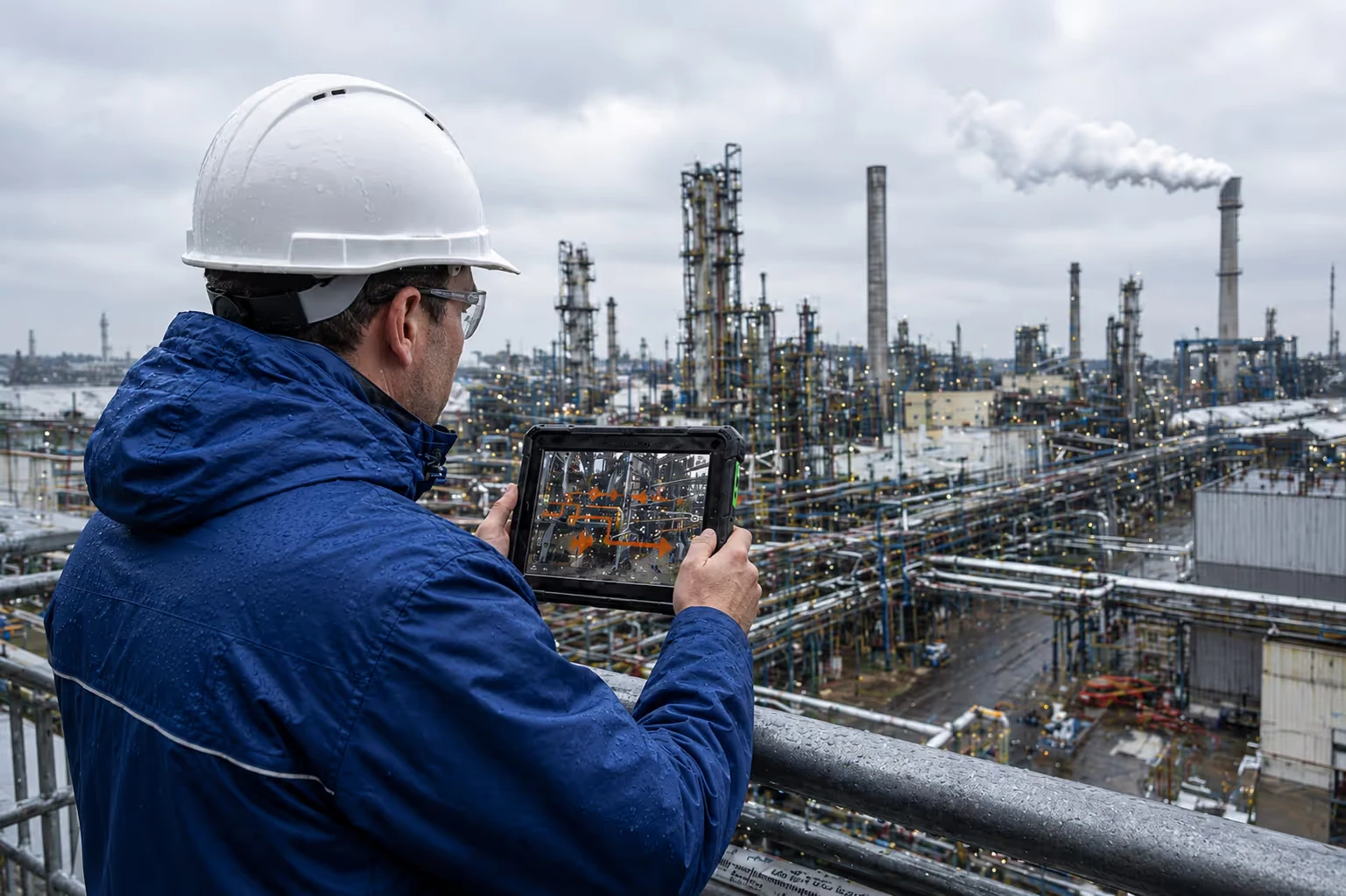
ChemCorp's site is described as the world's largest integrated chemical complex: about ten square kilometres of pipes, reactors and towers, with its own roads, railways and emergency services. Large parts of it are ATEX-certified hazardous zones, where a spark from an ordinary electronic device could ignite flammable gases or vapours.
That meant frontline workers in those zones had no access to the plant's digital systems. They relied on paper blueprints, laminated manuals and two-way radios. A technician who needed to check a valve's pressure tolerance had to leave the area, walk to the control room, look up the data and walk back. Each trip cost time and added a chance of error, and decisions could be based on an outdated manual or a misremembered value.
Three things made change possible. Processes were becoming more complex and needed better data access. The workforce was more comfortable with digital tools. And intrinsically safe mobile devices had matured into reliable hardware for industrial use.
What they did: intrinsically safe tablets with AR
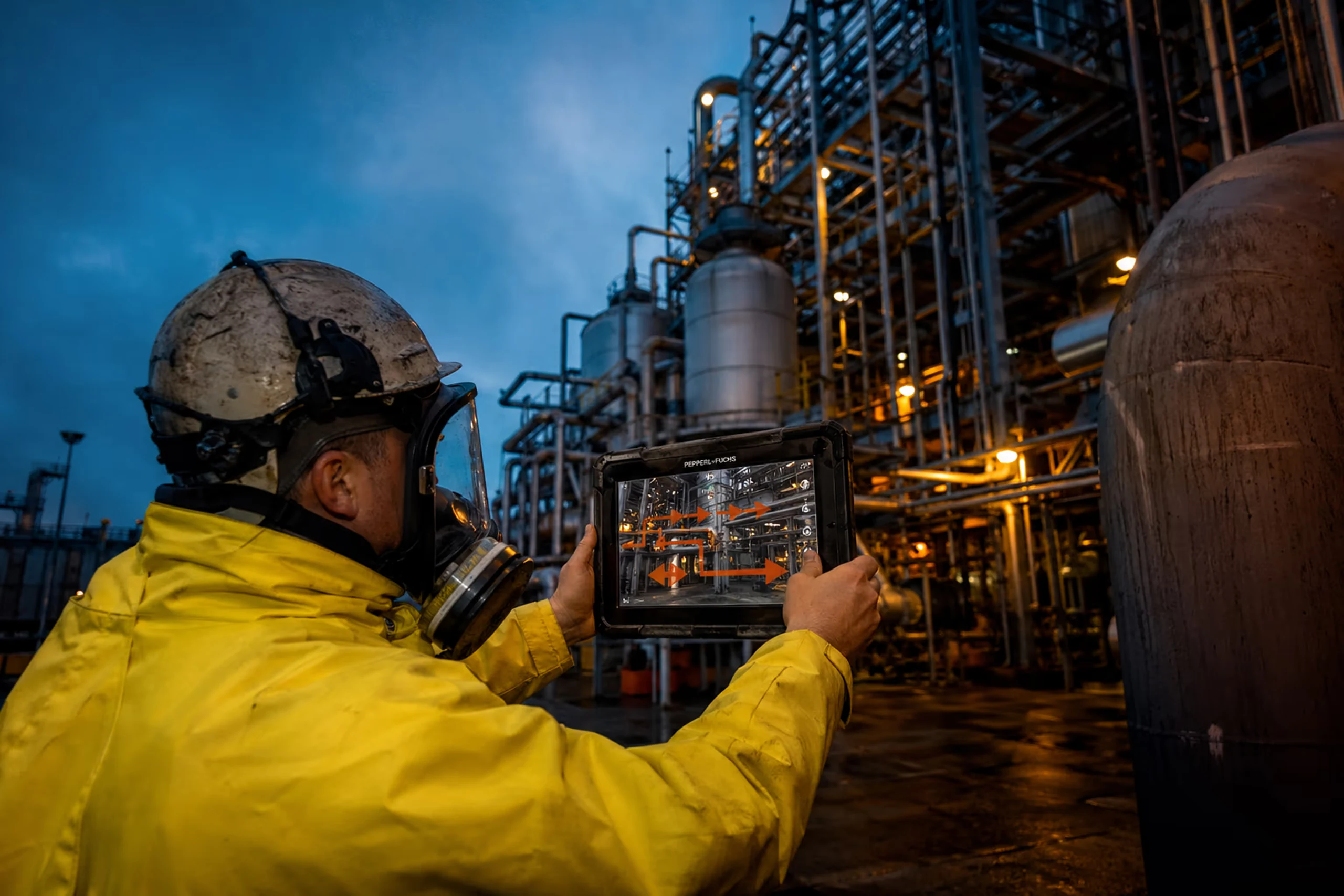
ChemCorp deployed the Pepperl+Fuchs Tab-Ex series, intrinsically safe Android tablets engineered so they cannot generate a spark. They are certified for use in the most hazardous zones. With an AR software platform installed, an operator can point the tablet at a piece of equipment and see live operating pressures, maintenance history and step-by-step repair guides on the camera view, without leaving the area.
The company paid close attention to the people using the tablets. Technicians had classroom sessions on the hardware and software, then hands-on practice in a safe, non-hazardous dummy area. Veteran technicians helped design the interface and workflows. Their input made the app easier to use and helped turn sceptics into advocates.
How it works
An ATEX-certified Wi-Fi network covers the operational zones. Through it, the tablets connect in real time to the plant's Distributed Control System (DCS) and to the SAP Plant Maintenance (PM) module.
A typical job runs like this:
- The technician scans a QR code on a pump.
- The tablet pulls the matching work order from SAP and live performance data from the DCS.
- The technician sees the current pressure and a 24-hour pressure graph overlaid on the physical gauge.
- An AR-guided procedure takes them through the repair, and they mark each step as done.
- They close the work order in SAP, with notes and annotated photos, before leaving the site.
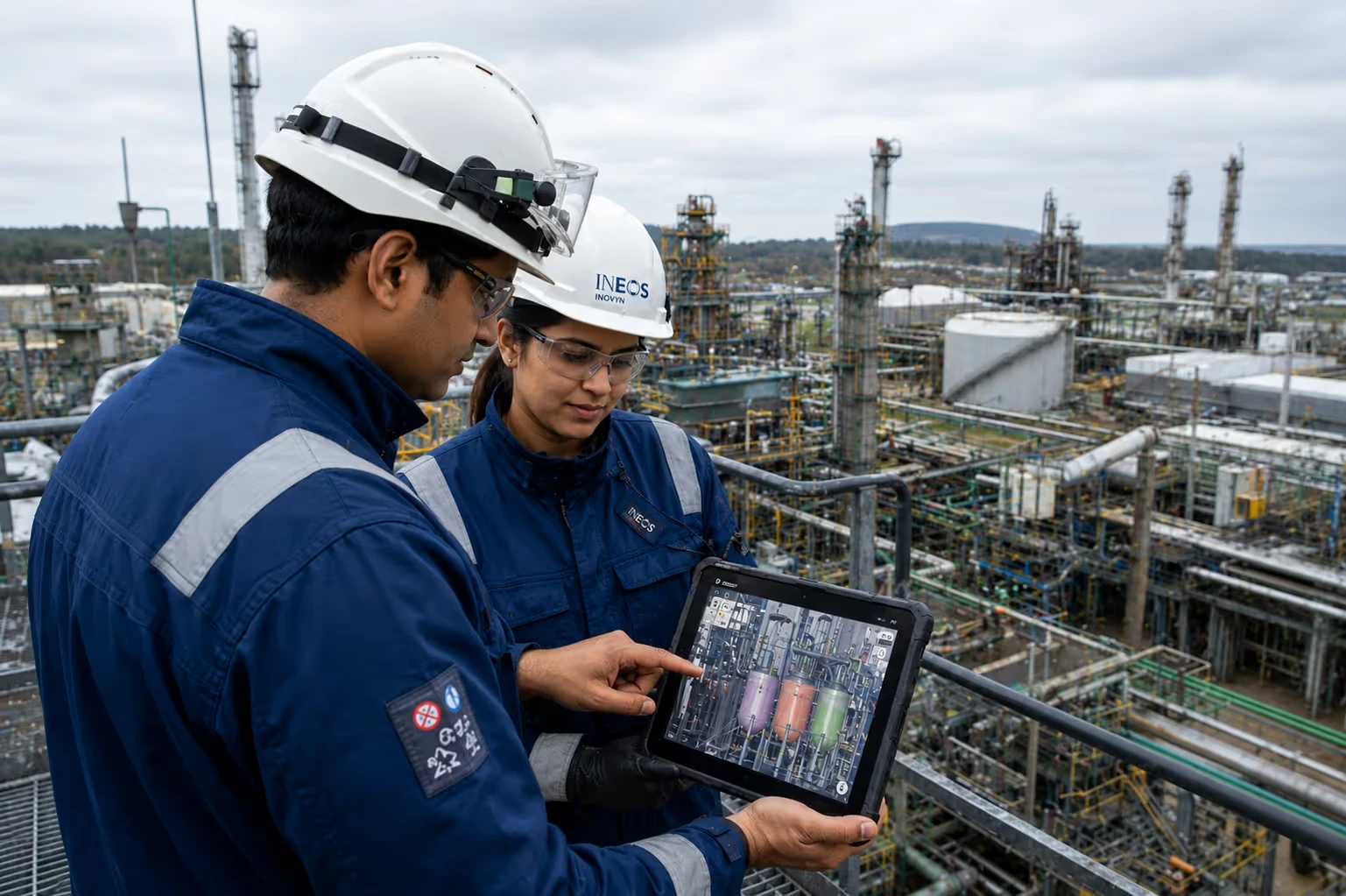
The system also uses CAD and BIM models. A technician can view a complex valve assembly in 3D, exploded into labelled parts that are cross-referenced to inventory, instead of reading a 2D schematic.
The IT team designed and runs the ATEX Wi-Fi network, which needed careful site surveys because steel structures block radio signals. They manage the tablet fleet with a Mobile Device Management (MDM) platform, pushing software updates and security patches remotely so devices do not have to be recalled.
Who benefits
- Plant operations: operators see live trend data next to the asset, so they spot deviations earlier and respond faster.
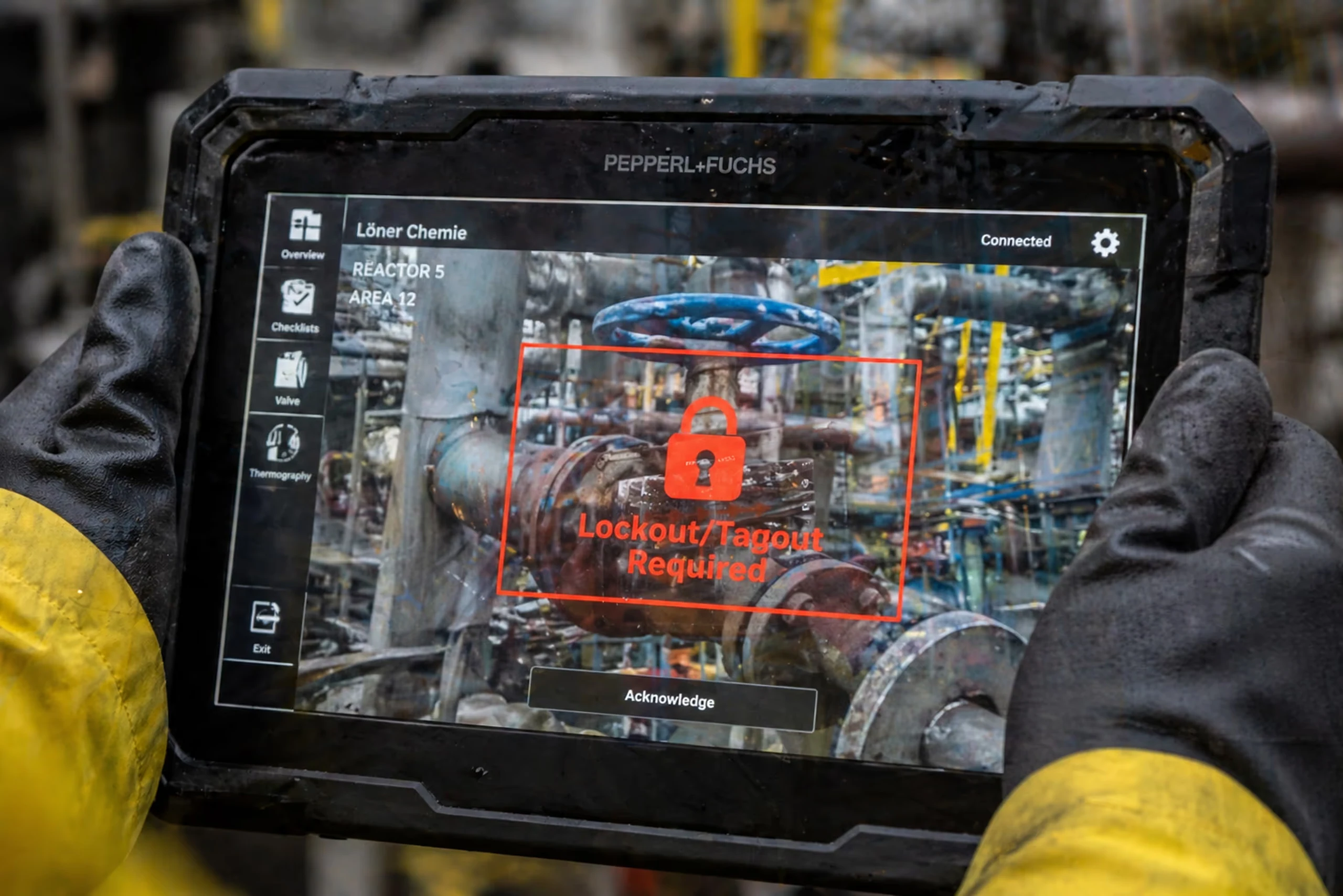
- Maintenance and safety: AR overlays guide technicians through lockout/tagout procedures and servicing, with photo records of completed work.
- Engineering and procurement: field notes and photos on repeat failures help engineers diagnose design issues and help buyers see which parts and suppliers perform best.
- Environmental, health and safety (EHS): officers photograph a hazard with a time stamp and location, annotate it and raise a corrective action straight into the safety management system.
- Training: new hires practise guided procedures on the tablets, and the knowledge of experienced technicians is captured in digital form.
Results
ChemCorp reported these results:
- A 40% reduction in safety-related incidents in the pilot areas in the first year.
- Time spent on compliance reporting reduced by an estimated 75%.
- Time-to-information, the time taken to reach manuals or work orders, cut by over 90%, from an average of 15 minutes to less than a minute.
- A 15–20% increase in maintenance team efficiency in the initial pilot areas.
- A projected 25% reduction in rework during the first year of full deployment.
- A 10% increase in the retention rate of technicians in departments using the tablets.
The investment is expected to pay for itself within 18–24 months through higher uptime, better technician productivity and less rework. That expected return was a key factor in the decision to expand the programme across the whole site, a complex of 200 plants. Time saved in maintenance has been moved to preventive work.
What it means for manufacturers
This example shows that industrial AR is not limited to clean assembly lines. With certified hardware, it works in highly regulated, high-risk process plants.
It also shows the case for tablets over headsets in many plants. Smart glasses and headsets are often impractical or unsafe in hazardous areas. A ruggedised, certified tablet offers a large screen, enough processing power and a route to safe operation. For chemical, oil and gas, pharmaceutical and other process manufacturers, the practical lessons are to start with a pilot area, connect the tablets to the systems people already use, and involve experienced technicians in the design.
Frequently asked questions
Does this work in pharmaceutical or oil and gas plants, not just chemicals?
Yes. Intrinsically safe, ATEX-certified tablets are designed for any environment where flammable gases, dust or vapours create an explosion risk, including oil and gas, pharmaceuticals, mining and food processing. What matters is the hazardous area classification, not the industry. If you operate ATEX or IECEx certified zones, this type of tablet AR is designed for them.
How long does deployment take?
A focused pilot in a single plant area can often be running in 6–8 weeks. A full-scale, multi-site rollout is usually planned over 6–12 months.
What does the investment cover?
Three main parts: the explosion-proof hardware, such as the Pepperl+Fuchs Tab-Ex; the AR software platform licences; and professional services for integration, training and workflow adaptation.
How soon do results appear?
The first return is better safety and compliance. Efficiency gains, such as faster maintenance, less downtime and less travel to the control room, typically appear within the first 3–6 months and build over the first year.
Why use tablets instead of AR headsets in hazardous zones?
Headsets and smart glasses are often impractical or unsafe in hazardous industrial areas. A certified tablet is safe to use there, has a large clear screen and is familiar to most workers.
More on augmented reality on the shop floor
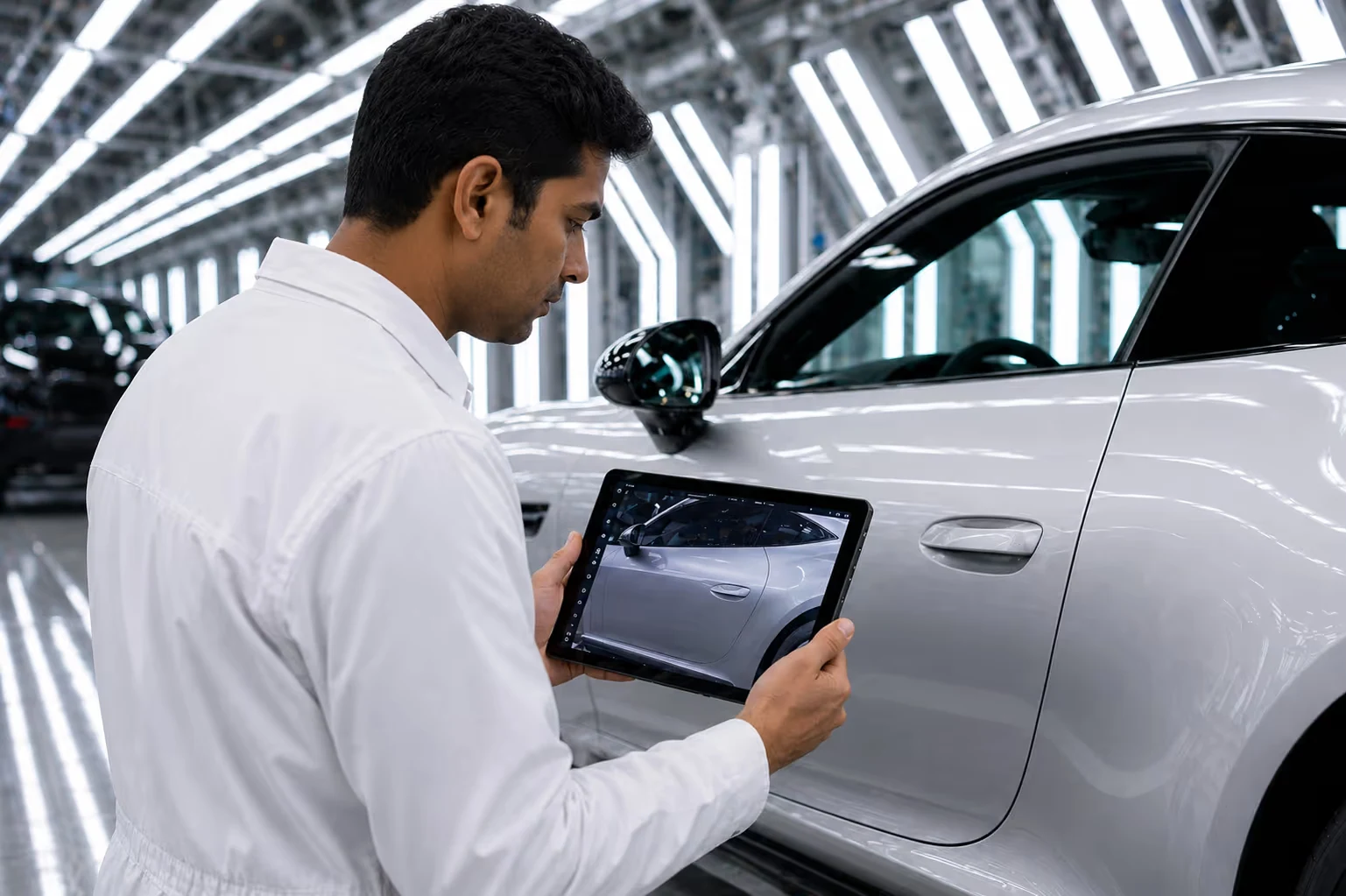 Insight · Tablet AR
How a premium automaker uses tablet AR for quality checks on the assembly line
How a premium automaker in Leipzig used tablet AR, built with the Fraunhofer Society, to check parts on the line and halve supplier issue resolution time.
Read the article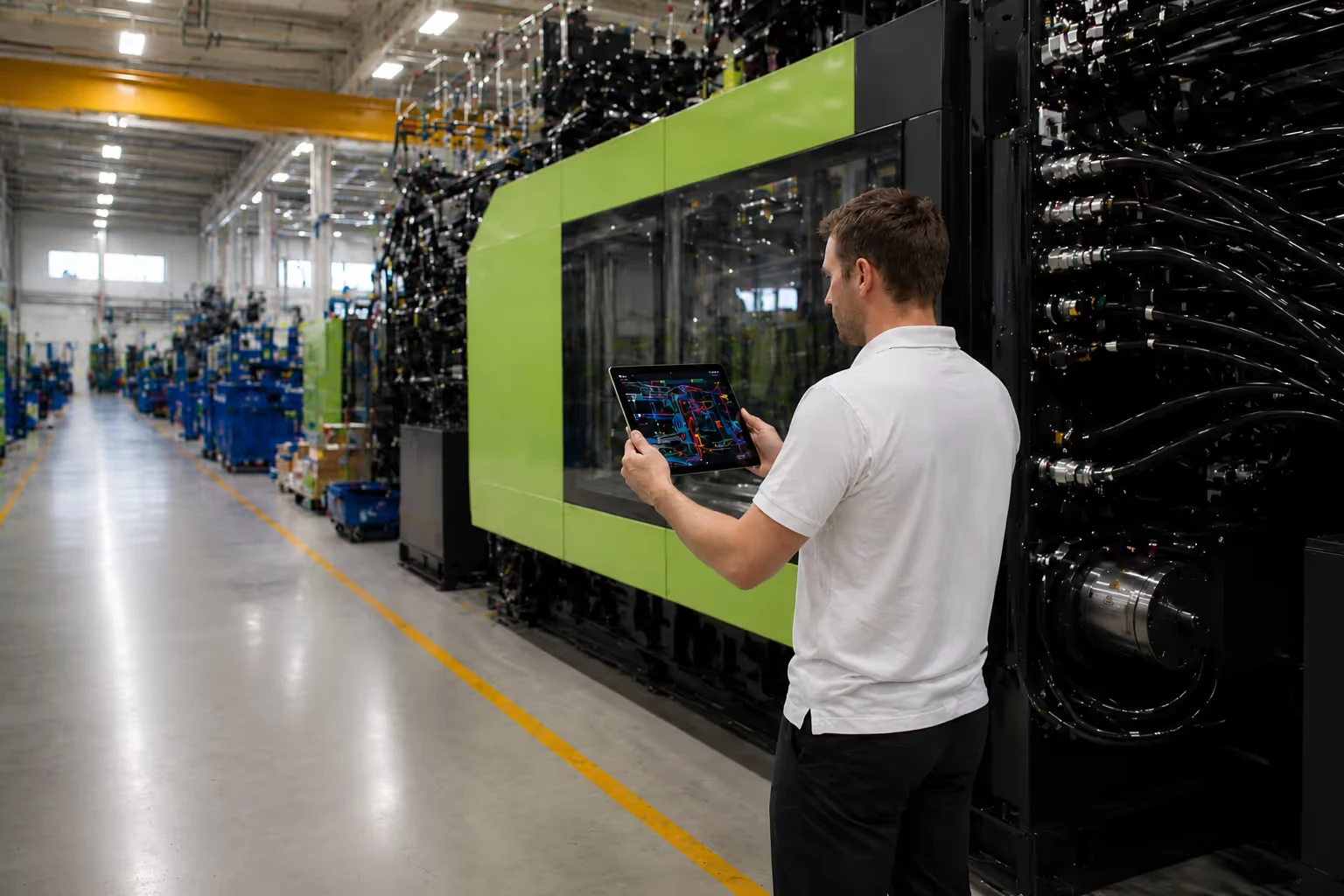 Insight · Tablet AR
How an injection moulding machinery maker uses tablet AR for final quality checks
How an injection moulding machinery maker used tablet AR and digital twins for final inspection, cutting inspection time by 75% and post-shipment errors by 90%.
Read the article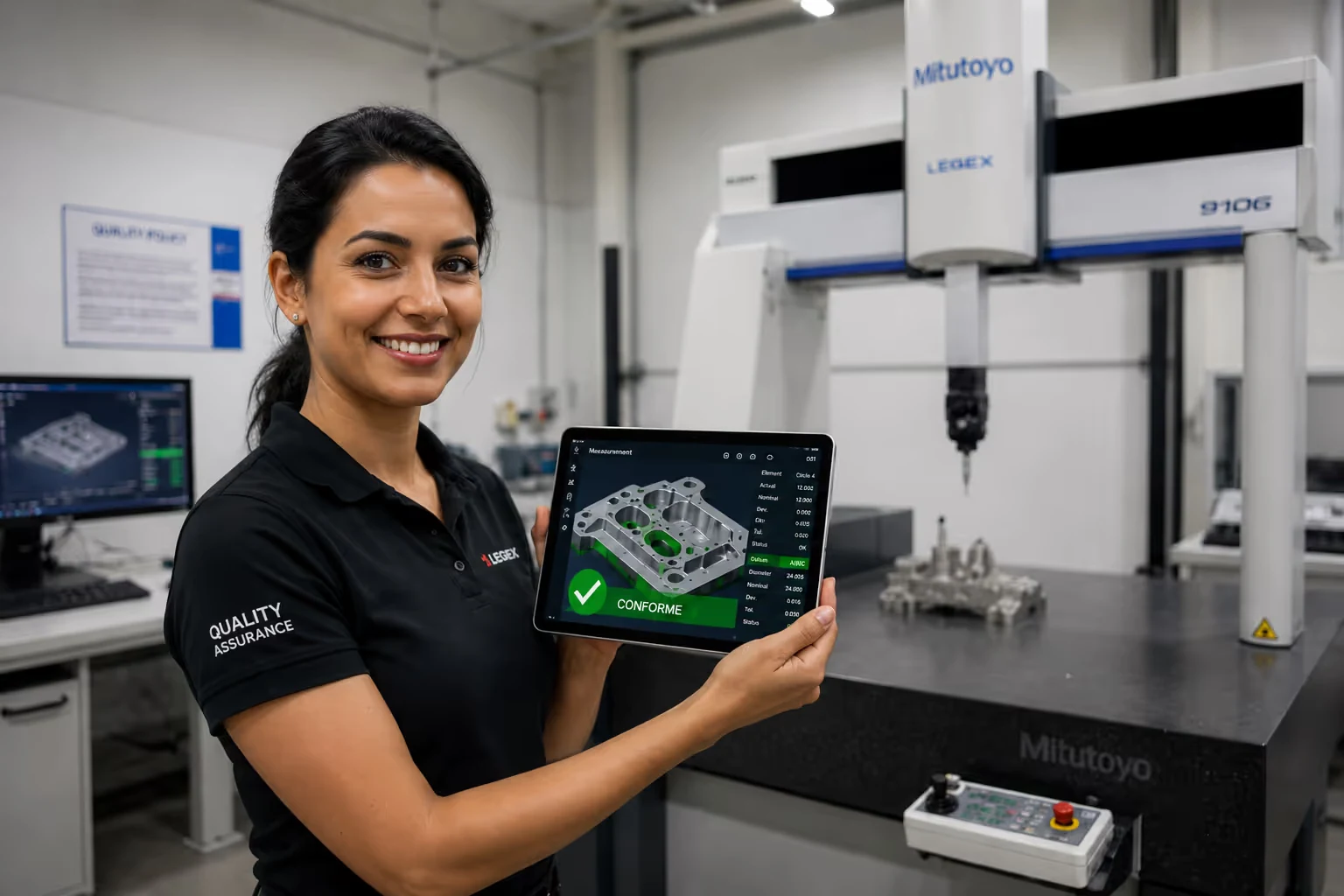 Insight · Tablet AR
How a vacuum technology manufacturer cleared its CMM bottleneck with tablet AR
How a vacuum technology manufacturer used tablet AR to triage incoming vacuum chambers in under five minutes, freeing its CMMs for the checks that need them.
Read the article