

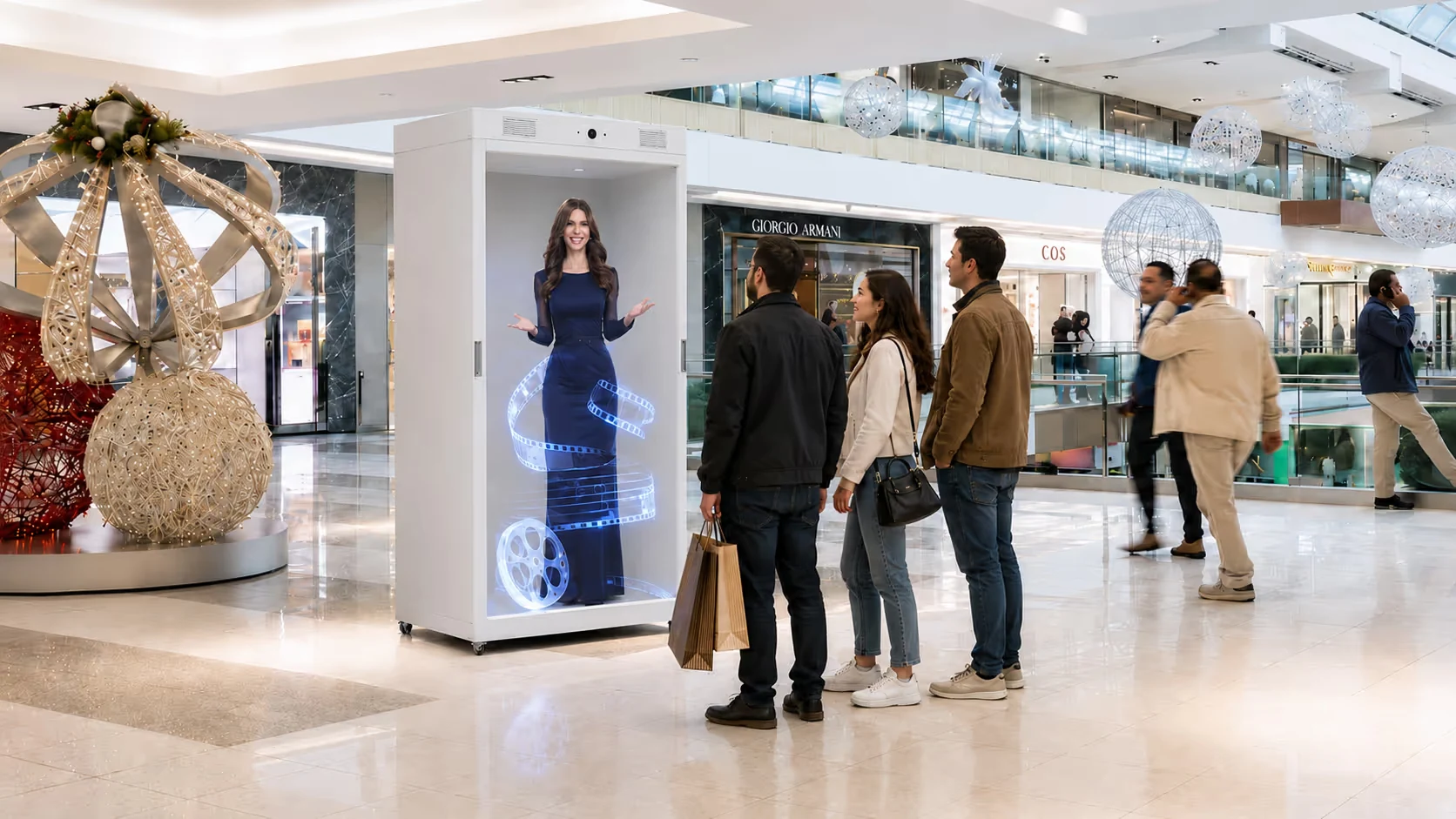
Industry insight: this article describes how the technology is used in the industry. It is not a Metaverse911 client project. See our case studies for our own work.
The situation: shoppers ignore flat ads
E-commerce has changed what a mall is for. Static billboards, printed banners and flat digital screens no longer stop shoppers, who walk past them the way they scroll past banner ads online. Mall operators need ad formats that earn attention and turn footfall into media they can sell at a premium.
The operator in this example is the largest shopping mall operator in the United States, with an interest in more than 250 retail properties, weighted towards premium malls and outlet centres. It wanted an advertising platform that did more than rotate video ads: one that gave brands interactive 3D experiences and created a new, measurable revenue line.
What they did: a permanent hologram network
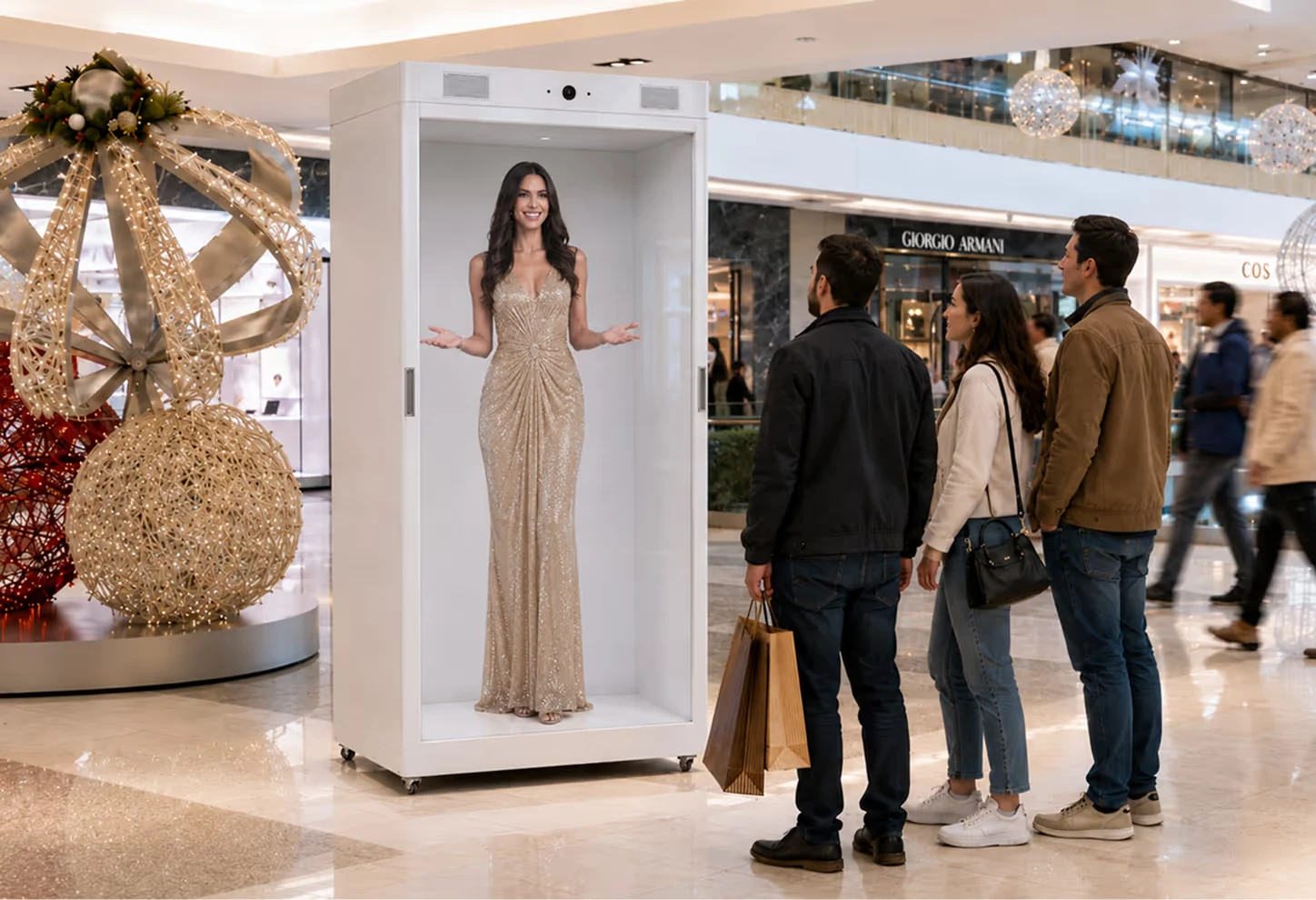
The operator installed a permanent, life-size hologram advertising network across 30 of its premier locations. This was not a pop-up or a single-mall trial. It was built as always-on media infrastructure from the start, with three goals: drive shopper engagement at scale, give brands a 3D medium no one else offered, and open a high-margin advertising revenue stream.
How it works
The hardware
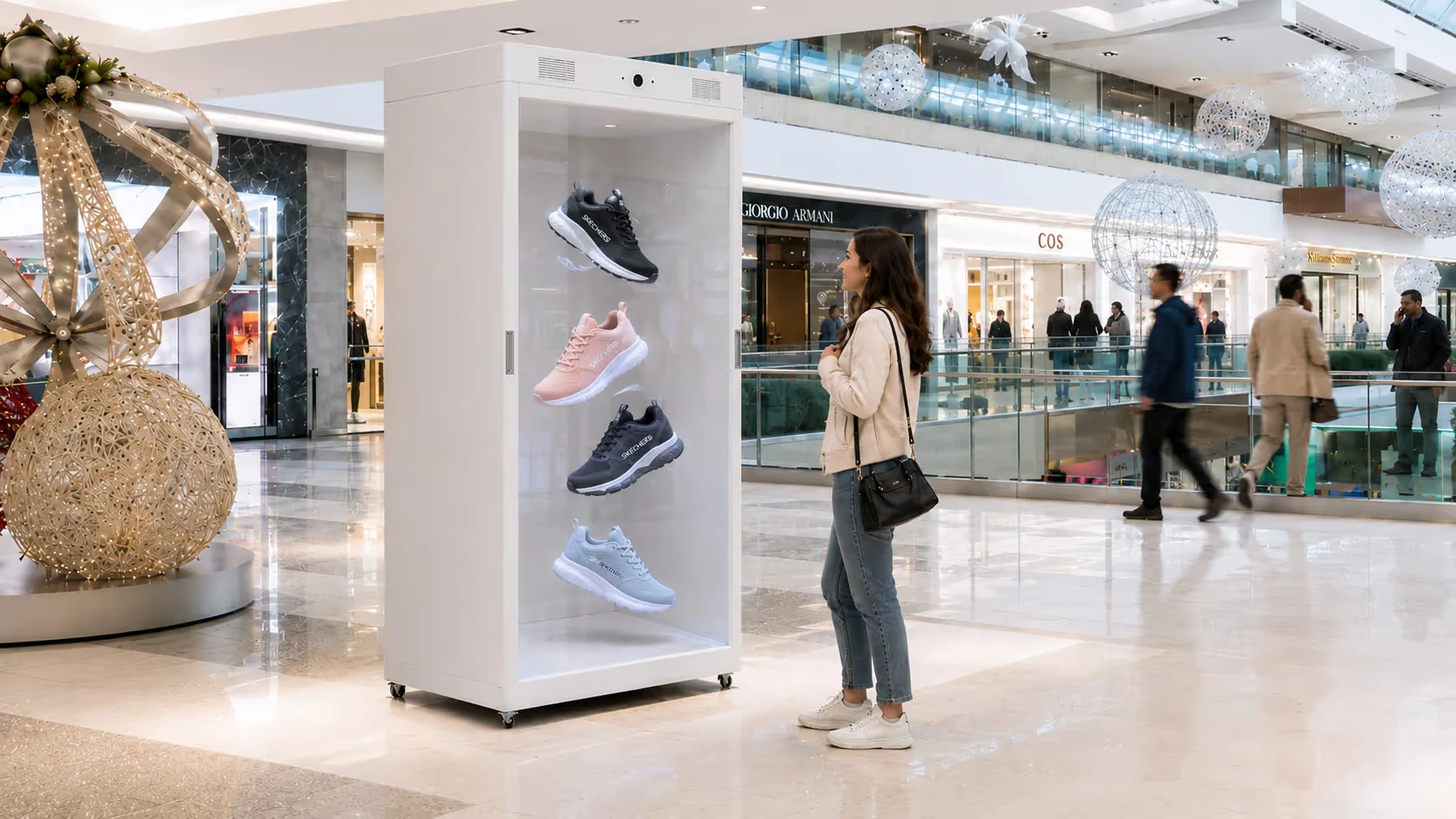
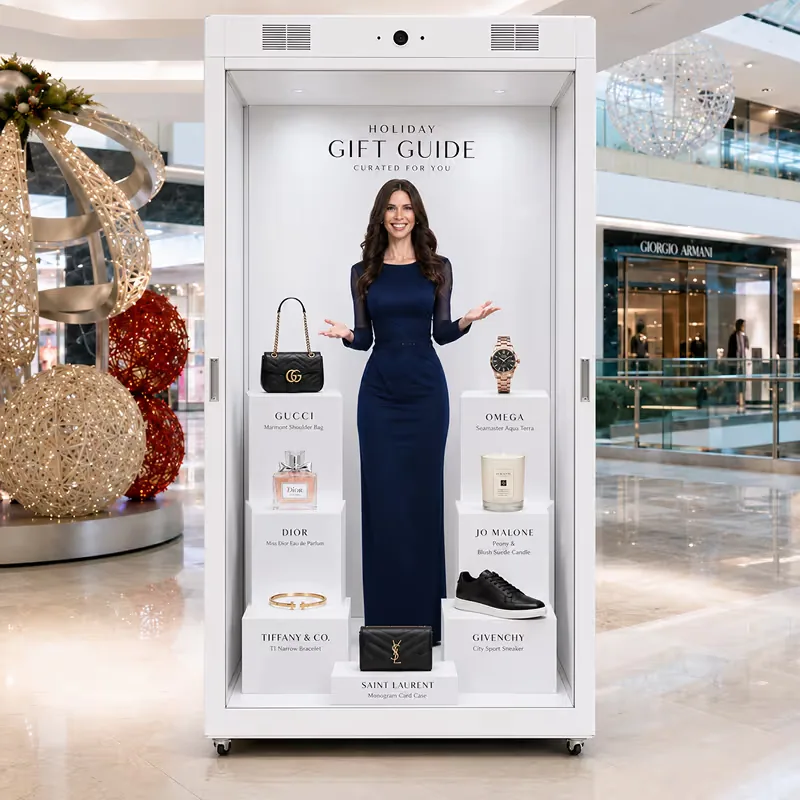
Each site has life-size volumetric units: 86-inch 4K HoloBox-class enclosures built for busy public spaces. They show photorealistic 3D images that appear to float inside the glass. High brightness keeps the image clear under overhead lighting and skylight glare, so each unit stands out across the concourse. Each unit draws under 40W and accepts content by media server, USB or TF card.
The content and CMS
The operator's media division builds detailed 4K 3D models with advertisers in luxury fashion, automotive, consumer electronics and film. These are rigged, animated assets, not static loops. They sit in a cloud-based content management system (CMS) that runs the whole network. The central team pushes updates, changes featured ads by time of day or mall audience, and schedules animations across all 30 sites at once. The CMS also monitors every unit remotely and flags hardware or connection problems automatically.
The shopper journey
- Stop: a bright, floating 3D product catches the eye from across the concourse.
- Explore: a 360° rotation and an "exploded view" show the product's features, for example a sports car turning to reveal its drivetrain.
- Interact: a 22-inch touch overlay lets shoppers switch variants, change colours and check specs and pricing.
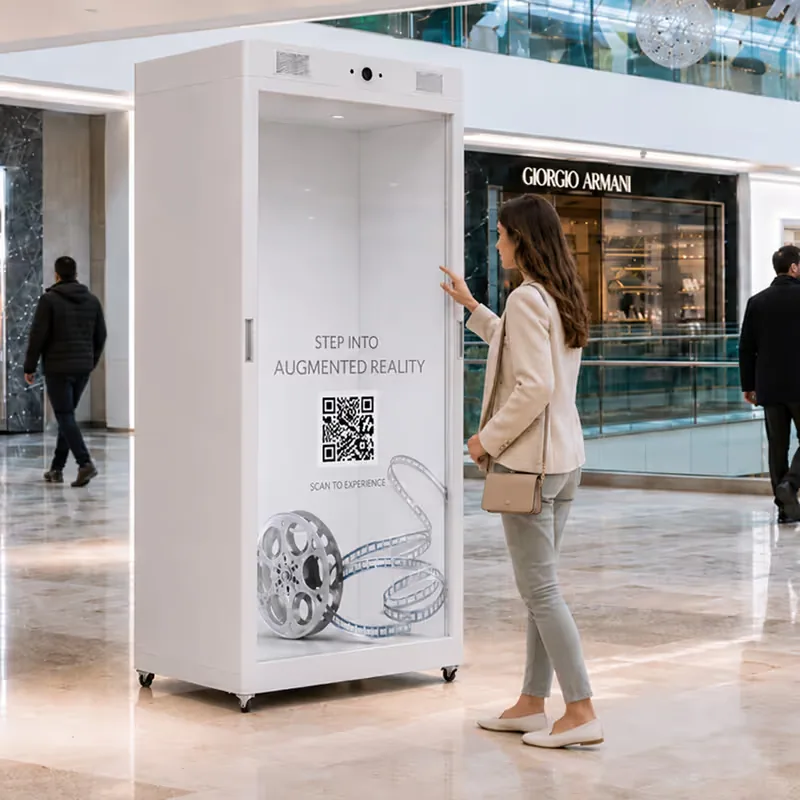
- Act: a campaign-specific QR code on the base sends the offer, coupon or product page to the shopper's phone.
Results
The source reports that shoppers spend around 45% longer with volumetric 3D advertisements than with static or 2D video signage, which gives brands more time to get their message across.
The other benefits are described by team:
- Media sales: instead of competing on price against hundreds of identical flat screens, the team sells an exclusive 3D medium at premium rates. Centrally managed scheduling allows targeted buys, for example a luxury brand taking weekend hours and a film studio buying the network for a Friday premiere.
- Operations: no printed banners, install crews or downtime between campaigns across 30 properties. Units are built for continuous running with minimal daily upkeep.
- Marketing and analytics: each unit records which ads get the most views, how long shoppers engage and how many scan the QR code, so content can be improved and return shown to brand clients.
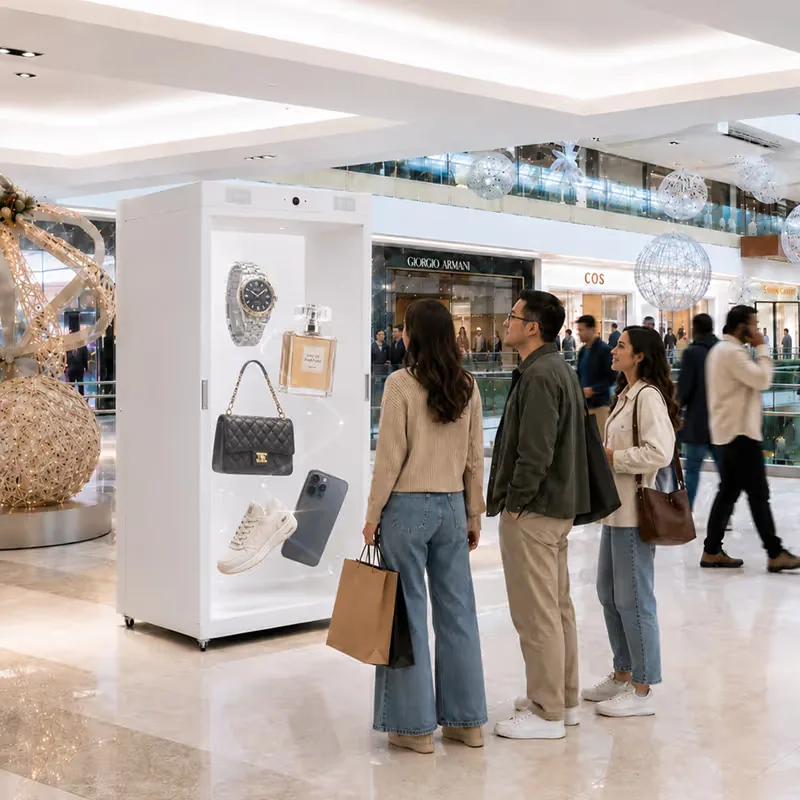
The measures the source lists for mall hologram networks are ad revenue per unit compared with flat digital kiosks, dwell time, campaign conversions such as coupon downloads, app installs and leads, and savings on printing, shipping and overnight installation for seasonal campaigns.
What it means for manufacturers
For manufacturers, the lesson is about how products are shown, not mall advertising itself. A life-size 3D model that rotates, opens into an exploded view and lets people switch variants explains a machine, vehicle or appliance better than a brochure. That works in showrooms, dealer outlets and on exhibition stands.
The QR handoff matters too. It turns interest at the display into a lead or a product page view that can be measured. And a central CMS means one marketing team can update every display in every location at once.
Frequently asked questions
What hardware does a hologram ad network need?
In this example, 86-inch 4K HoloBox-class units with high brightness, a 22-inch touch overlay and QR code generation. Each draws under 40W and takes content by media server, USB or TF card.
Is it hard to maintain across many locations?
No. The units are built for continuous operation with minimal daily upkeep, and the cloud CMS monitors every unit remotely and flags problems automatically.
How is content scheduled across the network?
Through a cloud-based CMS. The central team can change featured ads by time of day or audience and schedule content across all sites at once.
How do you measure results?
Each unit tracks views, engagement time and QR code scans. Operators also compare revenue per unit with flat digital kiosks and track savings on printing and installation.
How do shoppers interact with a mall hologram advert in the US mall network?
In the US mall operator's hologram network, a bright, floating 3D product first stops shoppers from across the concourse. A 360° rotation and exploded view then show its features, a 22-inch touch overlay lets shoppers switch variants and colours and check specs and pricing, and a campaign-specific QR code on the base sends the offer, coupon or product page to their phone.
More on holobox use cases
 Insight · HoloBox
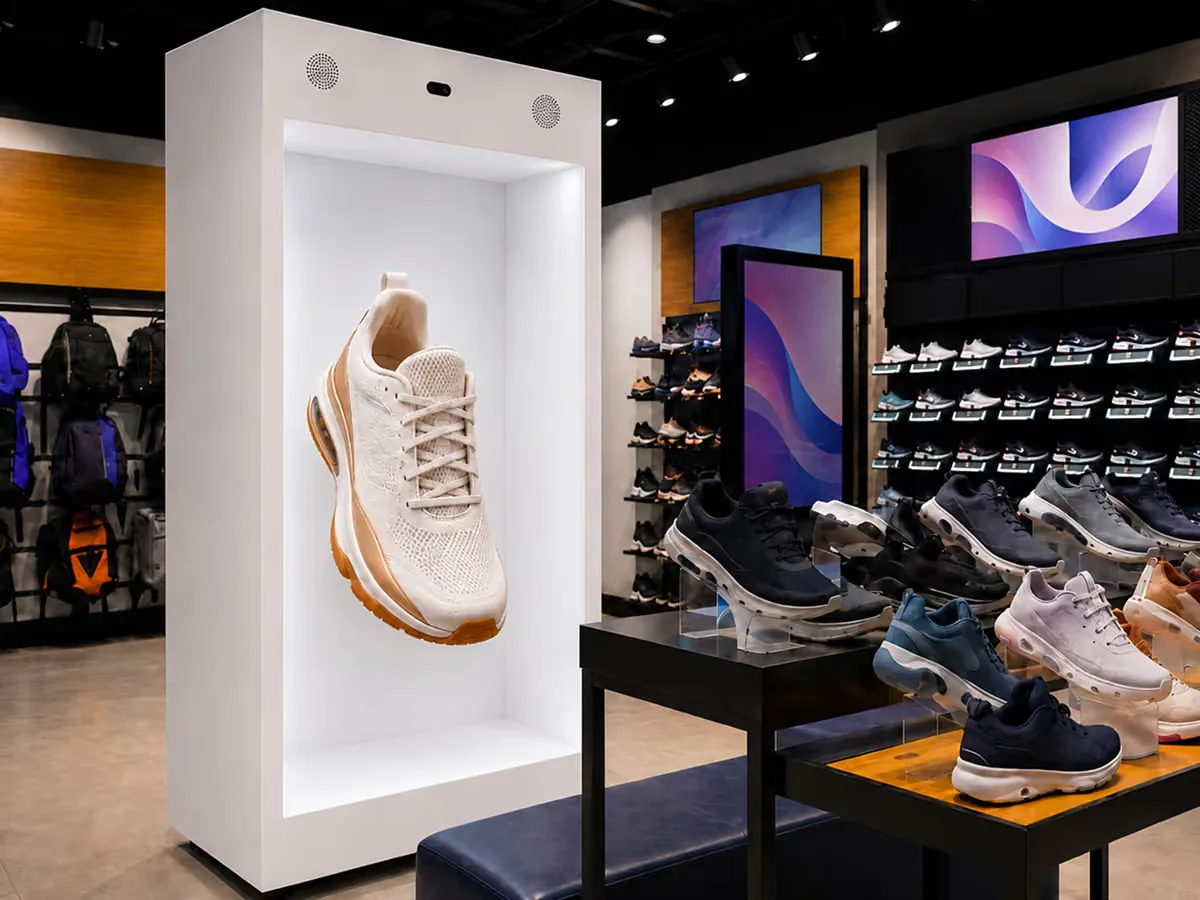
How a global footwear brand uses a hologram display in its flagship store
How a global footwear brand put a permanent hologram display in its Manhattan Beach flagship to show shoe technology in 3D and link shoppers to checkout.
Read the article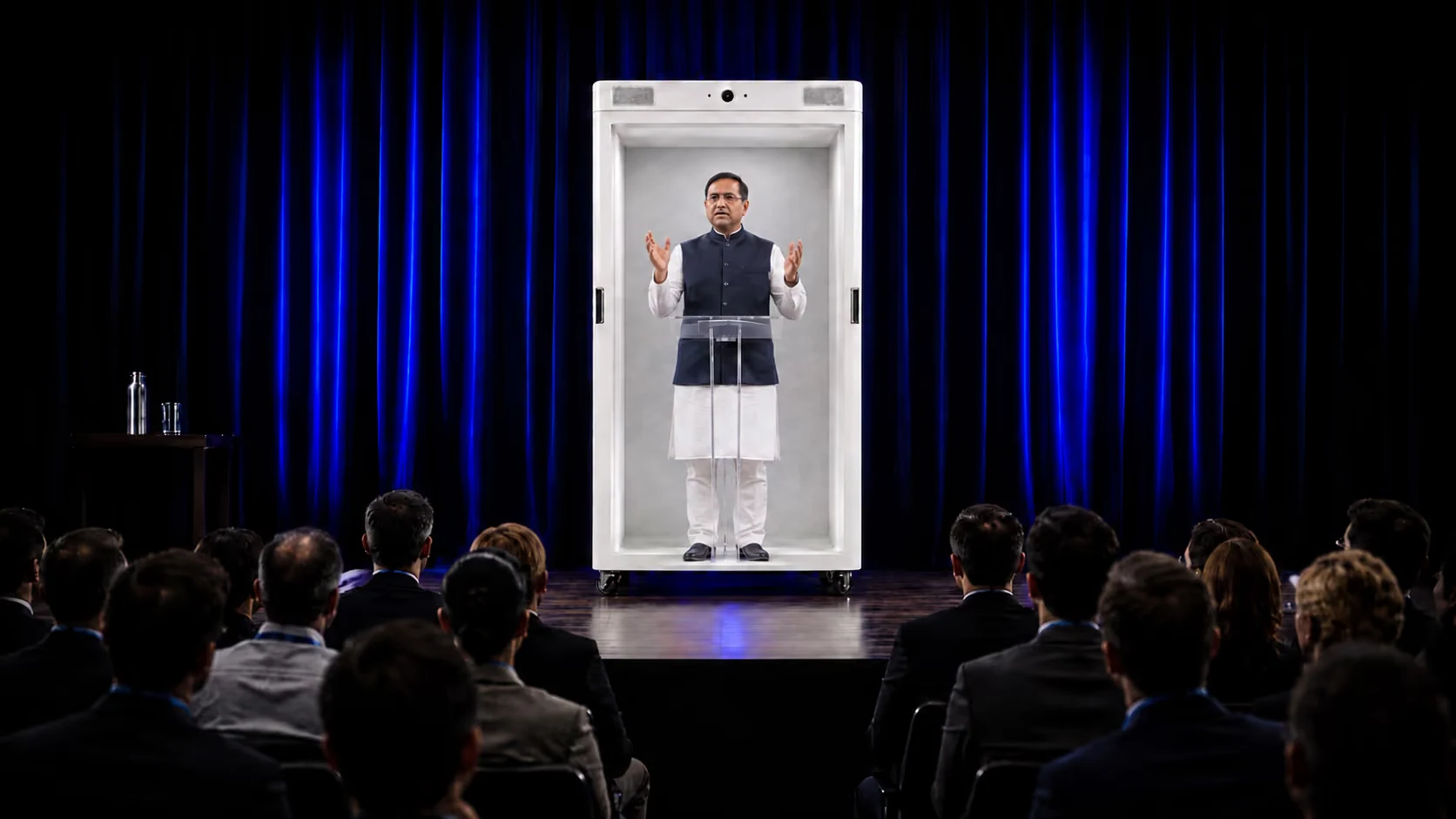 Insight · HoloBox
How holograms are used at live events in India, from 2014 to HoloBox
How hologram presence at Indian events moved from 2014 election stage rigs to plug-and-play HoloBox units, and how they work for conferences and summits today.
Read the article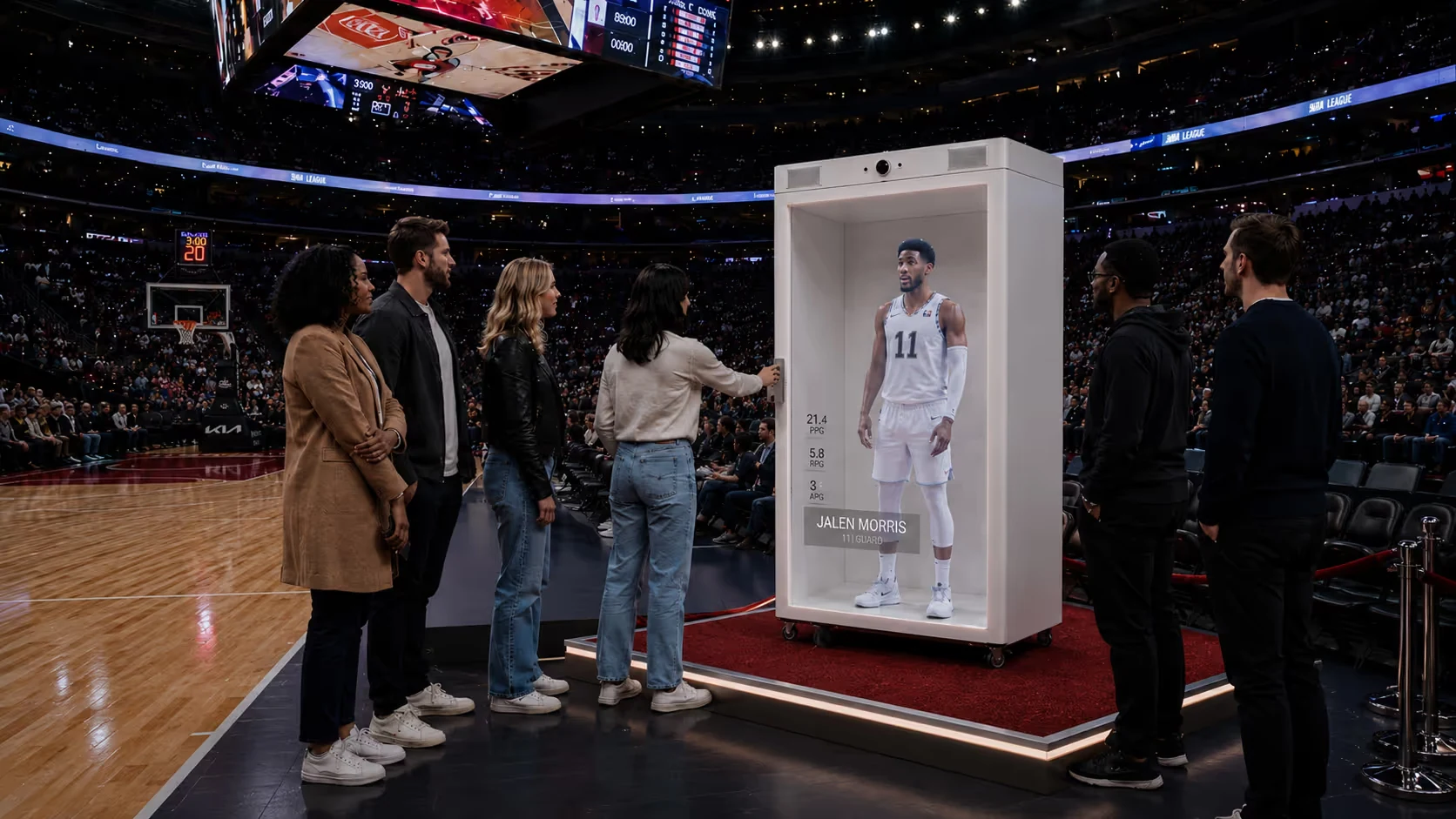 Insight · HoloBox
How a sports broadcaster brings remote athletes to the studio as holograms
How a sports broadcaster put life-size, interactive holograms of remote athletes on its studio desk, and how capture, beaming and two-way audio work.
Read the article