


Industry insight: this article describes how the technology is used in the industry. It is not a Metaverse911 client project. See our case studies for our own work.
The situation: a shortage of skilled welders and painters
India's manufacturing sector is growing fast, helped by initiatives such as 'Make in India' and global moves to diversify supply chains. That growth has exposed a serious shortage of skilled tradespeople, especially in precision trades like welding and industrial painting.
Industrial Training Institutes (ITIs) and corporate academies have long relied on the master-apprentice model. It works, but it is slow, expensive and risky. Trainees use large amounts of steel plate, shielding gas, welding wire and industrial coatings just to practise basics. The hazards also make beginners hesitant, which slows learning and increases the chance of accidents.
What they did: simulators with real-feel tools
A leading Indian XR hardware manufacturer worked with vocational training experts to build simulators for the Indian market. Its view was that standard VR, using plastic controllers, cannot build the muscle memory these trades need. The answer was "phygital": physical tools combined with a digital environment.
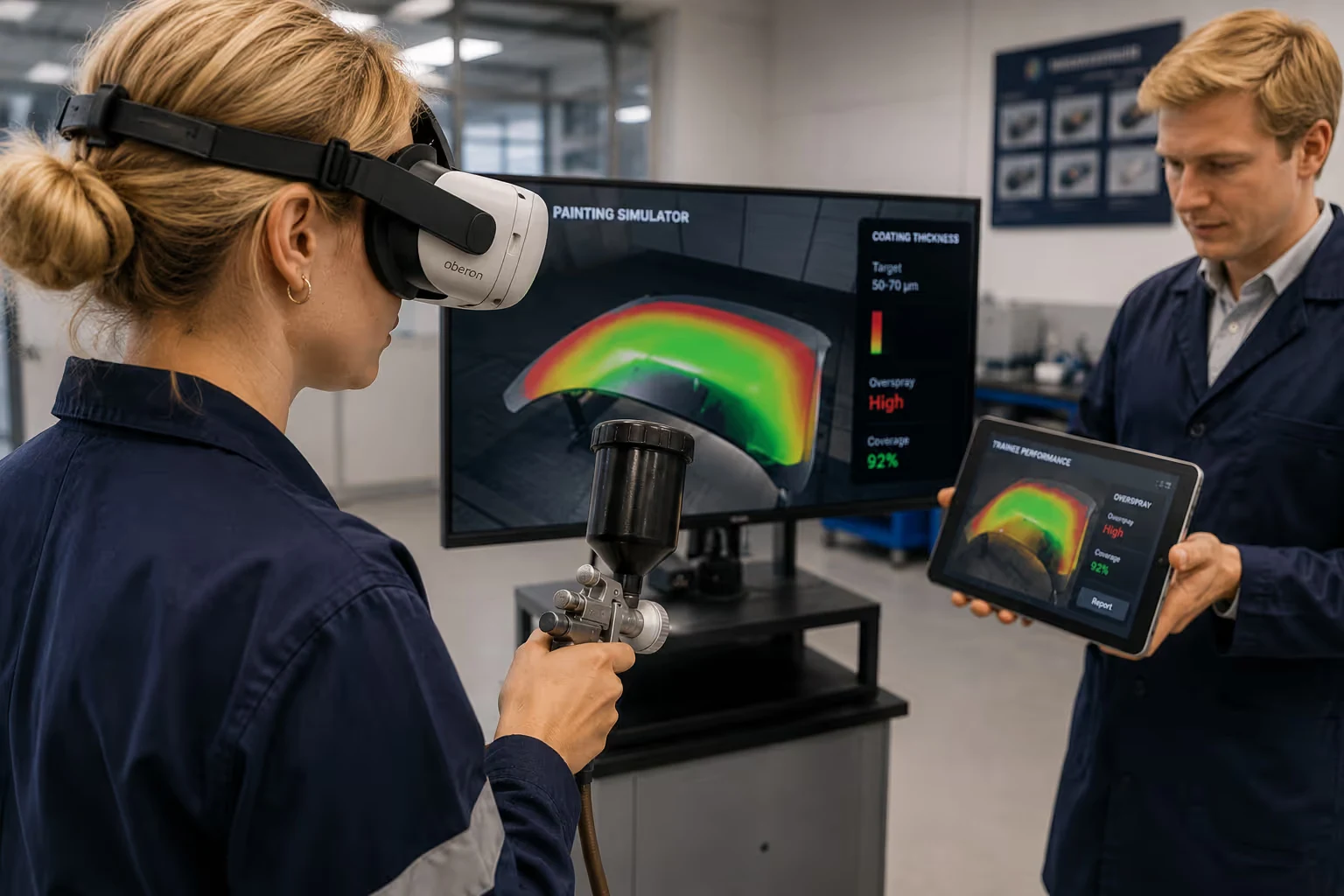
It built welding and painting simulators that pair standalone XR headsets with exact replicas of industrial welding torches and spray guns. Trainees feel the weight, balance and trigger resistance of a real tool while working in a safe, zero-waste virtual workshop. The simulators have been deployed across ITIs and corporate training centres, including smaller institutes that could not afford the ongoing cost of consumables.
How it works
Welding simulator
The trainee holds a torch that matches the weight and feel of a real MIG, TIG or Stick welding gun, fitted with precise tracking sensors. When they strike the virtual arc, the torch vibrates to mimic welding. The software tracks four parameters in real time:
- Work angle
- Travel angle
- Travel speed
- Contact-tip-to-work distance
If the trainee drifts outside the right range, visual cues guide them back. For example, if travel speed is too fast, a red indicator appears until they slow down and it turns green. This prevents bad habits forming early.
Painting simulator
The trainee uses a spray gun replica with a realistic trigger and weight. They coat 3D models of automotive parts or industrial machinery. The software tracks gun distance, stroke speed and angle, calculates the thickness of the virtual paint, and highlights overspray, under-application and incorrect overlap. The workpiece resets instantly, so trainees can try again without wasting coating.
Both simulators run on standalone headsets with no PC, so they can be used in any classroom or workshop, taken to the factory floor or moved between campuses.
Results
The reported results for deployments are:
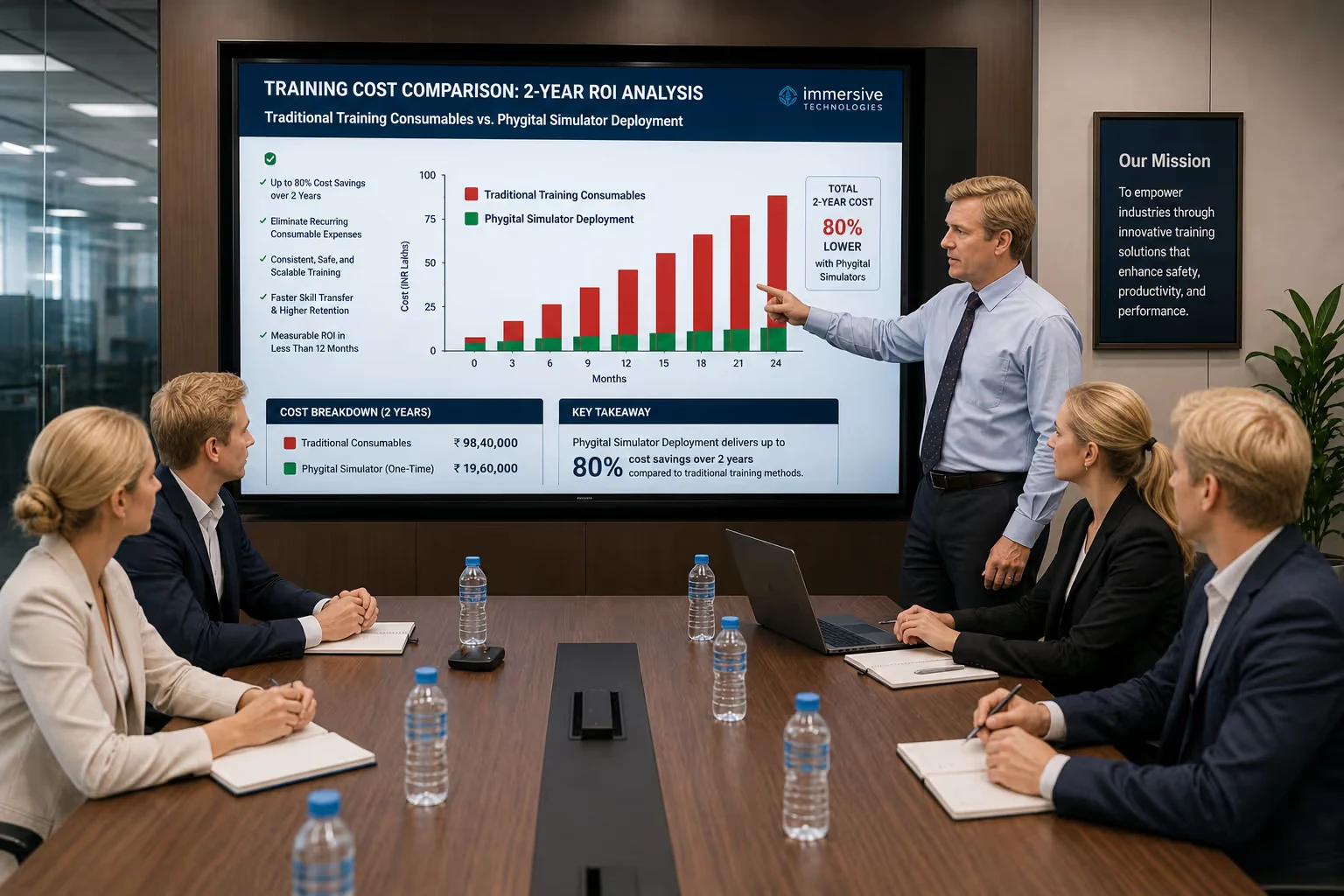
- Up to 70% lower cost of raw materials (steel, gas, wire, paint and coatings) during foundational training.
- Trainees reach certification-ready skill levels up to 40% faster.
- No burns, fume inhalation or other physical injuries during simulated modules.
- Fully objective, data-driven scoring, which removes instructor bias and standardises certification.
A complete welding simulator unit, including the standalone XR headset, tracked torch, software and analytics dashboard, is priced between INR 11 Lakhs and INR 12 Lakhs. A busy ITI or corporate academy can recover this within 12–18 months from savings on practice materials, depending on trainee numbers.
For ITIs, the simulators give every student instant feedback, which one instructor watching one or two students cannot. For plant managers, new hires arrive with the right muscle memory, and simulator data shows whether a candidate is ready for live production. For safety teams, beginners make their first mistakes with no exposure to heat, fumes, UV or chemicals, and instructors can safely simulate emergencies such as a gas leak. Less scrap and wasted paint also reduces the training centre's environmental impact.
What it means for manufacturers
For any manufacturer that trains its own welders or painters, the cost of practice materials and the time to competency are real, measurable costs. Simulators with realistic tools move the early stages of learning off the shop floor, save materials and produce data on each trainee's skill.
The key detail is the physical tool. For hands-on trades, a replica torch or spray gun with the right weight and trigger is what makes the skill transfer to the real workshop.
Frequently asked questions
What does "phygital" mean here?
It combines physical and digital. The trainee wears an XR headset but holds a tracked, realistic replica of the real tool, such as a welding torch or spray gun, so they build genuine muscle memory.
How much does a phygital welding simulator cost in India?
A complete unit, including headset, tracked torch, software and analytics dashboard, is typically priced between INR 11 Lakhs and INR 12 Lakhs.
How quickly does it pay back?
For a training centre with high trainee numbers, savings on steel, gas, wire and paint typically cover the investment within 12–18 months.
Do simulators replace real workshop training?
No. They cover the foundational and intermediate stages. Once trainees reach a high score in the simulator, they move to the real workshop for final practice and certification, needing much less physical practice time.
Are they difficult to set up?
No. Standalone headsets need no PC or external tracking cameras. The system needs a standard power outlet and a clear space for the trainee.
Can the software be customised?
Yes. Beyond standard MIG, TIG, Stick welding and spray painting modules, it can be tailored with specific workpieces, environments or the behaviour of a manufacturer's own coatings.
More on vr training & events
 Insight · VR training
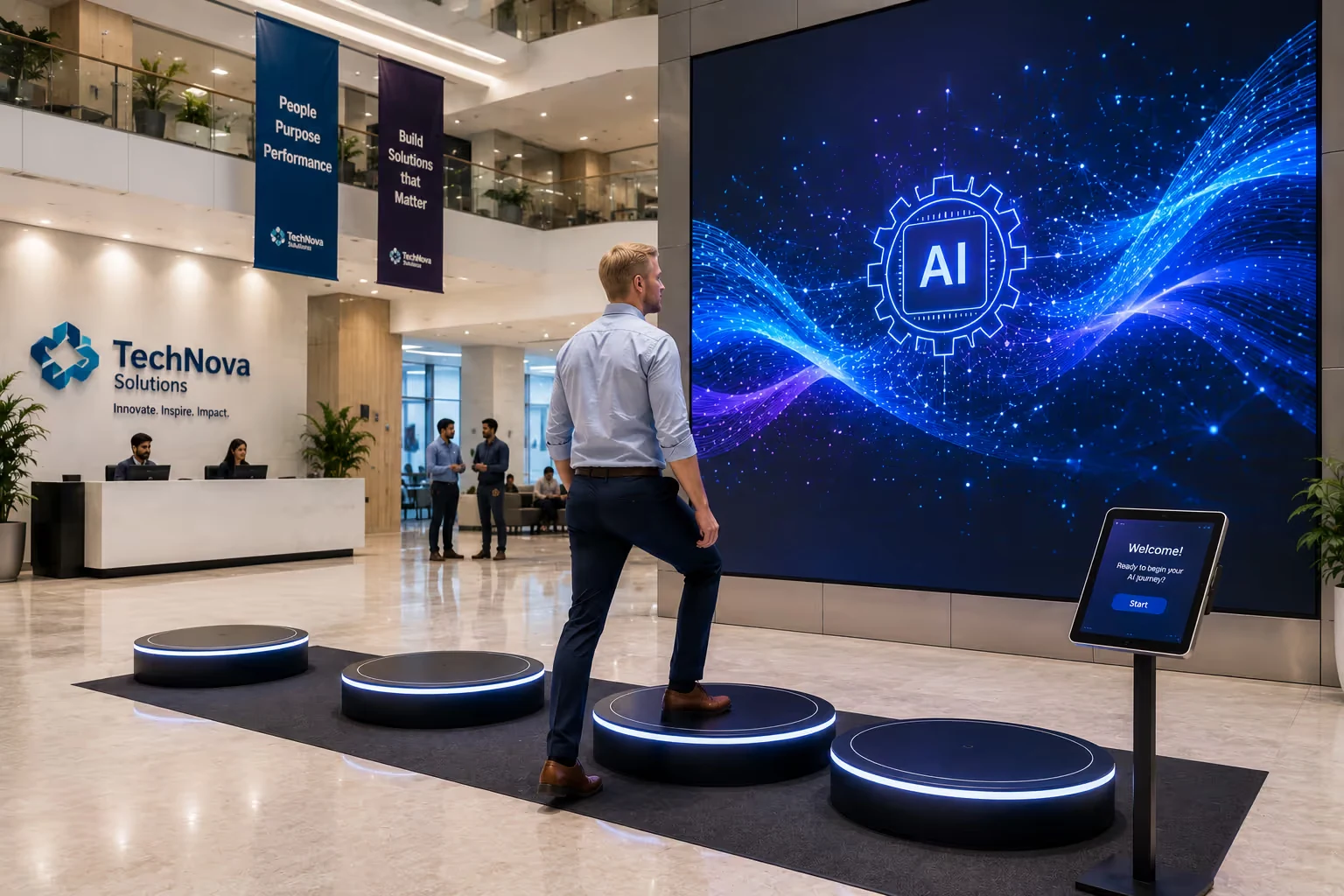
How a Big-4 consulting firm assessed AI maturity for 10,000+ employees with gamified podiums
How a Big-4 consulting firm assessed the AI maturity of over 10,000 employees with floor podium quizzes in its offices, sorting staff into four maturity bands.
Read the article Insight · VR training
The 3-minute rule: running high-throughput VR and hologram displays at corporate events
How a professional services firm ran VR and hologram fans at an internal summit, using 3-minute experiences to serve about 15 people per headset an hour.
Read the article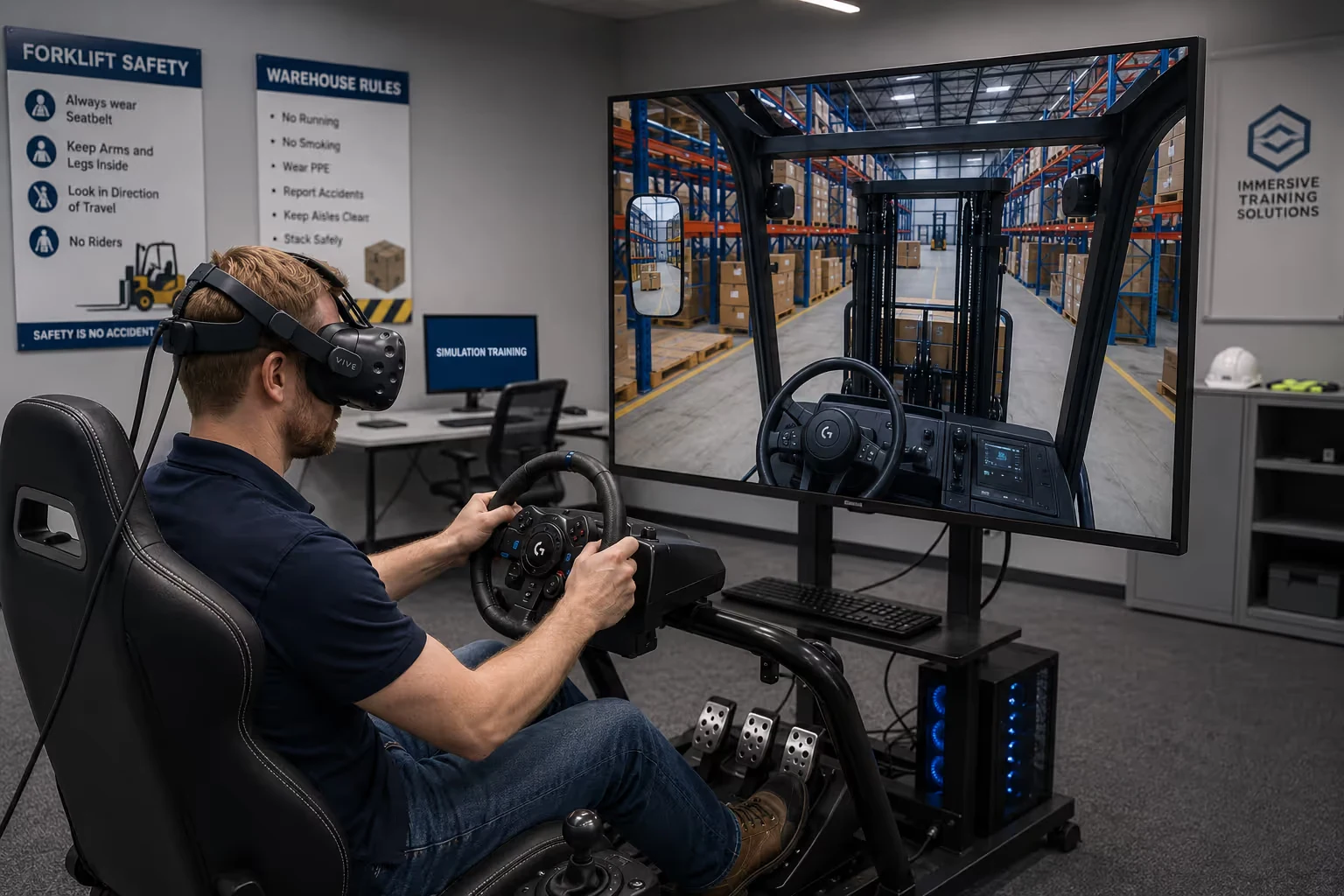 Insight · VR training
How a training institution uses high-fidelity VR for forklift operator training
How an OSHA-certified training institution built a PC-tethered VR forklift simulator with real steering and pedals, an instructor panel and 360-degree replay.
Read the article