

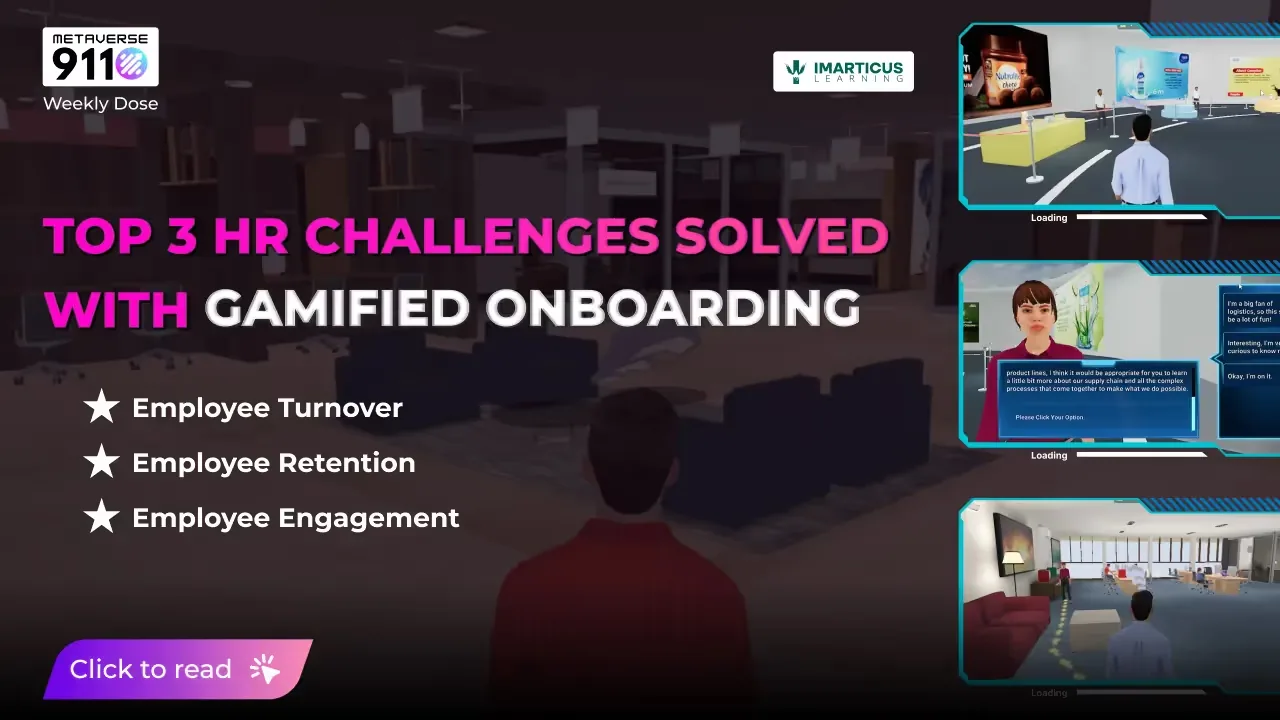
New hires go through paperwork, training modules and introductions in their first weeks. When that process is tedious and slow, they disengage and never really understand the company's culture. In a LinkedIn Live session, "Level Up Your HR Strategy: Boost Employee Retention with Gamified Learning", we discussed how HR leaders can deal with this.
Three onboarding problems HR leaders face
1. Turnover that is hard to predict
HR teams often learn that a new hire is unhappy only when they resign. By then it is too late to act.
2. Inconsistent onboarding for remote employees
With more people working remotely, new hires in different places can have very different first weeks. Without a standard process, remote joiners feel disconnected.
3. Low engagement
Traditional onboarding struggles to hold attention. Long sessions and forms do little to build genuine engagement.
How gamification addresses each one
Gamification is not new. Chess is an early example: it taught the manoeuvres of war without taking anyone to the battlefield. Applied to onboarding, the same idea turns information into tasks, challenges and rewards.
Spotting turnover risk early
Game-based onboarding shows HR teams more about each employee's motivations and preferences. Imarticus Learning's onboarding solution, for example, lets HR leaders build game-based modules, sometimes set in a virtual replica of the office, where new hires explore the brand story and products. The time each hire spends on the platform feeds reports and analytics that help predict behaviour, such as churn.
One standard experience for remote hires
A gamified programme gives every new hire, wherever they are, the same consistent and engaging experience from day one.
Higher participation
Games make learning more enjoyable, which drives higher participation and better retention of what is taught.
Example: Zydus Wellness
Zydus Wellness onboards its employees through gamified environments. The experience was built with constant feedback from teams and new hires, who evaluated each version and shaped what was added next. It has three main elements:
- An interactive mascot: Zylo, the company mascot, guides new hires through the brand and its product range.
- Gamified modules: each learning module is a game, and employees collect coins for completing tasks.
- Leaderboards and perks: leaderboards create friendly competition, and HR leaders can track performance and offer perks for reaching targets.
Employees reported feeling more engaged and motivated, and the game elements helped them retain information more effectively. Saurabh Sharma, Head, Corporate HR, L&OD at Zydus Wellness, spoke about the company's experience with gamified solutions in an interview with us.
How to apply it in your organisation
- Start with the content every joiner must learn: company story, products, policies and safety basics.
- Turn each module into a task with a clear reward, such as coins or points.
- Add a leaderboard and decide which targets earn perks.
- Use the platform's data on time spent and progress to spot joiners who are falling behind.
- Ask new hires for feedback after each cohort and build what they respond to, as Zydus Wellness did.
Next step
If you want to build a gamified onboarding programme for your plants or offices, talk to our team about our gamified learning and employee onboarding solutions.
First published on the Metaverse911 blog.
Frequently asked questions
Which onboarding problems does gamified onboarding solve for HR leaders?
Gamified onboarding addresses three common problems HR leaders face. First, turnover that is hard to predict, because HR often learns a new hire is unhappy only when they resign. Second, inconsistent onboarding for remote employees in different locations. Third, low engagement, since long sessions and forms do little to hold attention or build genuine engagement.
How can gamified onboarding help predict employee turnover?
Gamified onboarding shows HR teams more about each employee's motivations and preferences. Imarticus Learning's onboarding solution, for example, lets HR leaders build game-based modules, sometimes set in a virtual replica of the office. The time each new hire spends on the platform feeds reports and analytics that help predict behaviour such as churn.
How does Zydus Wellness use gamified onboarding?
Zydus Wellness onboards employees through gamified environments with three main elements. Zylo, the company mascot, guides new hires through the brand and its products. Each learning module is a game where employees collect coins for completing tasks. Leaderboards create friendly competition, and HR leaders can track performance and offer perks for reaching targets.
What results did Zydus Wellness see from gamified onboarding?
Zydus Wellness employees reported feeling more engaged and motivated after going through gamified onboarding, and the game elements helped them retain information more effectively. The experience was built with constant feedback from teams and new hires, who evaluated each version and shaped what was added next, so the programme kept improving over time.
How can a company start a gamified onboarding programme?
To start gamified onboarding, begin with the content every joiner must learn, such as the company story, products, policies and safety basics. Turn each module into a task with a reward like coins or points, add a leaderboard with perks for targets, use platform data to spot joiners falling behind, and gather feedback after each cohort.
More from the blog
Blog · Training & L&DFixing employee onboarding: a practical guide for HR leaders
Why traditional onboarding loses new hires, and a practical seven-step plan for HR leaders to run interactive virtual onboarding, with Kotak's example.
Read the postBlog · Training & L&DVirtual dojo rooms: better manufacturing training with immersive technology
How virtual dojo rooms give manufacturing trainees realistic, risk-free practice without floor space limits, and where the return on investment comes from.
Read the postBlog · Training & L&DHow HR leaders can use virtual worlds for hiring, engagement and training
How HR leaders can use virtual worlds for recruitment, engagement, retention, remote collaboration and training, with survey data and company examples.
Read the post