

Industry insight: this article describes how the technology is used in the industry. It is not a Metaverse911 client project. See our case studies for our own work.
The situation: branches have to offer what an app cannot
Mobile banking has changed what customers expect from a branch. A teller window, a queue token and a wall of posters no longer hold the attention of a digitally native customer, who walks past printed offers the way they scroll past banner ads. The branch now needs to create a personal moment that an app screen cannot.
The bank in this example, known for a digital-first approach to customer experience, saw this early. Its product range was changing quickly, and it wanted a branch centrepiece that did more than display a rate card: an interactive brand ambassador that could explain its services in a way customers warm to.
What they did: a celebrity AI avatar in the lobby
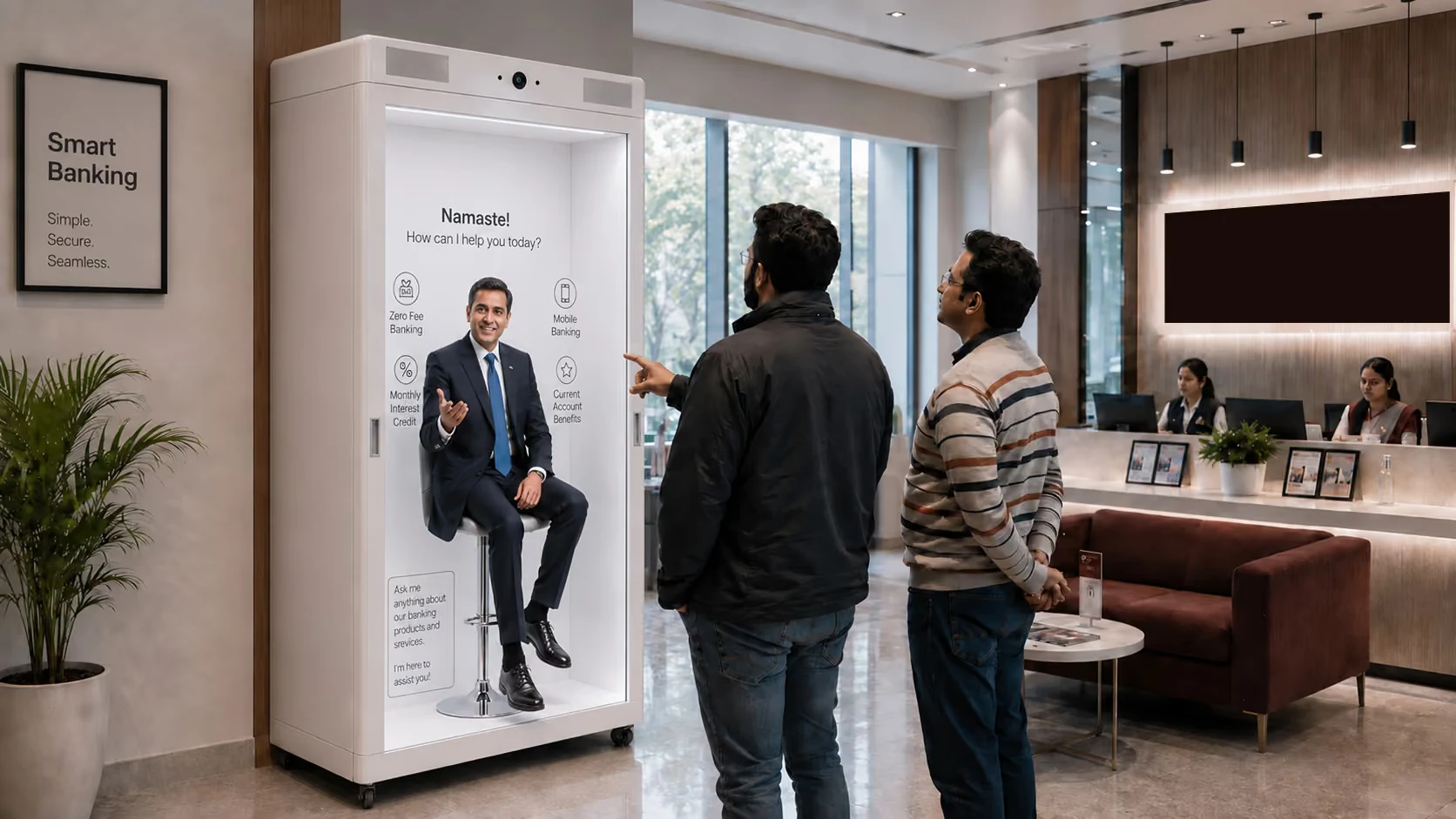
The bank installed a life-size AI hologram avatar, which it calls its Holographic Extended Reality (HXR) device, at its Juhu branch in Mumbai. It was not a one-off launch event but a permanent, customer-facing installation in the branch.
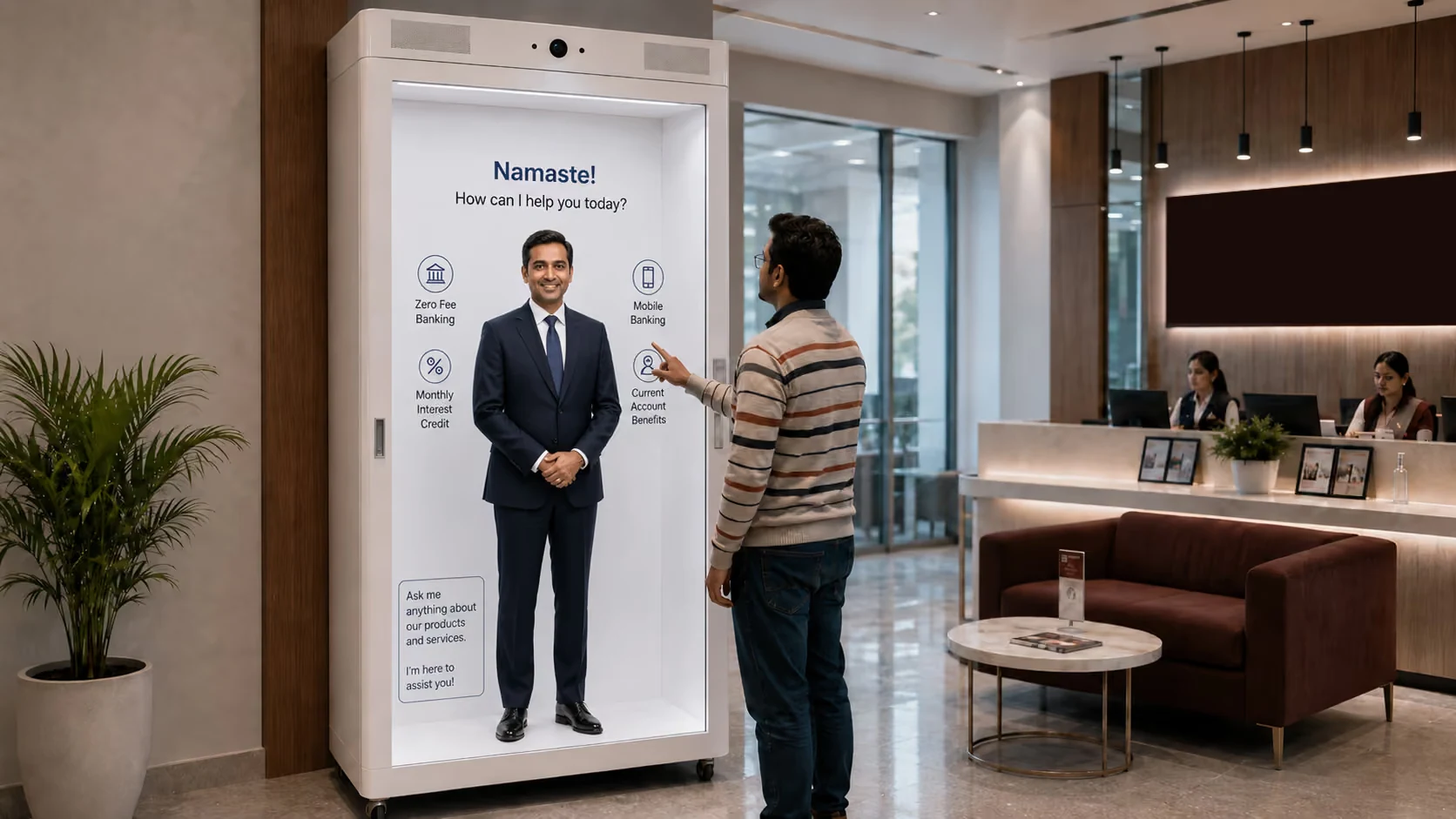
Customers walk up and interact by touch with an AI-powered avatar of Amitabh Bachchan, who explains services including:
- Zero Fee Banking
- Monthly Interest Credits
- Mobile Banking
- Current Account BRAVO
The bank plans to roll the format out to high-footfall branches and strategic locations across the country.
How it works
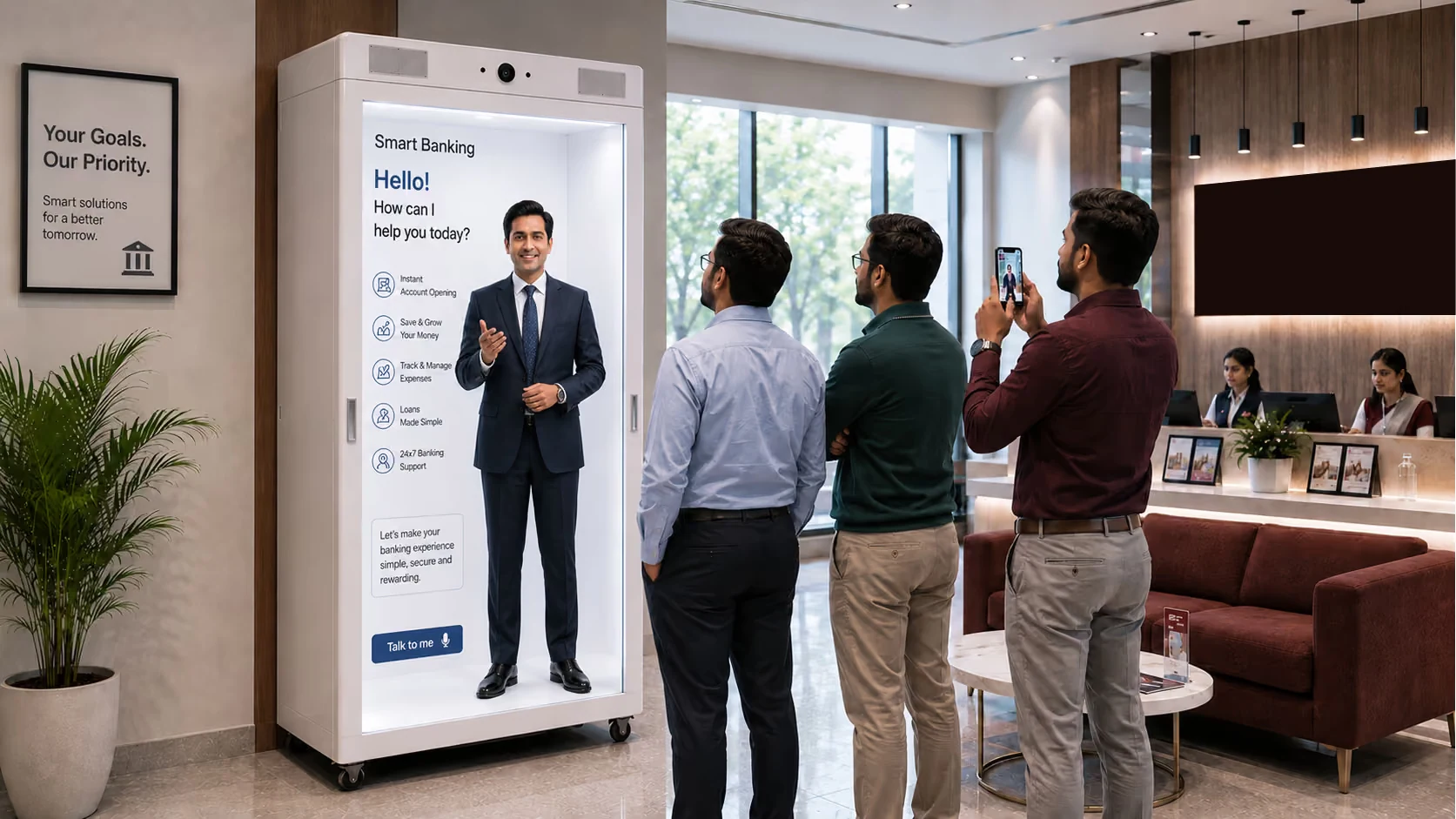
The setup combines three things: a bright volumetric display, an AI content and conversation layer, and high-quality 3D content.
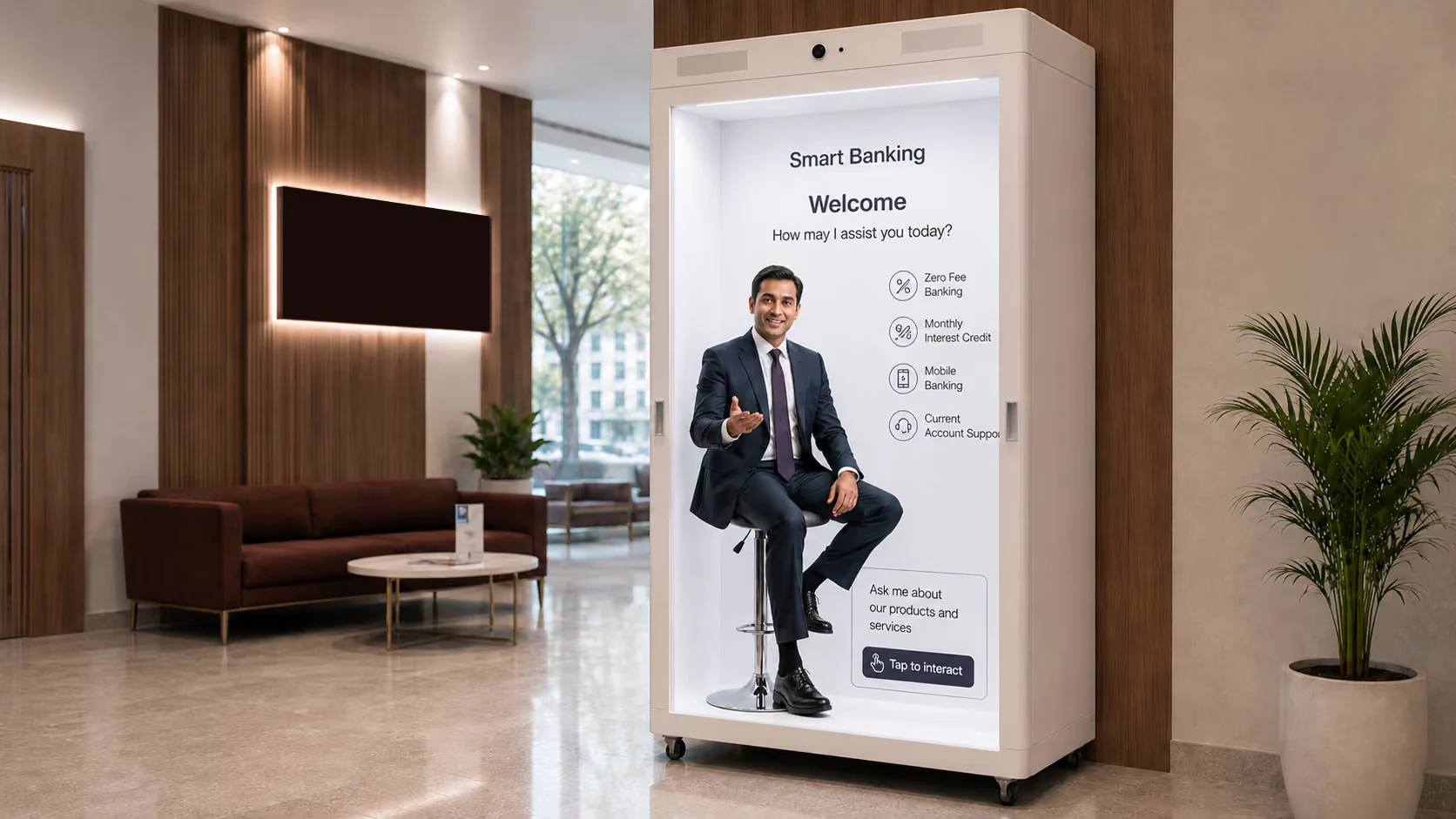
The display is a life-size HoloBox-class unit built for a busy branch floor. It uses light-field technology and high-brightness LED arrays to show a photorealistic figure that appears to stand inside the glass. It is bright enough to stay clear under branch lighting and sunlight through the storefront, so it can be seen across the lobby.
The avatar's likeness, voice, expressions and mannerisms are captured in a studio. An AI layer then drives the avatar using a scripted library of the bank's products and answers. Content is managed centrally, so the marketing team can change which services are featured, update seasonal campaigns and keep the message the same in every branch using the format.
The customer journey has four steps:
- Stop: the bright, life-size avatar catches the eye of customers who would otherwise head straight for the queue.
- Explore: the avatar introduces the bank's main products in person rather than as a printed list.
- Interact: the touch screen lets customers choose a service, look at the details and get answers at their own pace.
- Act: the experience ends with a clear next step, such as opening a product, downloading the app or speaking to a manager.
Results
The source does not publish figures for this branch. It describes the benefits by team.
Branch operations: older corporate holograms needed a fragile stage build and days of calibration. A standalone volumetric unit rolls into the lobby and runs on standard power and a stable internet line. It answers routine product questions, which frees staff for account openings and advisory conversations. It also fits smaller branch layouts.
Marketing: getting a celebrity ambassador into branches in person is difficult and expensive. An AI avatar gives the ambassador a presence in many branches at once, with the same message everywhere. The novelty also drives social sharing and press coverage beyond the branch.
Digital banking: because the unit is interactive, it can send customers straight into digital onboarding through a QR handoff, an app download or a product sign-up. A marketing display becomes a way to acquire customers.
The source lists the measures banks typically track for this kind of installation: customer dwell time in the branch, engagement and innovation scores compared with branches using static signage, the cost of ambassador appearances, and earned media and social reach.
What it means for manufacturers
The problem the bank solved is common in manufacturing too. Showrooms, dealer outlets and exhibition stands are full of printed product sheets and static screens that visitors ignore. A life-size, interactive presenter can stop people, explain a product range consistently and hand them to a salesperson or a sign-up form.
The useful lessons are to treat the display as permanent infrastructure rather than a one-day stunt, manage content centrally so every location says the same thing, and design the experience to end in a clear next step.
Frequently asked questions
Is an AI hologram avatar suitable for smaller branches?
Yes. A standalone volumetric unit does not need a stage build, so it fits smaller layouts that could not take older hologram setups.
What does the hardware need, and is it hard to set up?
It needs standard power and a stable internet connection. The unit rolls into place and runs as part of the branch, without the days of calibration older systems required.
How is the content updated?
Centrally. The marketing team can change featured services and seasonal campaigns, and the update applies to every branch running the format.
How do you measure whether it is working?
Typical measures are dwell time in the branch, customer engagement and brand innovation scores, the number of customers handed into digital onboarding, and earned media and social reach.
Which bank products does the Amitabh Bachchan AI hologram avatar explain in the Juhu branch?
In the bank's Juhu branch in Mumbai, the life-size, touch-enabled AI hologram avatar of Amitabh Bachchan explains services including Zero Fee Banking, Monthly Interest Credits, Mobile Banking and Current Account BRAVO. Customers choose a service on the touch screen and get the details at their own pace. The bank calls the unit its Holographic Extended Reality (HXR) device and plans to roll it out to more high-footfall branches.
More on holobox use cases
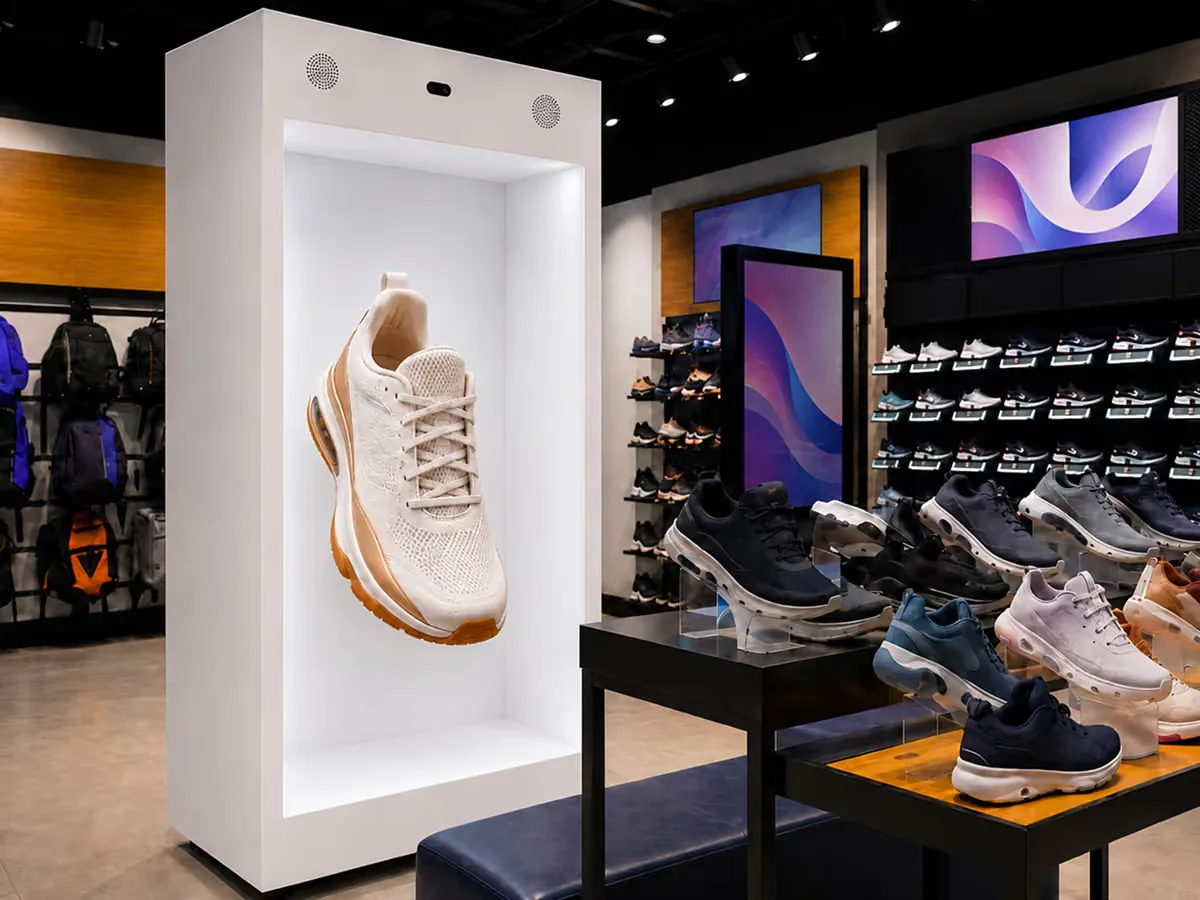 Insight · HoloBox
How a global footwear brand uses a hologram display in its flagship store
How a global footwear brand put a permanent hologram display in its Manhattan Beach flagship to show shoe technology in 3D and link shoppers to checkout.
Read the article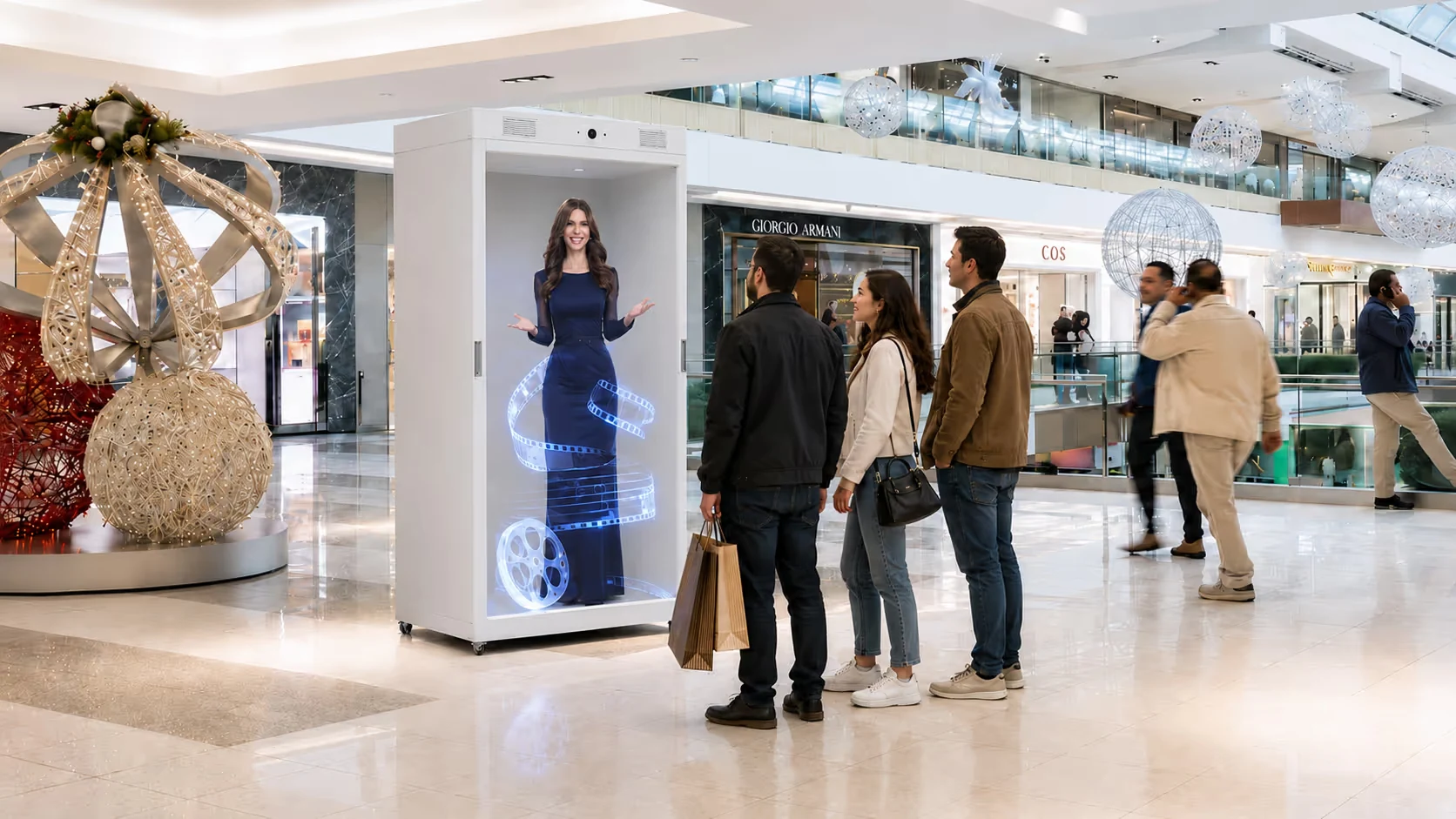 Insight · HoloBox
How a US mall operator built a 30-mall hologram advertising network
How the largest US mall operator built a permanent hologram advertising network across 30 malls, with a cloud CMS, touch screens and QR codes for shoppers.
Read the article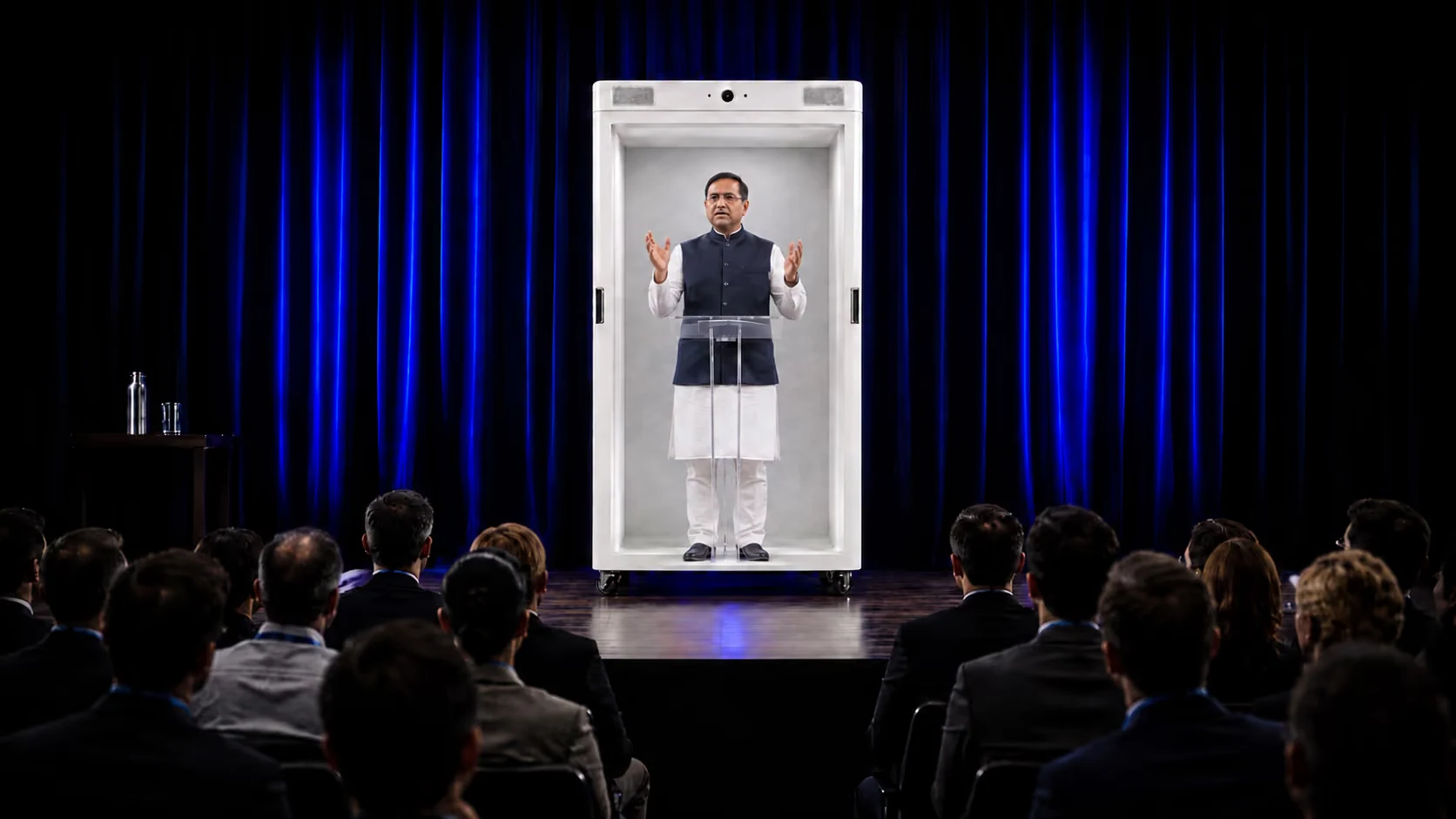 Insight · HoloBox
How holograms are used at live events in India, from 2014 to HoloBox
How hologram presence at Indian events moved from 2014 election stage rigs to plug-and-play HoloBox units, and how they work for conferences and summits today.
Read the article