


Industry insight: this article describes how the technology is used in the industry. It is not a Metaverse911 client project. See our case studies for our own work.
The situation: a front desk under pressure
Hotel check-in has long been a single transaction: queue, paperwork, key. It often comes at the end of a long journey, delivered by a front-desk team stretched across early starts, late nights and unpredictable arrival peaks.
Travellers now expect the convenience of their phone and the warmth of a concierge at the same time. Owners and operations directors must control labour costs, keep service consistent across a growing portfolio and make arrivals memorable enough to justify premium rates. Another self-service kiosk does not solve that. The industry needed a way to make automation feel human.
What they did: an AI receptionist with a human backup
A Nordic hotel operator, part of the wider BWH Hotels group, launched an AI-powered holographic receptionist at its hotel in Lolland, Denmark, going live on 21 November. It worked with three partners:
- Holoconnects, the holographic display maker, which supplied the HoloBox.
- RAVATAR, the AI avatar platform, which supplied the conversational digital human.
- Mews, the cloud hospitality system, which lets the avatar complete real tasks.
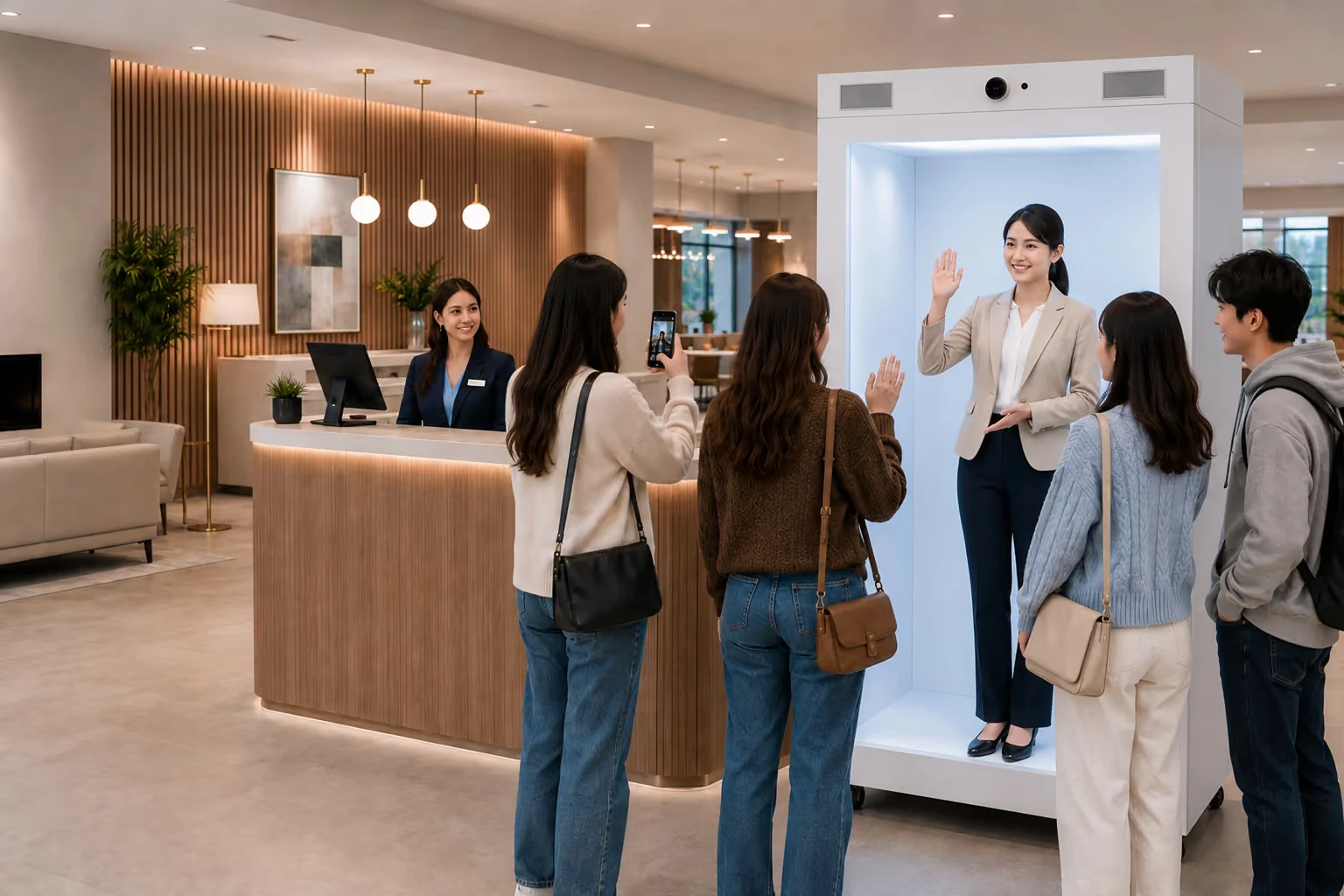
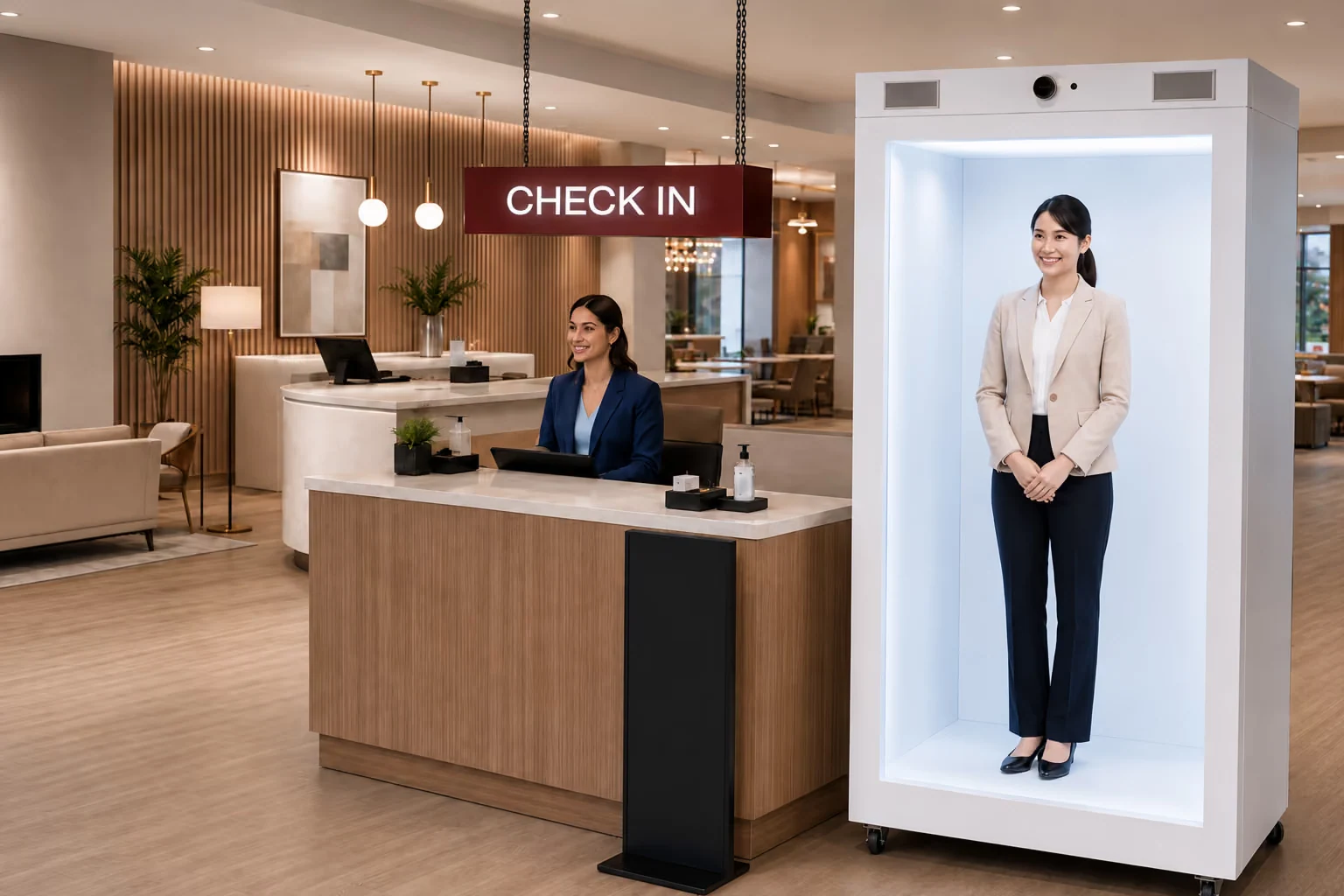
The result is a life-size, 4K holographic greeter that guests simply talk to. It checks guests in and out, generates room keys, books extra rooms, arranges dinner and spa reservations, and answers everyday questions. The operator became the first hotel operator to use the HoloBox at the reception desk. The launch was set up as an early pilot to gather feedback from guests and staff and to add features over time.
How it works
Older corporate "holograms" used a scaled-up version of the 19th-century Pepper's Ghost trick, reflecting a projected image onto an angled transparent foil. That needed controlled lighting, heavy rigging and days of calibration, which does not suit a working hotel lobby.
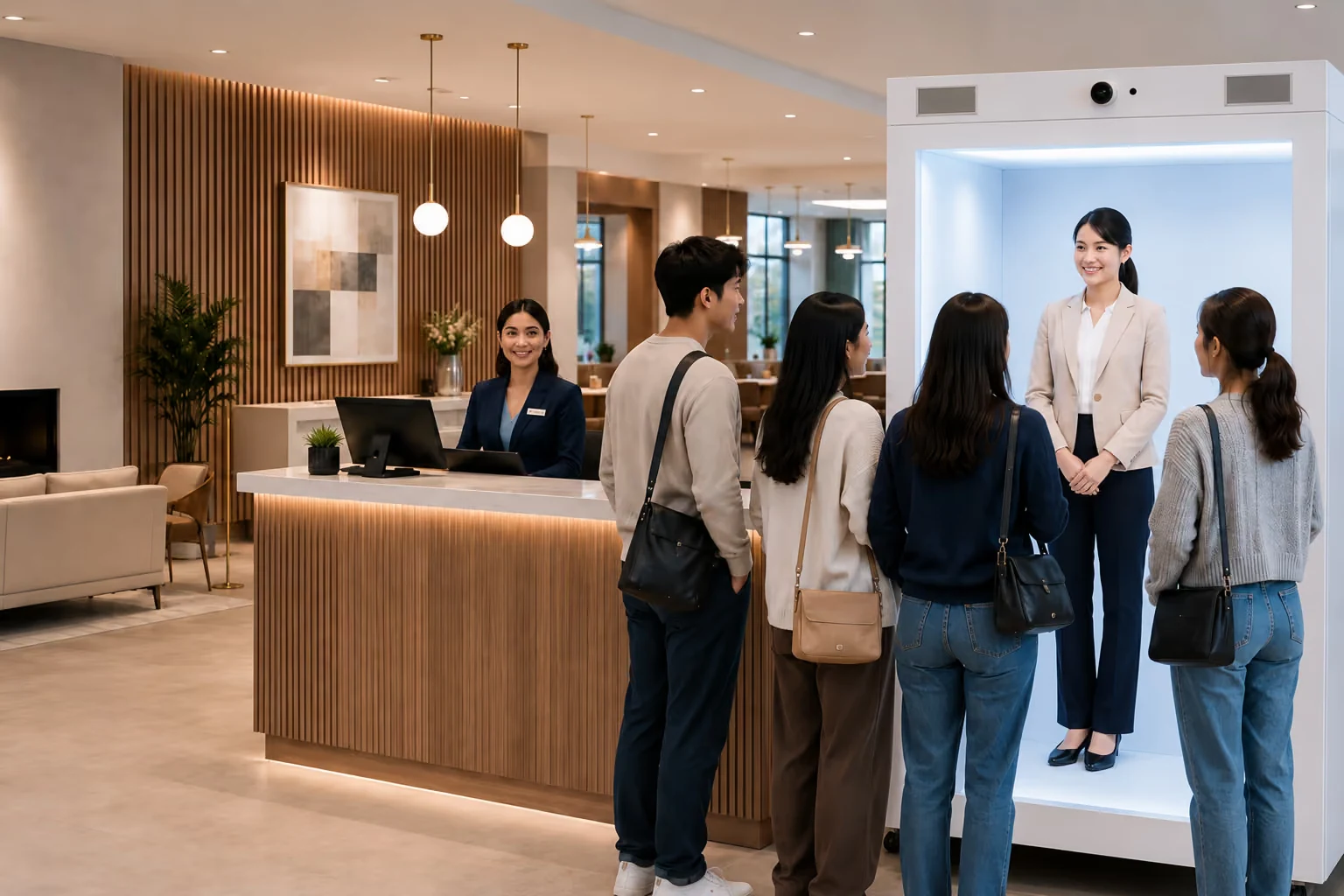
The HoloBox is a standalone, self-contained transparent enclosure, about two metres tall. A high-brightness display inside shows a life-size, 4K, lifelike 3D figure behind glass. There is no stage, foil or truss. The box is placed in the lobby and connected to power and a stable internet link.
Service runs on two layers:
- The AI avatar handles routine arrivals from start to finish in natural spoken conversation. Because it is linked to Mews, it can actually process a check-in, issue a digital key or take a booking.
- A live member of staff takes over when a request is beyond the avatar. The guest connects to a real employee based remotely in Oslo, who appears as a life-size 4K hologram in the same box.
This means one remote team can support reception at several hotels, stepping in only when a person is really needed.
Results
The operator has not published performance figures. The source describes the expected benefits by team and gives the measures operators typically track.
Front office and operations: night shifts, absences and arrival peaks no longer set the headcount at each property. The AI handles routine check-ins, check-outs and keys, and a central team of the best multilingual staff covers escalations across several hotels.
Guest experience and brand: every guest meets the same polished welcome, which is hard to achieve across managed and franchised hotels. The hologram also draws press coverage and social sharing.
Revenue: because the avatar is connected to the booking system and already in conversation with the guest, it can offer a room upgrade, a spa slot or a dinner booking at the right moment.
Typical measures for this kind of deployment are front-desk labour cost, especially on night shifts and off-peak hours, arrival experience scores, conversion on upgrades and add-ons, and earned media and social reach. These are industry measures, not figures published by the operator.
What it means for manufacturers
The model of an AI avatar for routine questions, with a live expert who can appear in the same box when needed, applies well beyond hotels. A manufacturer could use it at a plant reception, a visitor centre or an exhibition stand: the avatar handles common questions and registration, and a product specialist joins remotely as a hologram when a visitor needs more.
The key lesson is integration. The hotel avatar is useful because it is connected to the system that does the work. A manufacturer's avatar would be most useful when connected to its visitor management, lead capture or CRM systems.
Frequently asked questions
Does hologram check-in suit smaller hotels?
Yes. It suits smaller boutique hotels and regional chains as well as large properties, because the HoloBox is a self-contained unit that needs only power and an internet connection.
How long does deployment take?
A holographic concierge can typically be deployed within a few weeks.
What happens when the AI cannot answer a question?
The guest connects to a live member of staff, based remotely in Oslo in this case, who appears as a life-size hologram in the same box.
How does it complete real tasks such as check-in?
It is integrated with the hotel's property management system, Mews, so it can process check-ins, issue digital keys and take bookings.
Where does the return come from?
From lower front-desk labour costs and higher conversion on upgrades and add-ons, with engagement gains visible straight away.
What should you look for in a technology partner?
Proven delivery of the display hardware and reliable, low-latency streaming for the live human hologram.
More on holobox use cases
 Insight · HoloBox
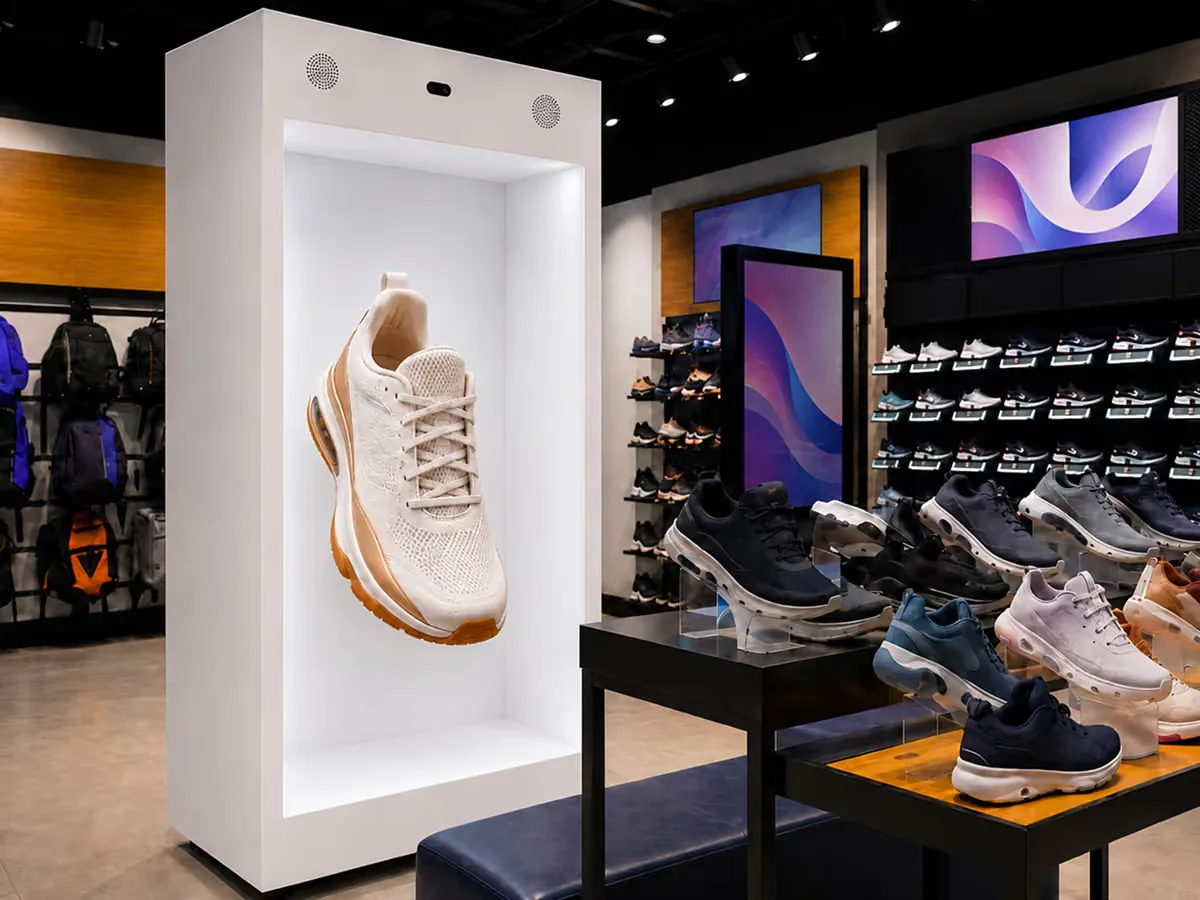
How a global footwear brand uses a hologram display in its flagship store
How a global footwear brand put a permanent hologram display in its Manhattan Beach flagship to show shoe technology in 3D and link shoppers to checkout.
Read the article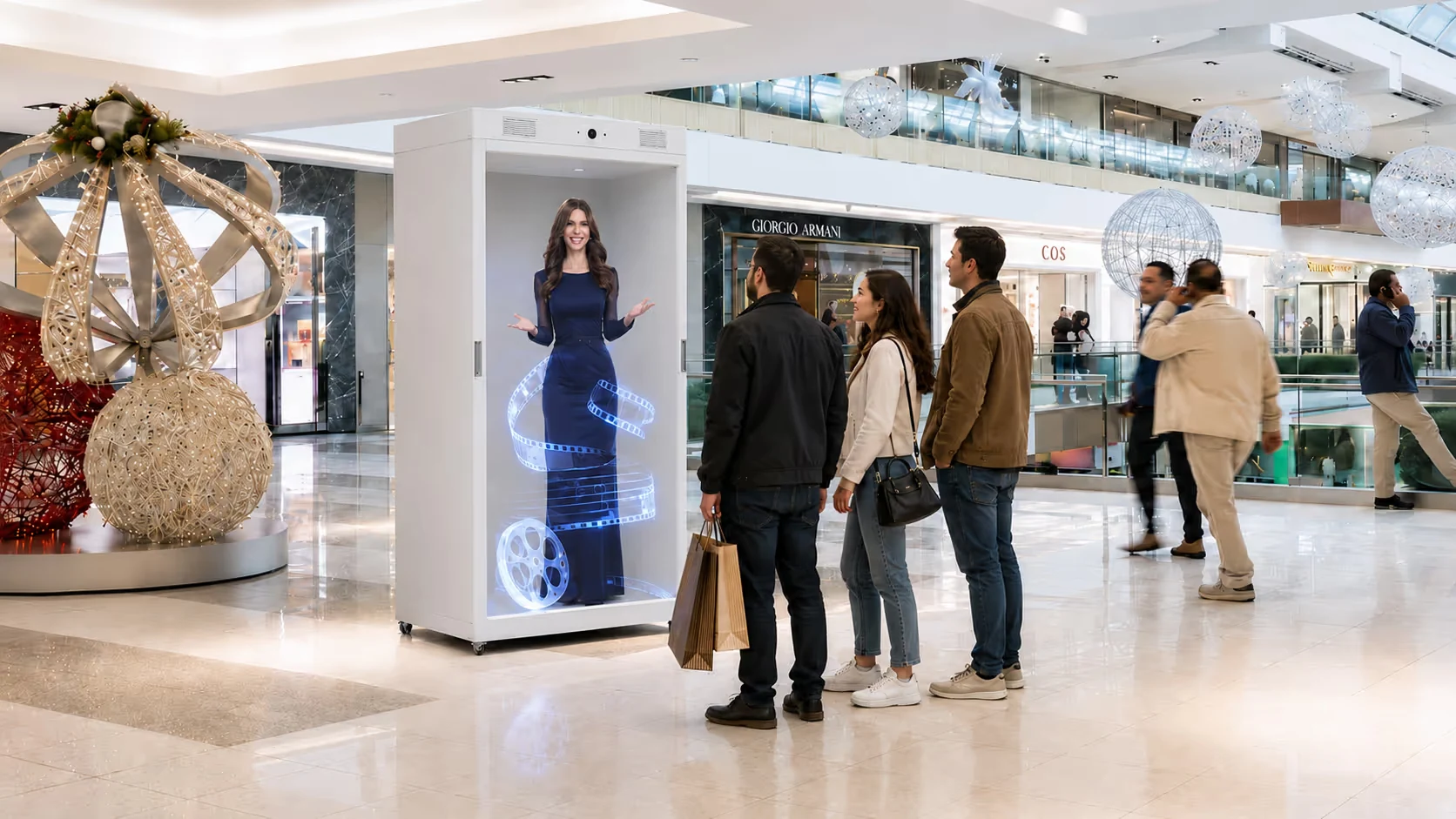 Insight · HoloBox
How a US mall operator built a 30-mall hologram advertising network
How the largest US mall operator built a permanent hologram advertising network across 30 malls, with a cloud CMS, touch screens and QR codes for shoppers.
Read the article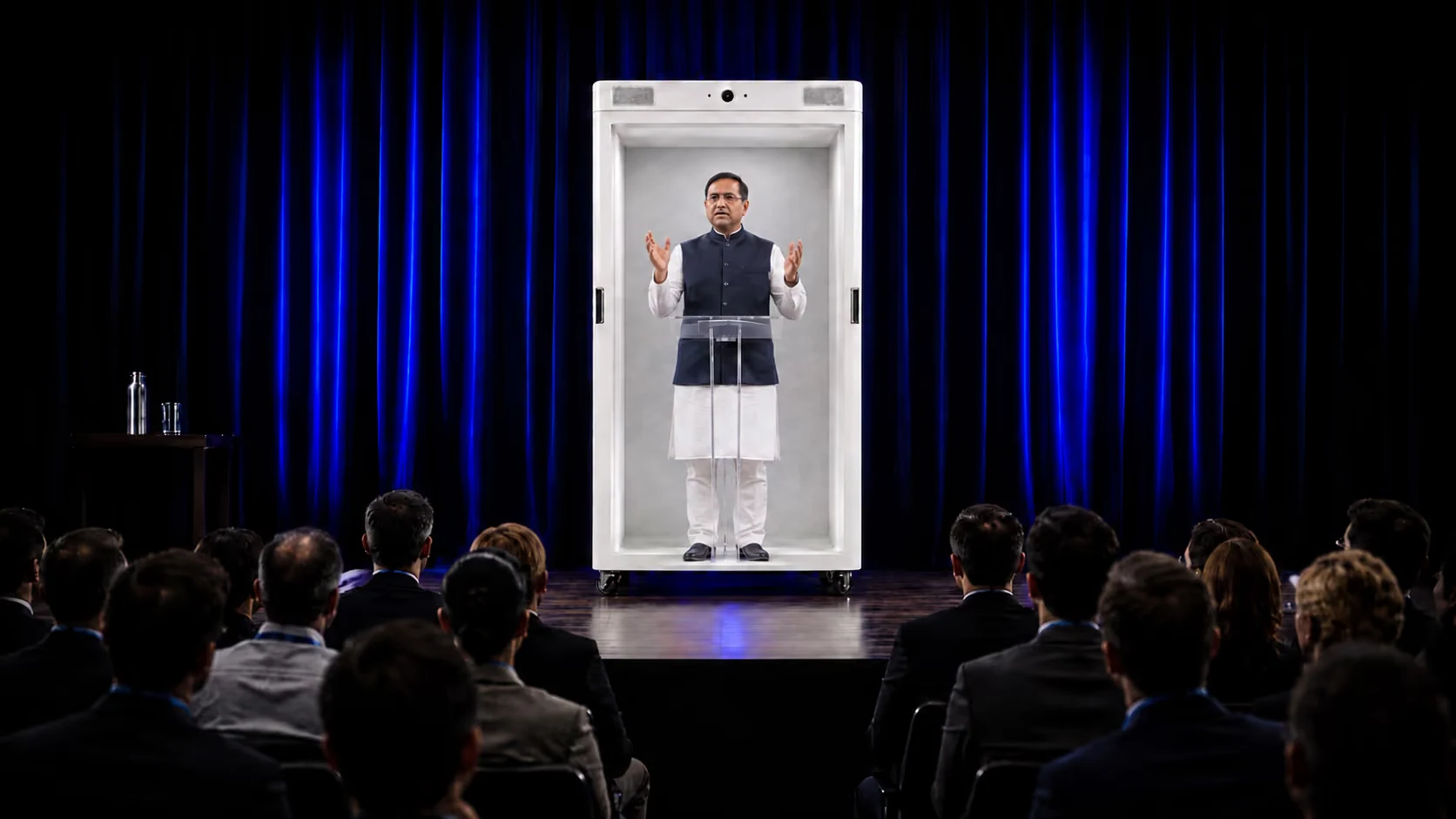 Insight · HoloBox
How holograms are used at live events in India, from 2014 to HoloBox
How hologram presence at Indian events moved from 2014 election stage rigs to plug-and-play HoloBox units, and how they work for conferences and summits today.
Read the article