


Industry insight: this article describes how the technology is used in the industry. It is not a Metaverse911 client project. See our case studies for our own work.
The situation: a busy lobby and a stretched front desk
For decades, a hotel lobby's job was simple: a place to check in, perhaps past some artwork or a screen showing the weather. Travellers now expect an engaging welcome from the moment they walk in. General managers and brand experience directors are expected to make the lobby a memorable, shareable first impression for the whole stay.
In a large hotel, the lobby also carries a practical load. Thousands of guests need information as they find their way around a sprawling complex, and much of it lands on the front desk as repeated questions about pool hours, restaurant locations or taxis.
What they did: an AI concierge in the lobby
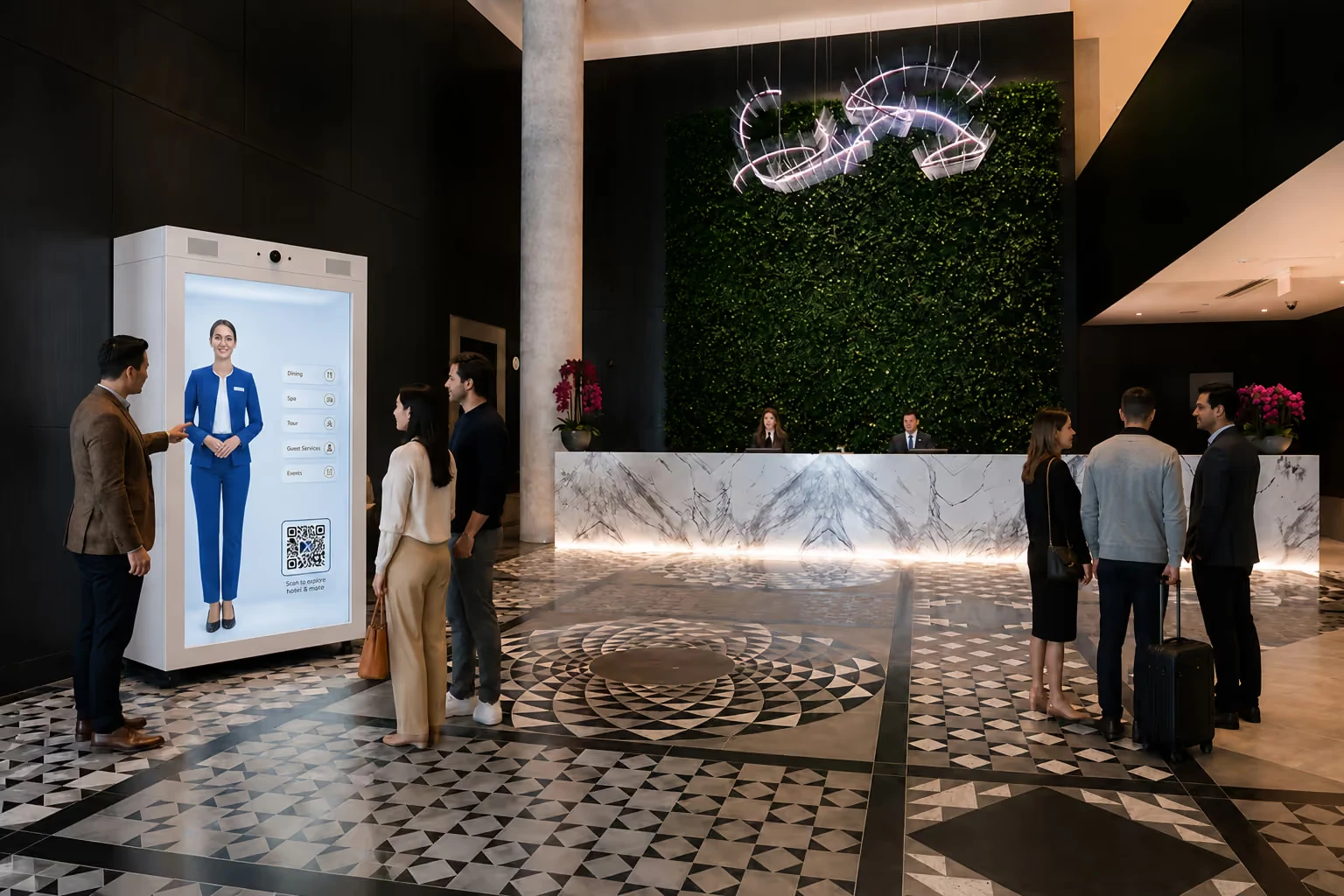
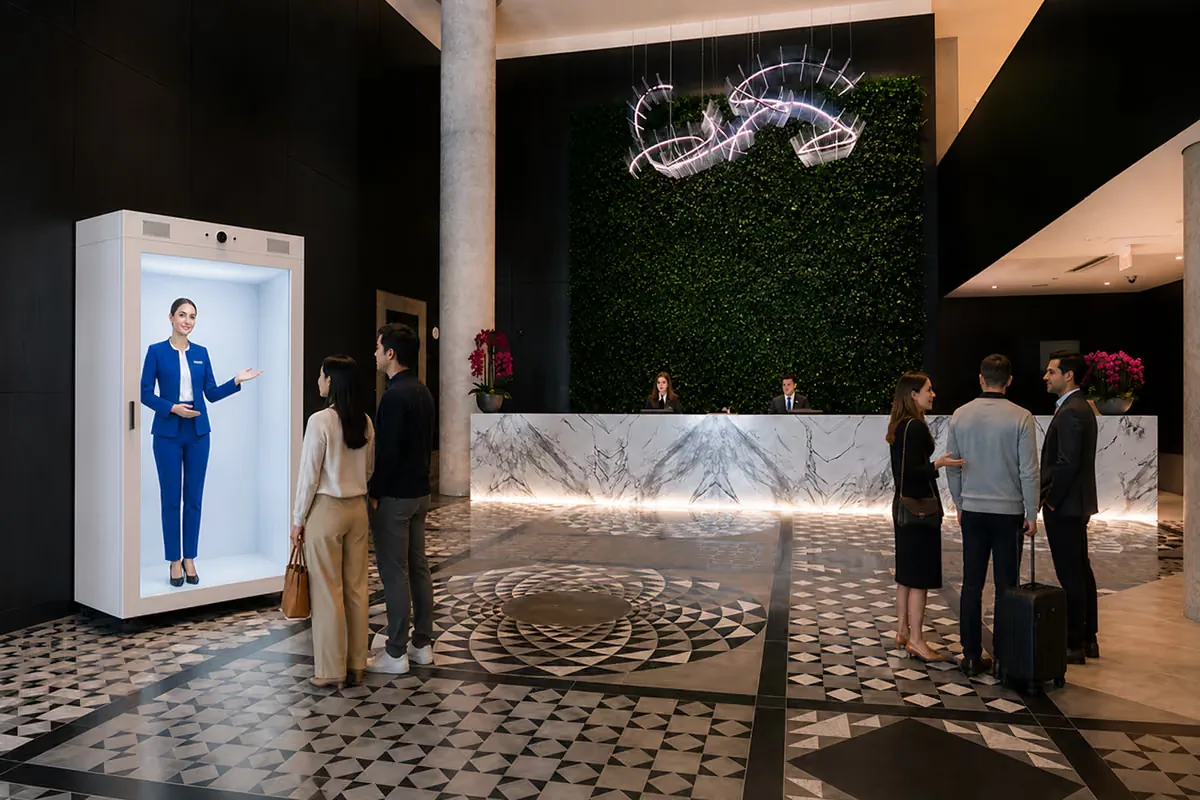
A large hotel known for its scale and its focus on guest experience deployed a life-size interactive 3D hologram in its main lobby. Guests talk to a lifelike, AI-driven digital concierge that gives them information instantly. The hotel used it as a working tool to answer common questions and take pressure off the front desk, not as a one-off attraction.
Since then, hotel groups have moved from one-off flagship installations to standalone volumetric displays placed in high-traffic areas. These units are sharper, need far less setup and allow a two-way conversation.
How it works
From foil illusions to standalone units
Early corporate holograms used a scaled-up version of the 19th-century "Pepper's Ghost" illusion. A projector beamed video onto a hidden reflective surface, which bounced it onto a transparent Mylar foil set at 45 degrees. It needed exact lighting, heavy steel trusses and days of calibration. Today's standalone units use light-field technology and dense, high-brightness LED arrays behind a clear, glass-like front.
The AI layer
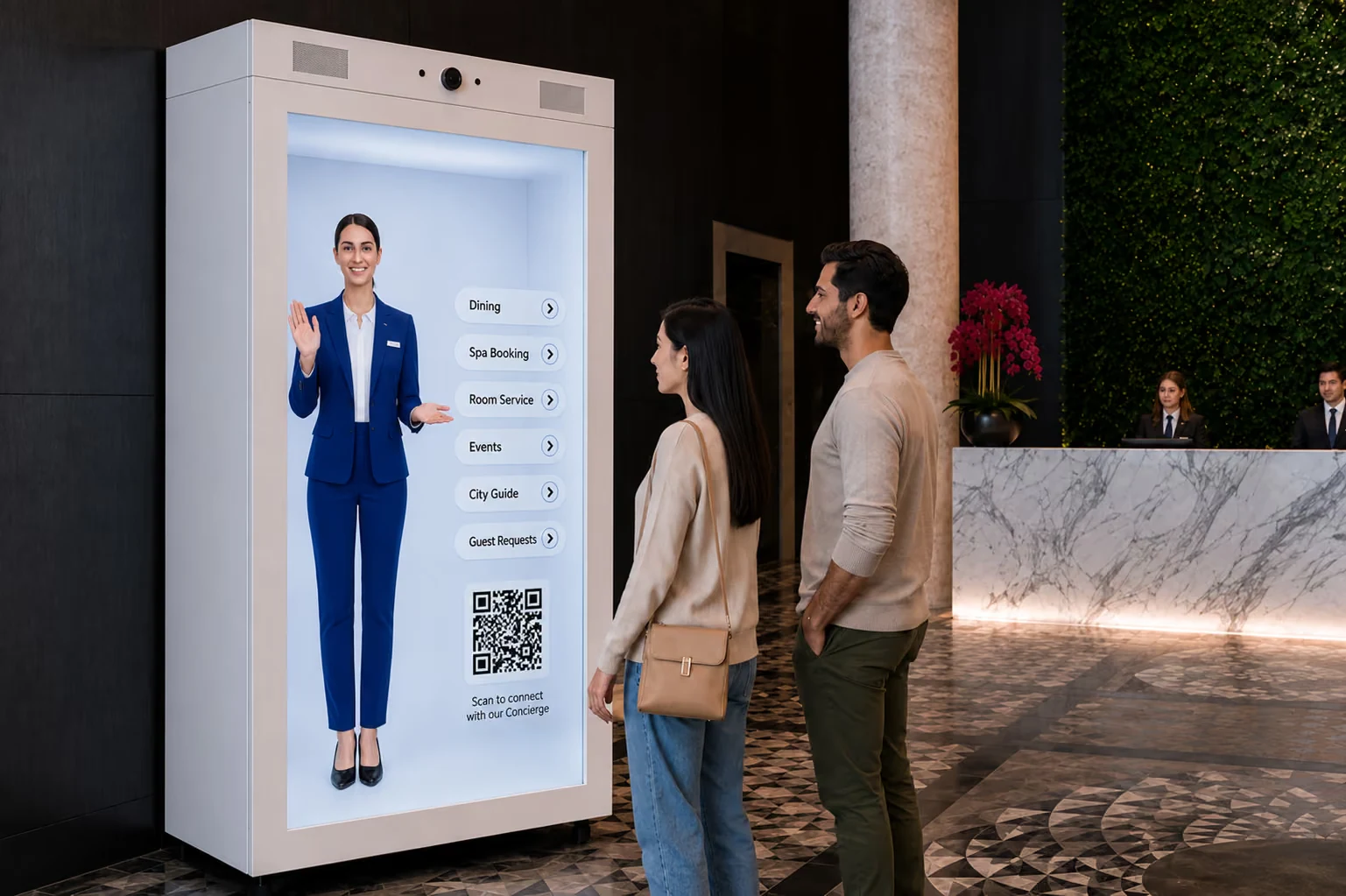
An AI engine maps a digital human's voice, expressions and body language to a database of hotel information, local attractions and service standards, and drives the avatar live. The unit has two-way audio with discreet microphones and cameras, so the avatar can see and hear arriving guests. It understands questions using natural language processing and answers aloud in real time.
One AI engine can serve several units at once, so a large resort or a whole chain gives the same branded information everywhere. A unit can be wheeled into the busiest part of the lobby, plugged into standard power and a wired internet connection, and running within hours.
Results
The source does not publish figures for this hotel. It describes the benefits by team:
- Front office: the hologram is a 24/7 first point of contact for routine questions, so staff can focus on complex issues, VIP arrivals and personal service.
- Brand and marketing: every guest gets the same welcome, because the avatar never has an off day, and the novelty attracts press and social sharing.
- Revenue: the avatar can suggest the signature restaurant, spa packages or late checkout during the conversation.
The measures hotels typically track for lobby holograms are front-desk queue times at peak check-in and check-out, arrival experience and brand innovation scores, upsell conversion on dining and spa, and earned media and social reach.
What it means for manufacturers
Large plants, corporate campuses and visitor centres have the same problem as a big hotel lobby: many visitors, the same questions, and a reception team that could be doing more useful work. A hologram concierge can welcome visitors, explain safety rules and site layout, and point people to the right building or meeting.
On an exhibition stand, the same setup can greet visitors, answer common product questions and hand serious enquiries to a salesperson. The lesson from hotels is to feed the AI a clear, current knowledge base and let people handle what the avatar cannot.
Frequently asked questions
Is a hologram lobby display suitable for smaller hotels?
Standalone units need only standard power and a wired internet connection and can be running within hours, so they do not require the space or rigging of older foil systems.
How does the AI avatar know what to say?
An AI engine connects the avatar to a database of hotel information, local attractions and service standards. It uses natural language processing to understand each question and answers in real time.
Can one system serve several locations?
Yes. One AI engine can drive several units at once, giving consistent information across a large resort or a hotel chain.
How is success measured?
Typical measures are queue times at the front desk, guest satisfaction scores for arrival, upsell conversion on dining and spa services, and earned media and social reach.
How can manufacturers use a hologram concierge like the one in a hotel lobby?
Manufacturers can use a hologram concierge at large plants, corporate campuses and visitor centres to welcome visitors, explain safety rules and site layout, and point people to the right building or meeting. On an exhibition stand, the same setup can greet visitors, answer common product questions and hand serious enquiries to a salesperson, freeing reception and sales staff for more useful work.
More on holobox use cases
 Insight · HoloBox
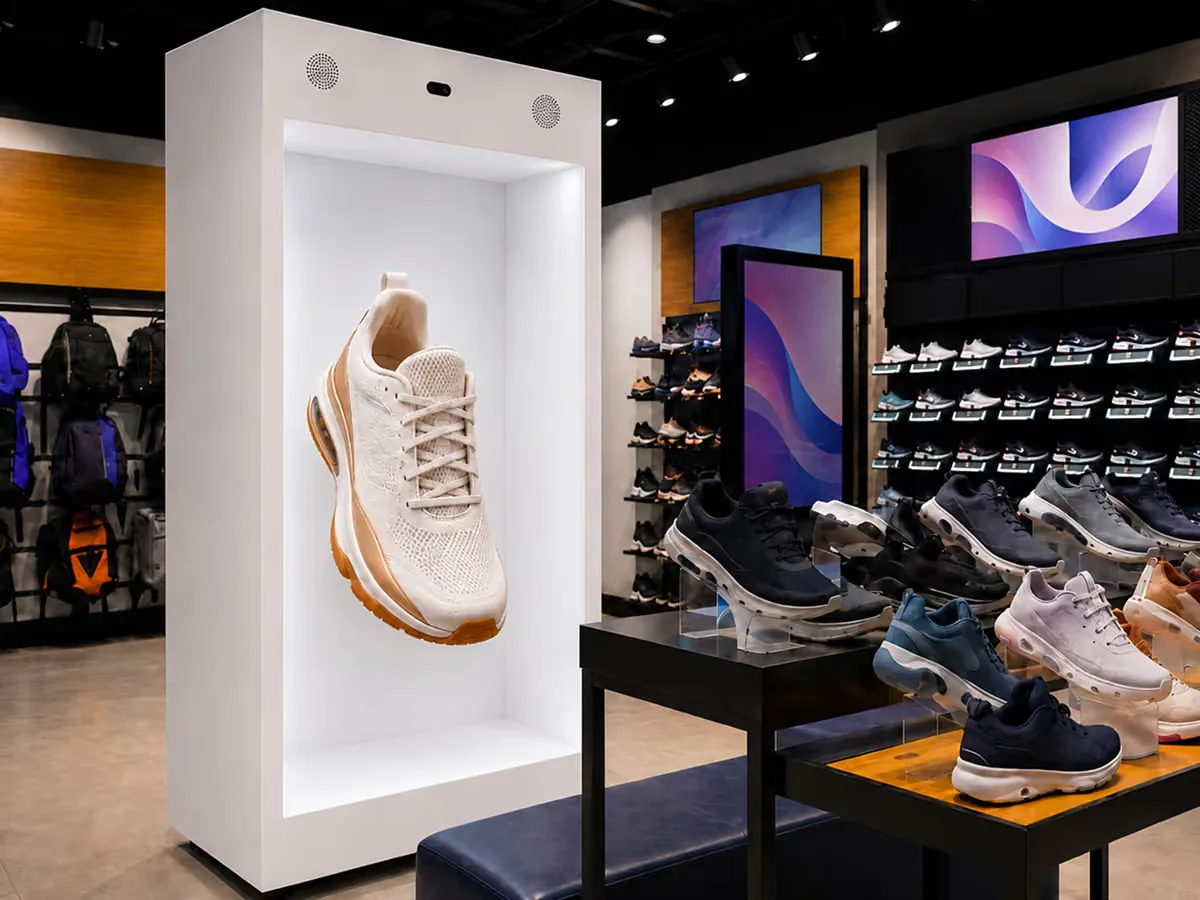
How a global footwear brand uses a hologram display in its flagship store
How a global footwear brand put a permanent hologram display in its Manhattan Beach flagship to show shoe technology in 3D and link shoppers to checkout.
Read the article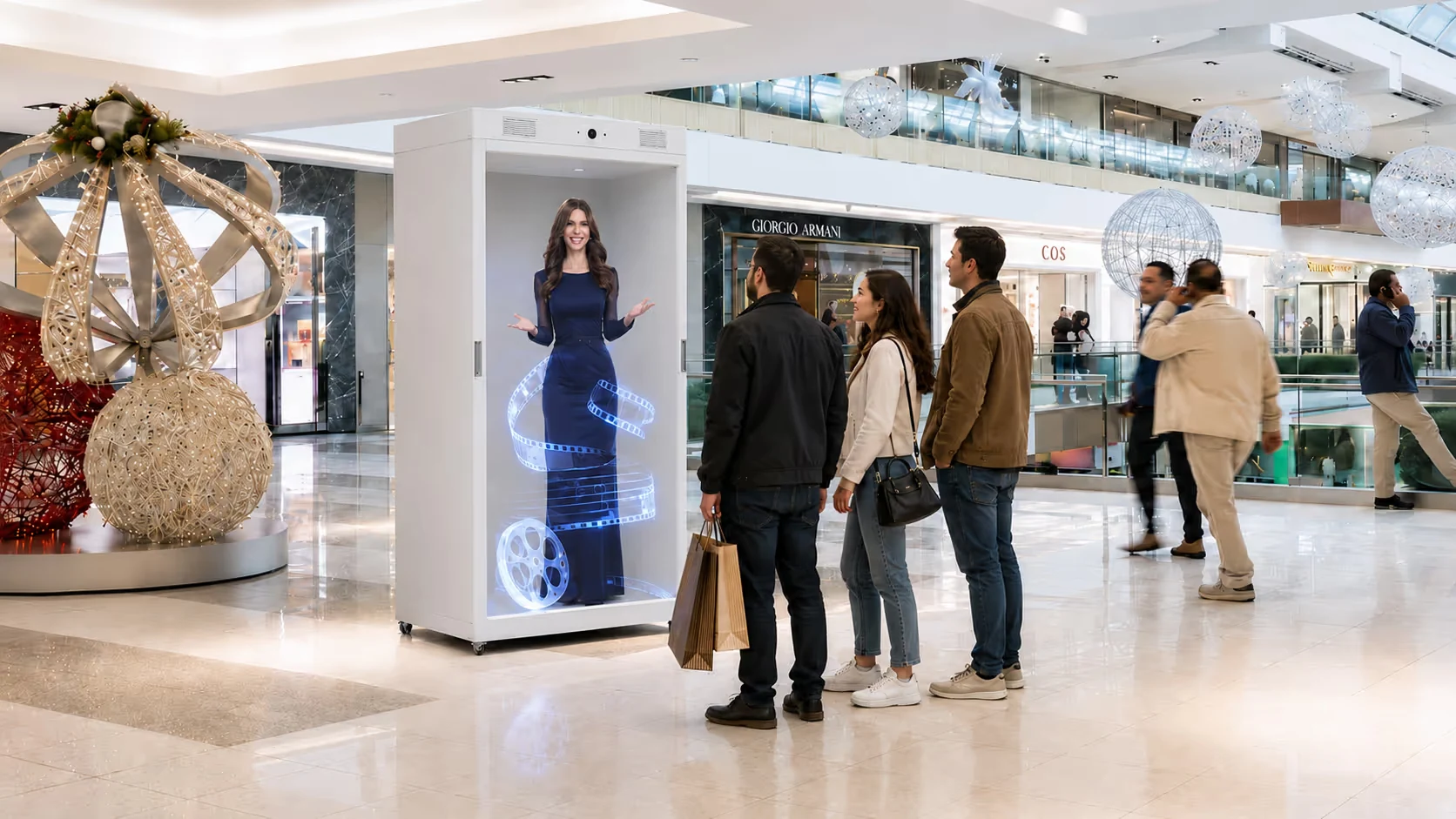 Insight · HoloBox
How a US mall operator built a 30-mall hologram advertising network
How the largest US mall operator built a permanent hologram advertising network across 30 malls, with a cloud CMS, touch screens and QR codes for shoppers.
Read the article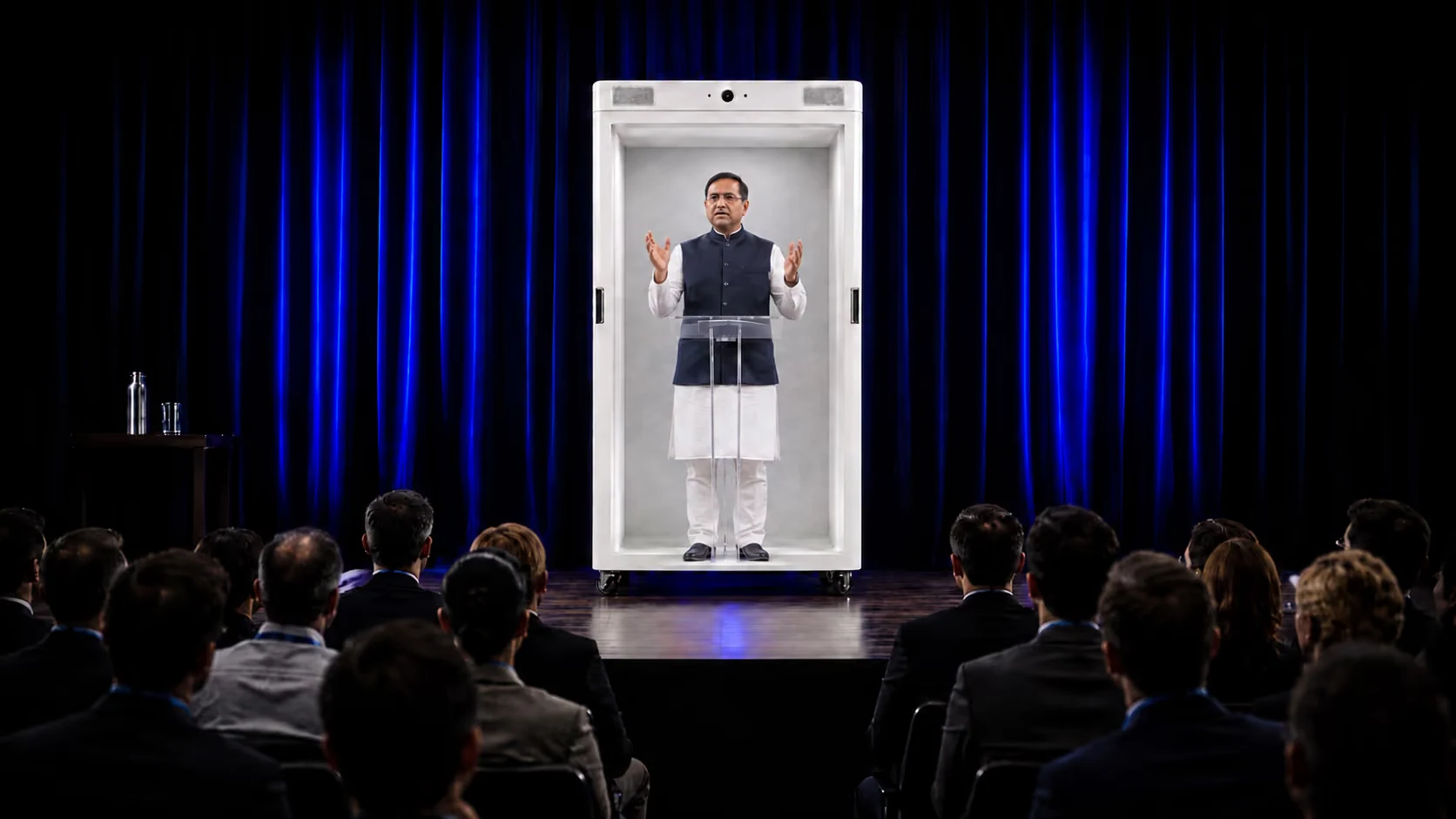 Insight · HoloBox
How holograms are used at live events in India, from 2014 to HoloBox
How hologram presence at Indian events moved from 2014 election stage rigs to plug-and-play HoloBox units, and how they work for conferences and summits today.
Read the article