At the India AI Impact Summit 2026 we built the pavilions of three government institutions, Aadhaar (UIDAI), the Government of Maharashtra and NPCI, using anamorphic 3D LED and interactive kiosks.
Over five days in February, more than 300 exhibitors from 30 countries competed for the same visitors at Bharat Mandapam, New Delhi. Our job was to make these three pavilions the ones people stopped at.
The full case study
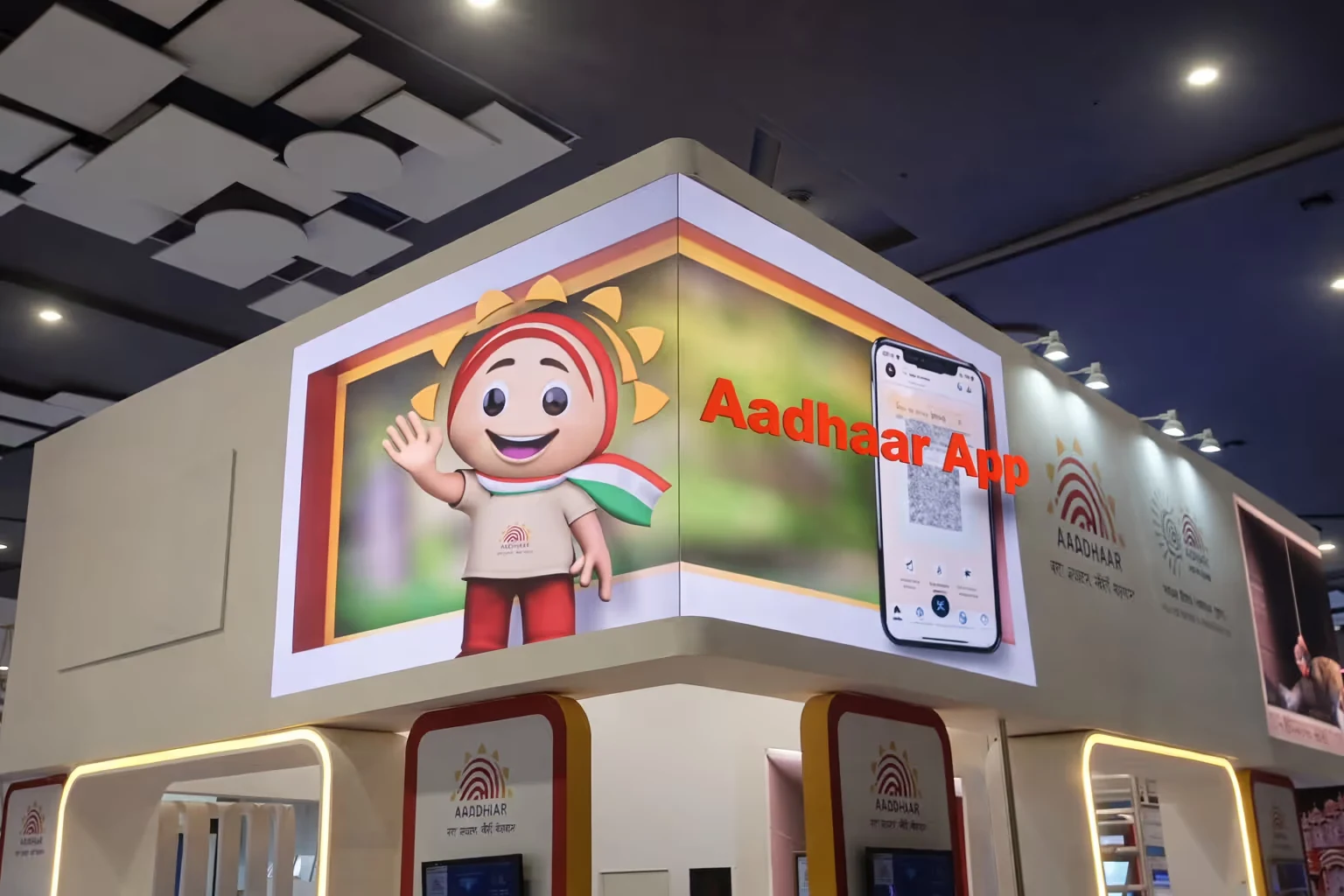
An L-shape anamorphic LED display for Aadhaar at India AI Impact Summit 2026
Summary
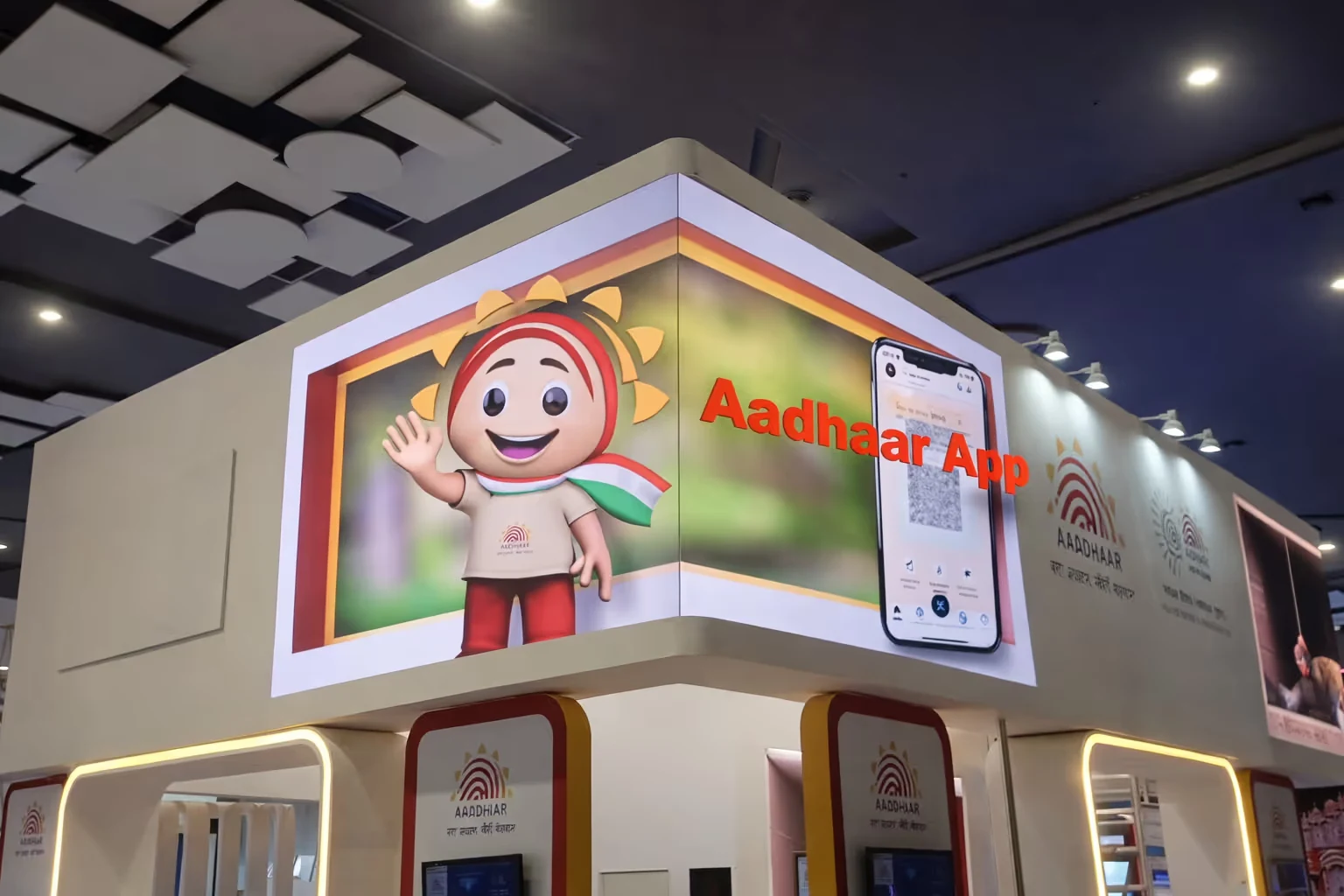
For the Unique Identification Authority of India (UIDAI), we designed, produced and ran an L-shape anamorphic LED installation on the Aadhaar booth fascia at India AI Impact Summit 2026. The summit ran from 16 to 21 February at Bharat Mandapam, New Delhi.
The 3D content was built around the features of the Aadhaar App. The display drew visitors from more than 20 metres away and played without a single technical issue for the whole event.
The brief: make a digital identity story stand out at a crowded summit
About UIDAI and Aadhaar
UIDAI is the statutory authority set up under the Aadhaar Act, 2016. It enrols residents and issues Aadhaar, India’s biometric-based digital identity. With over 1.42 billion people enrolled, Aadhaar is the world’s largest biometric digital identity programme.
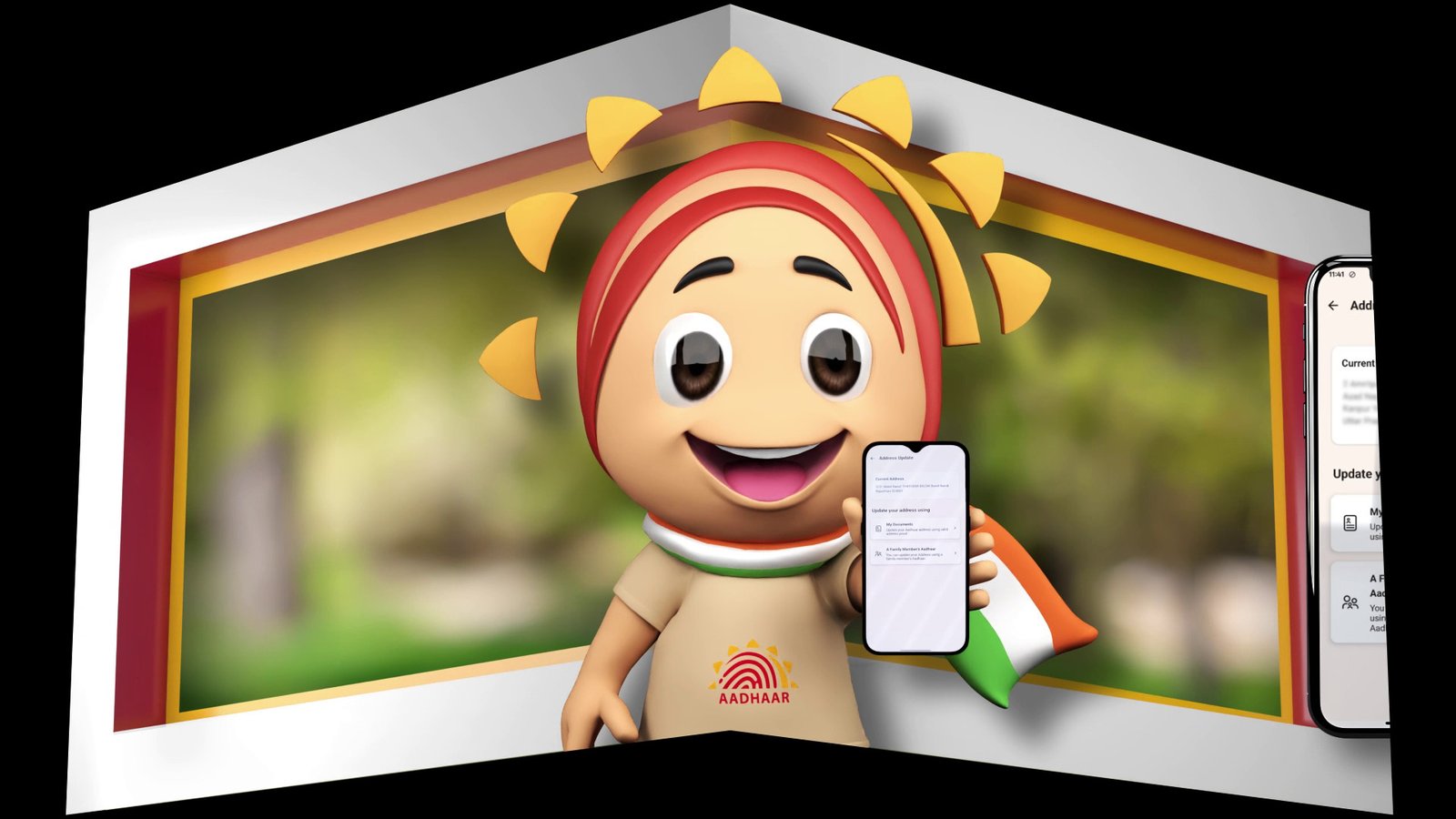
Aadhaar sits behind direct benefit transfers, banking, healthcare, income tax and mobile authentication. The Aadhaar App puts it on citizens’ phones, with paperless KYC, face authentication, QR-based identity sharing and secure offline verification.
About the summit
India AI Impact Summit 2026 was the first major global AI summit held in the Global South. It was inaugurated by Prime Minister Narendra Modi and attended by delegations from over 100 countries, with about six lakh people in person and nearly nine lakh watching online.
Hundreds of exhibitors competed for the same visitors. UIDAI wanted to show that Aadhaar is innovation as well as infrastructure, to an audience of policymakers, enterprise leaders and global delegations. Standard screens would not have stood out on that floor.
What we built
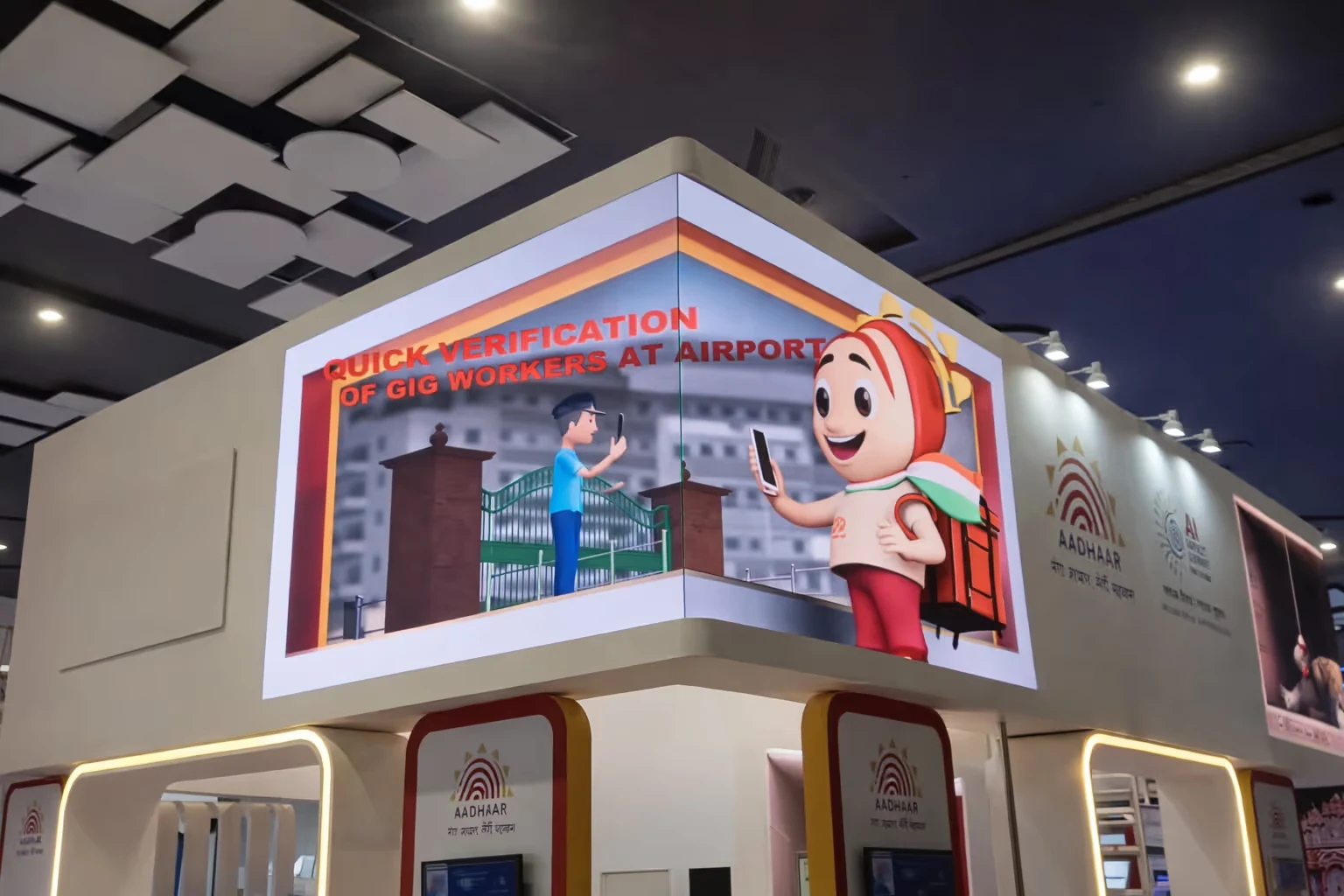
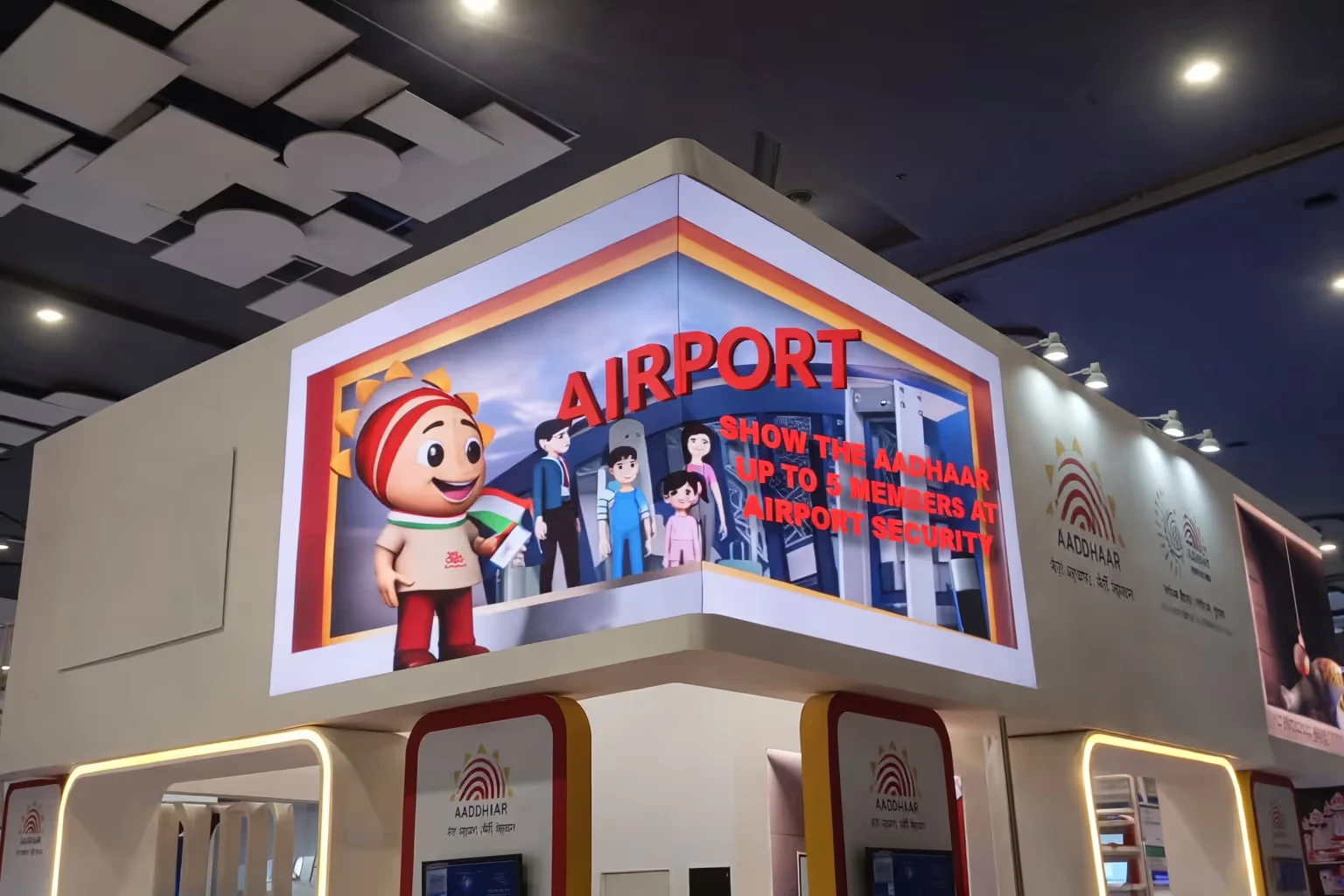
Two LED panels meet at a 90-degree corner on the booth fascia. We mapped the content to that corner so it produces a 3D forced-perspective effect: elements appear to float and extend out of the screen into the hall. The shared edge of the two screens acts as a vanishing point, which makes the effect much stronger than on a flat wall.
Content: the Aadhaar App, feature by feature
The loop worked as a 3D product reveal. Each Aadhaar App feature had its own moment, with interface elements and data flows appearing in the space between the wall and the viewer.
The content also showed the features in real use: rural banking, healthcare access, travel identity and social benefit delivery. Abstract ideas such as KYC, biometric authentication and offline verification became something visitors could see.
Why an anamorphic L-shape
Visitors expect flat screens at an exhibition. An anamorphic corner makes people stop and look before they know what the content is about. In a crowded hall, most displays get noticed at 2–5 metres; an anamorphic LED display can pull attention from 15–20 metres away, before visitors reach the booth.
How we made it
Every L-shape installation is built from scratch for its space. We handled each stage in-house:
- Site and brief analysis to choose the LED format, panel size, corner angle and position on the Bharat Mandapam floor plan.
- 3D production: concept, storyboard, modelling, rigging and animation, matched to the Aadhaar App’s features and visual identity.
- Anamorphic warping, so every frame lines up with the corner geometry and the viewer’s sweet spot, calibrated to the real viewing distances and angles on the summit floor.
- Post-production, LED content formatting and quality checks against the exact specification of the LED hardware at the venue.
How it worked on the day
Our crew installed the LED panels, aligned the corner, set up playback and calibrated the sweet spot before the summit floor opened. A Metaverse911 operations team then stayed on site throughout, monitoring the display and giving immediate technical support. There were no handoffs to third parties.
Because the display sat on the fascia, it could be seen across the hall and still worked up close for visitors at the booth.
Results
- The installation became one of the most discussed booth experiences on the summit floor.
- Visitors stopped mid-stride to work out what they were seeing, which kept them at the booth for longer.
- The display drew foot traffic from more than 20 metres away.
- It gave Aadhaar a credible presence for international delegations and government stakeholders.
- Playback ran without a technical issue for the whole summit.
- It is now our reference project for anamorphic LED in the government sector.
Frequently asked questions
What is an L-shape anamorphic LED display?
Two LED screens meet at a 90-degree corner and play content that is warped to match that corner. From the right spot, the content looks three-dimensional and seems to come out of the screen.
Who made the content for the Aadhaar display?
We did. Our creative and technical teams handled the 3D modelling, animation and anamorphic warping in-house, and our crew installed and ran the display at the summit.
Can the same approach work for other government or enterprise booths?
Yes. Each installation is designed for its own space and content. Talk to our team about your next event.
Open this case study on its own page
An L-shape anamorphic 3D LED display for the Government of Maharashtra at India AI Impact Summit 2026
Summary
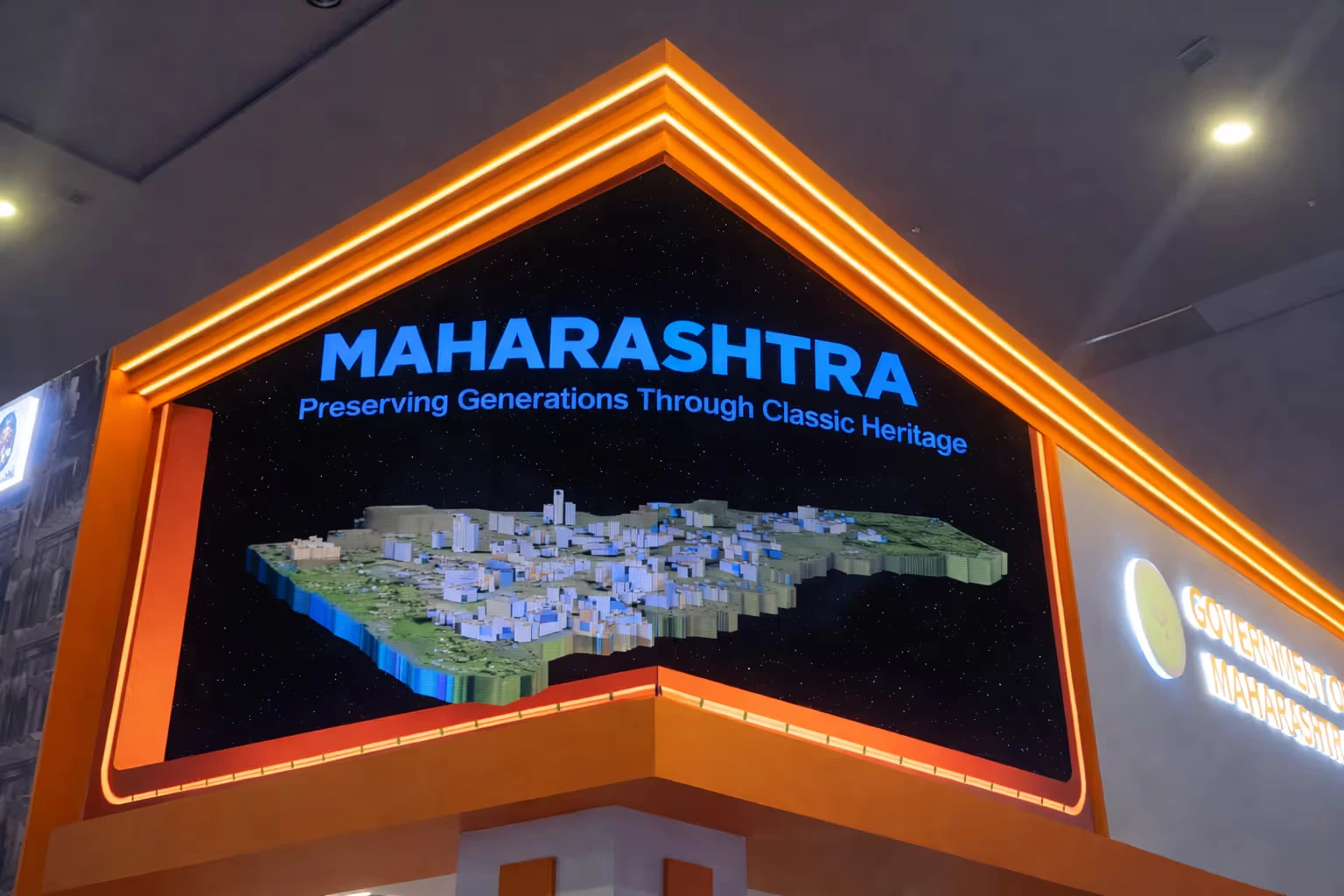
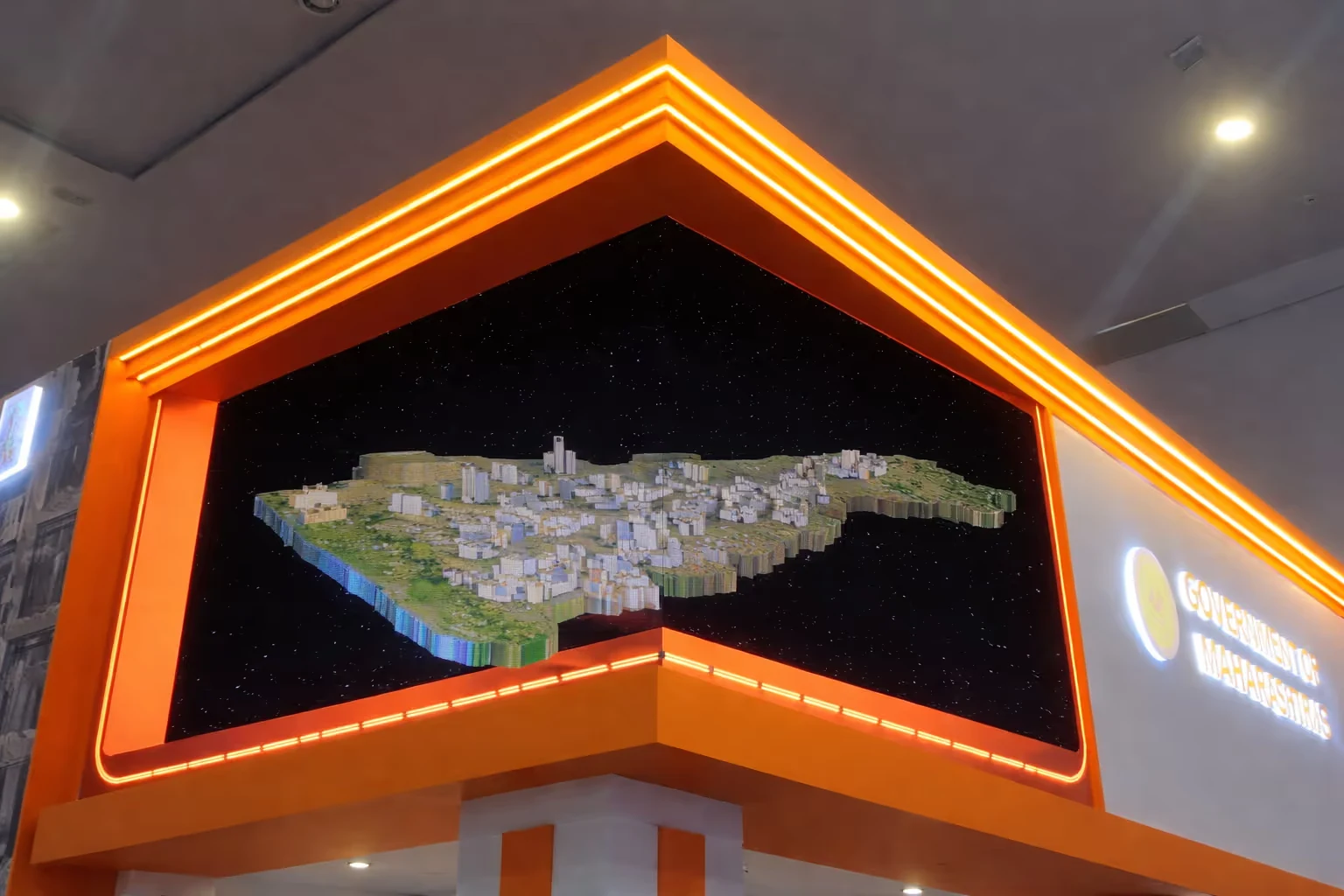
The Government of Maharashtra exhibited at India AI Impact Summit 2026, held at Bharat Mandapam, Pragati Maidan, New Delhi, in February 2026. We designed and installed an L-shape anamorphic 3D LED display that presented the state’s AI strategy as six 3D stories under the theme Viksit Maharashtra for Viksit Bharat.
The 3D effect stopped delegates as they passed and drew them into Maharashtra’s story before they had read a word.
The brief: make a policy vision impossible to walk past
About the summit
The summit was organised under the IndiaAI Mission, backed by the Ministry of Electronics & IT and Digital India. It drew 300+ exhibitors from 30+ countries across 10+ thematic pavilions. Attendees included Jensen Huang (NVIDIA), Sam Altman (OpenAI), Sundar Pichai (Google) and Dario Amodei (Anthropic), along with heads of state and Fortune 500 CEOs.
Standing out in a hall shared with the world’s largest technology companies needed more than a well-designed booth. It needed a display that could earn attention on its own.
The challenge
Maharashtra came to the summit with a multi-sector AI strategy covering urban governance, agriculture, healthcare and public infrastructure. The brief to us was to turn that policy vision into something delegates would stop for. Banners, flat screens and standard LED walls could not carry the message.
What we built
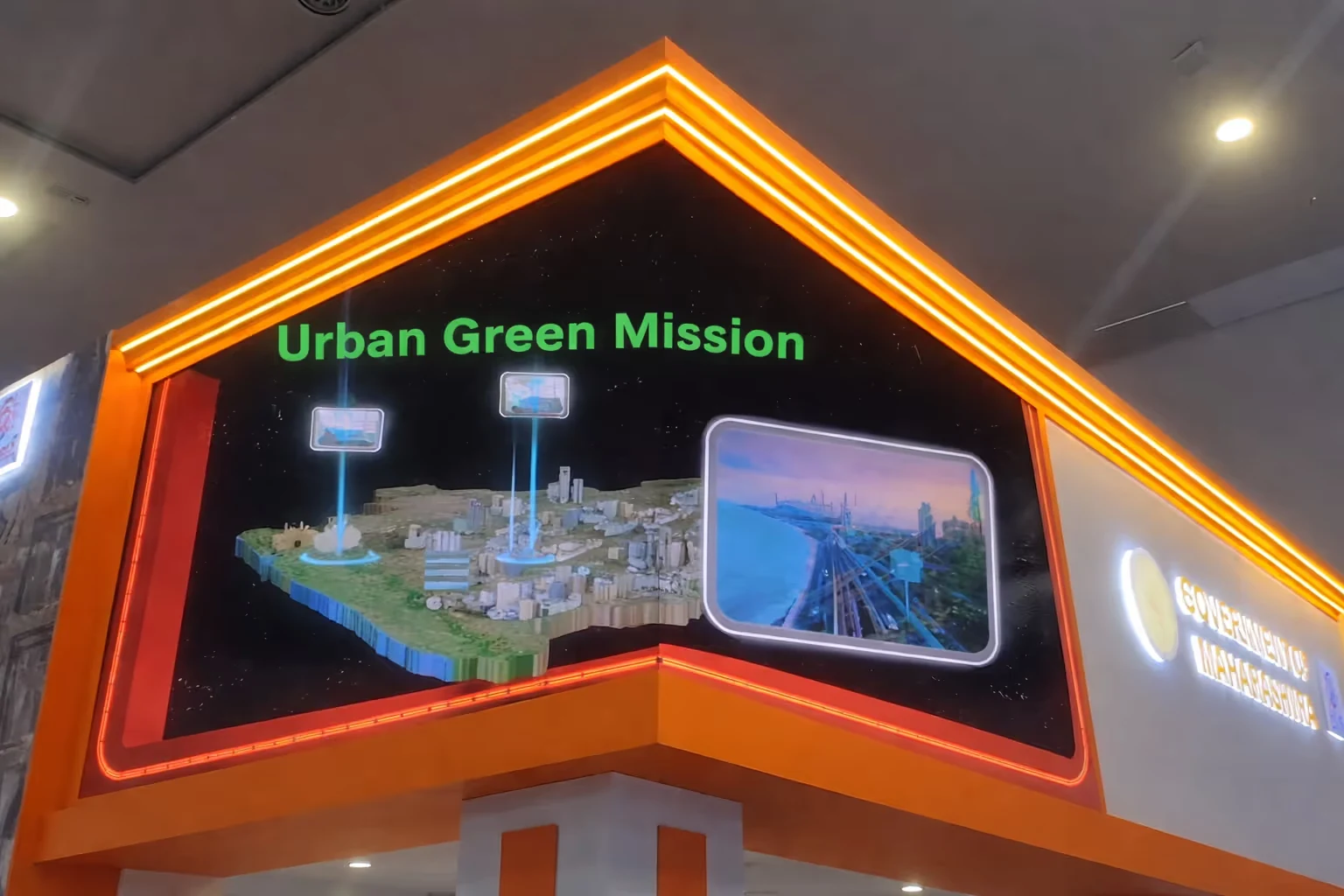
Two high-resolution LED walls meet at a 90° corner. The join between the panels gives the eye a fixed point for depth, so 3D content appears to exist beyond the edge of the screen. Objects seem to float, emerge and move through space, which makes people pause in a way flat or curved displays do not.
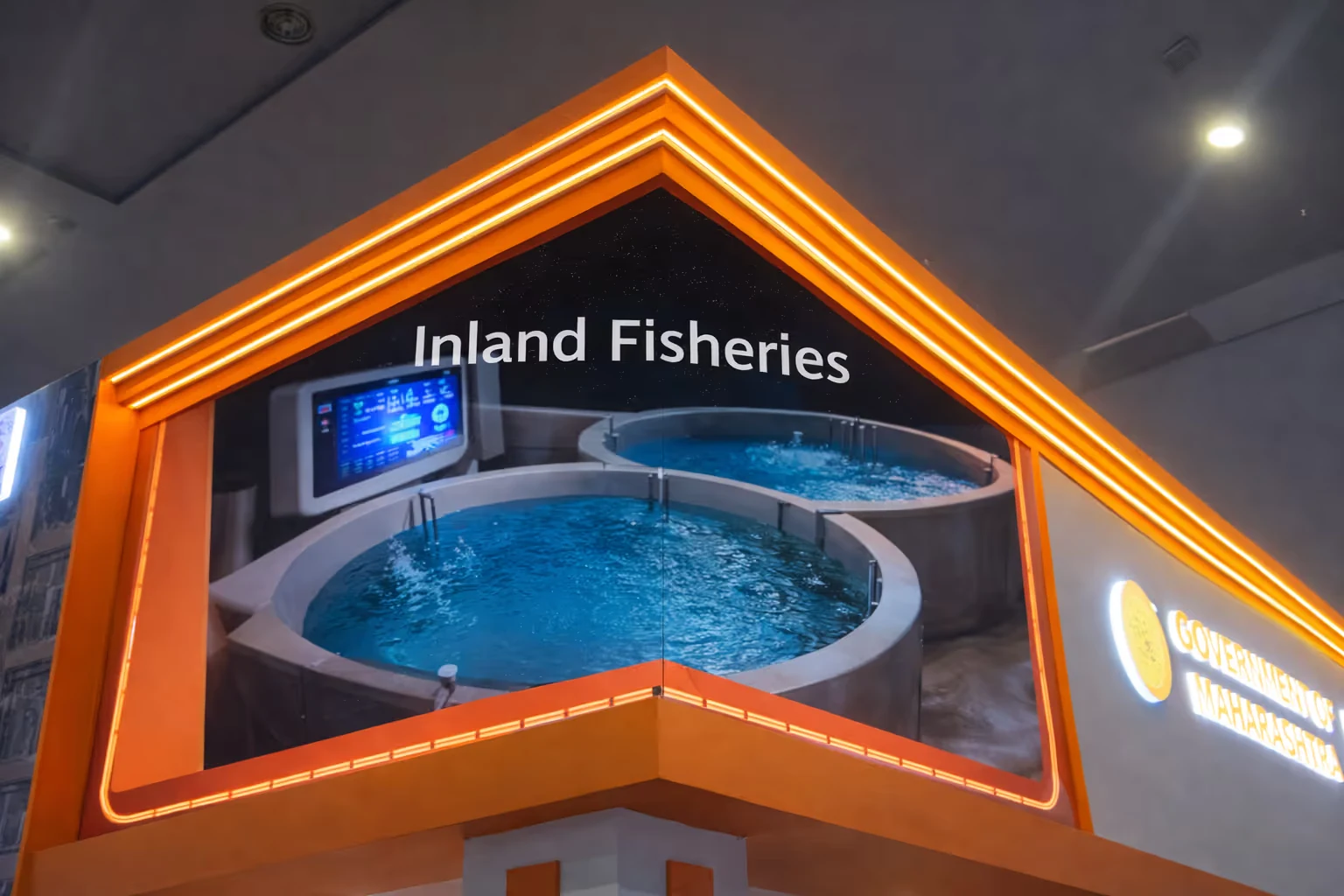
Six stories: Viksit Maharashtra for Viksit Bharat
Each scene was built to explain part of Maharashtra’s AI plan in the few seconds a passing delegate gives a booth.
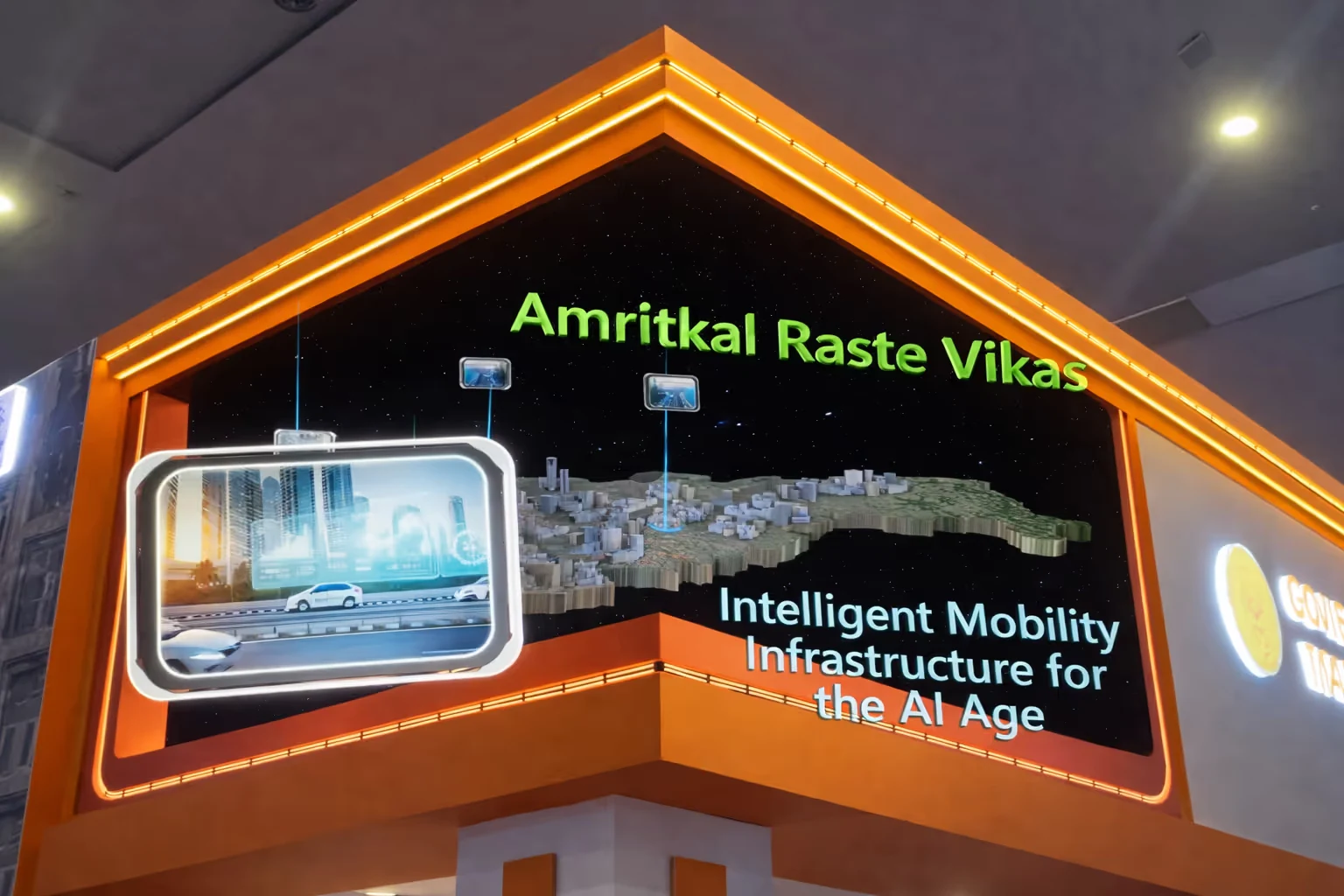
- Smart urban infrastructure: AI-powered cityscapes rising out of data streams
- Precision agriculture: climate-resilient farming shown as flowing maps of the state’s farmland
- AI-enabled healthcare: health networks with real-time AI connections, shown as 3D flows
- Sustainable smart cities: SDG-aligned urban development for carbon-neutral, digitally governed cities
- Unified state data infrastructure: the digital backbone behind real-time governance decisions
- Viksit Maharashtra vision: the state’s AI-first future, told as one narrative
LED specification
We used a premium indoor LED pitch of P1.5, P2.5, which suits viewing distances of 2–5m at exhibitions. At this pixel density the 3D illusion stays sharp at the distance of an exhibition walkway; lower-resolution panels lose the depth effect.
How it worked on the day
In a hall where every square metre competed for delegates’ attention, the corner display made people stop without being asked. The 3D illusion broke up the visual noise of the hall and pulled global delegates into Maharashtra’s story.
Results
- Delegates stopped at the booth and engaged with the content before reading any signage.
- Maharashtra showed its innovation through the medium itself, not just by talking about it.
- Visitors could see and remember the future the state wanted to project.
Frequently asked questions
Why use an L-shape rather than a flat LED wall?
The corner where the two walls meet gives the eye a fixed reference for depth, so the 3D effect is stronger than on a flat or curved screen.
What LED pitch did the display use?
P1.5, P2.5, a premium indoor pitch suited to 2–5m viewing distances at exhibitions.
Can government departments use this format at other events?
Yes. The content and the display are designed for each event and message. Talk to our team about your next summit or exhibition.
About the solution
Anamorphic 4D content for LED walls
Anamorphic content makes your product look like it is coming out of the screen. On a corner (L-shape) or curved LED wall, visitors see a 3D illusion without glasses. It is the fastest way to get people to stop at your booth and film it on their phones.
- Flat, L-shape (90°), inward L and curved LED wall formats
- Built from your CAD files, product photos and brand story
- Typical film length 30–90 seconds, looped for the show
- Content sized to the exact LED wall at your venue
About the summit and what we built
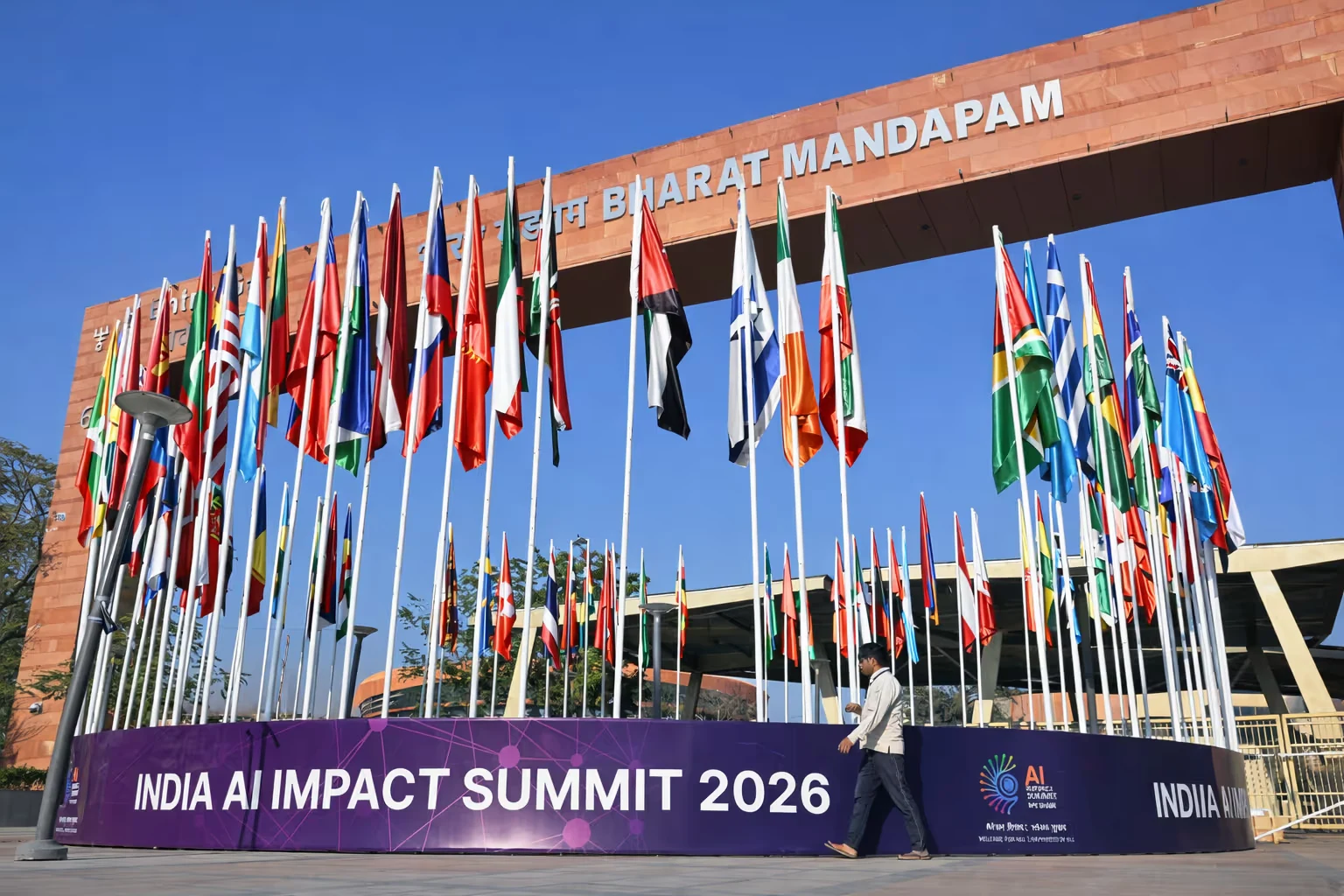
About the India AI Impact Summit 2026
The summit brought together heads of state, global tech CEOs, India’s top ministries and leading innovators. Its theme was “People, Planet & Progress, From Vision to Action”.
- Dates: 17–21 February 2026
- Venue: Bharat Mandapam, Pragati Maidan, New Delhi
- Organised by: IndiaAI Mission, Ministry of Electronics & IT, Digital India
- Scale: 300+ exhibitors, 30+ countries, 5,000+ delegates
What we built at the summit
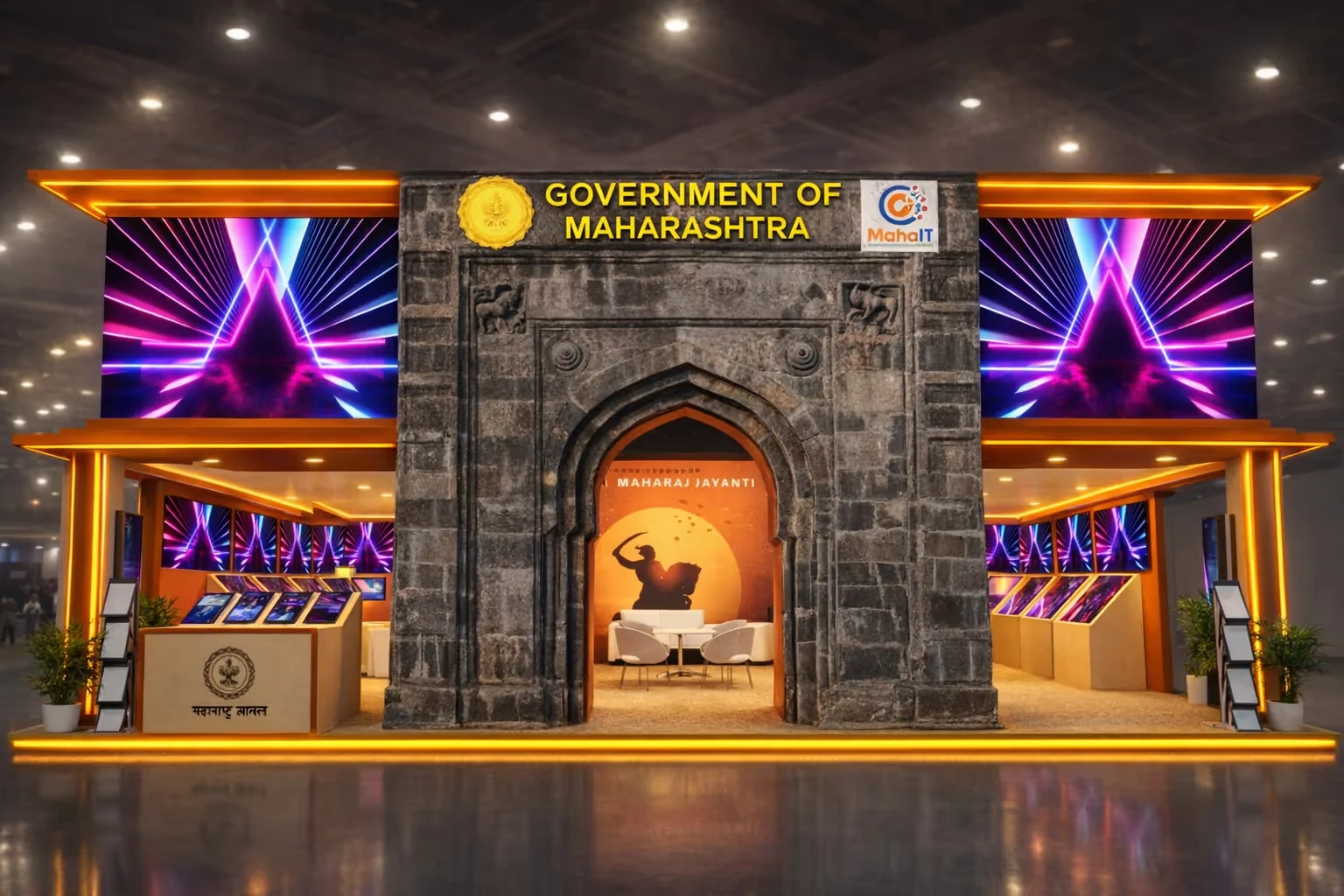
Government of Maharashtra: L-shape anamorphic 3D LED
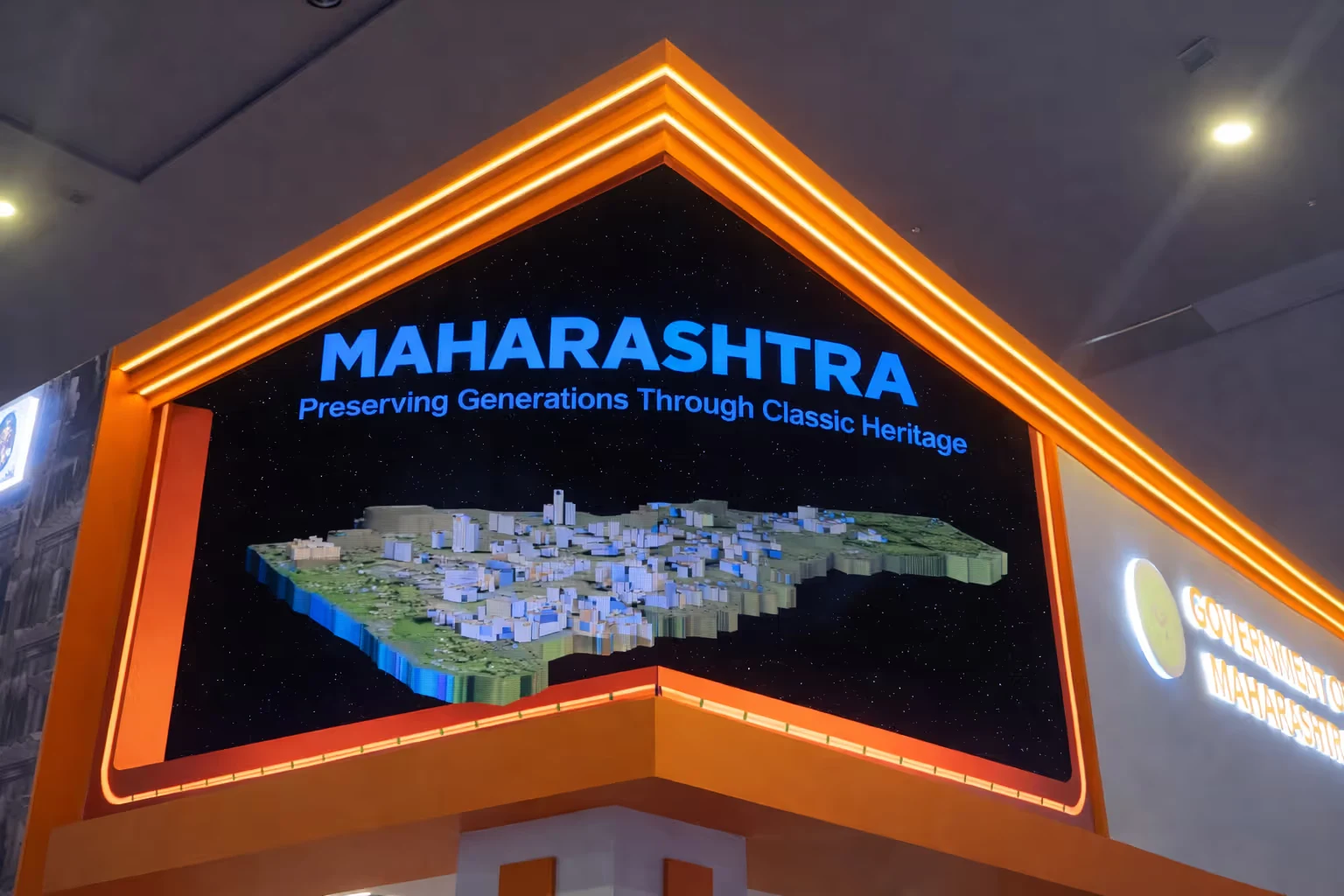
We designed and installed an L-shape anamorphic 3D LED: two high-resolution LED walls meeting at a 90° corner. The corner fixes the viewer’s depth perception at one point, so 3D content appears to float, emerge and move beyond the edge of the screen. Flat or curved displays cannot create the same effect.
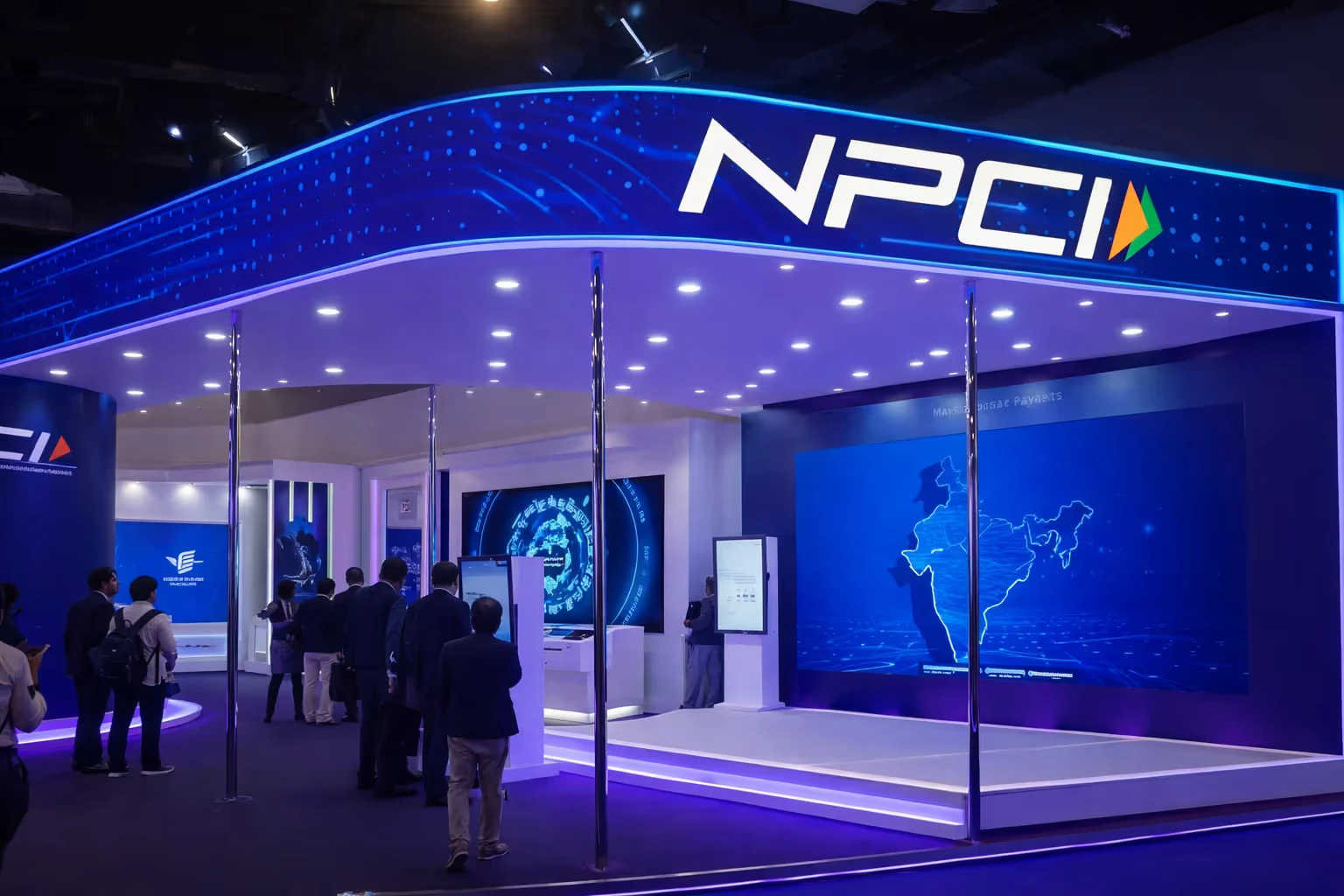
NPCI: a multi-tab interactive kiosk
NPCI, India’s payments infrastructure body, had complex information to share: UPI architecture, real-time payment rails, financial inclusion milestones and its roadmap. The audience ranged from fintech engineers to policy delegates to first-time visitors.
We built a touchscreen kiosk simulation with several tabs, so visitors could explore NPCI’s journey at their own pace. Each module covered one part of India’s digital payments story through motion graphics, data visualisations and interactive touchpoints, and it held visitors longer than the static booths nearby.
Aadhaar (UIDAI)
UIDAI is the statutory authority set up under the Aadhaar Act, 2016, to enrol residents and issue Aadhaar, India’s biometric digital identity. With over 1.42 billion enrolled individuals, it is the world’s largest biometric digital identity programme and sits behind services from benefit transfers and banking to healthcare, income tax and mobile authentication.
Results across the three pavilions
- Three government pavilions delivered
- 100% uptime across all five exhibition days, with zero downtime
- Up against 300+ competing booths from 30 countries
- Among the most photographed installations at the summit
Why these formats work at a large show
At a show this size, visitors decide in seconds whether to stop, based only on what they see from the aisle. Each format we use answers that in a different way:
- Anamorphic 3D LED wall: visible from 15–20m down the aisle
- Tab-based interactive simulation: self-guided and easy for any audience
- HoloFan holographic display: rotating LED fans that show a floating 3D hologram, which visitors film and share
- XWall gamification: a large interactive screen for multi-player, gesture-based games
Frequently asked questions
When and where was the India AI Impact Summit 2026?
It ran from 17 to 21 February 2026 at Bharat Mandapam, Pragati Maidan, New Delhi.
Who organised the summit?
The IndiaAI Mission, Ministry of Electronics & IT, Digital India.
Which pavilions did Metaverse911 work on?
Aadhaar (UIDAI), the Government of Maharashtra and NPCI. Maharashtra used an L-shape anamorphic 3D LED and NPCI used a multi-tab interactive kiosk.
This guide was first published on metaverse911.in.
Case studies from this exhibition
Where else our work has gone live